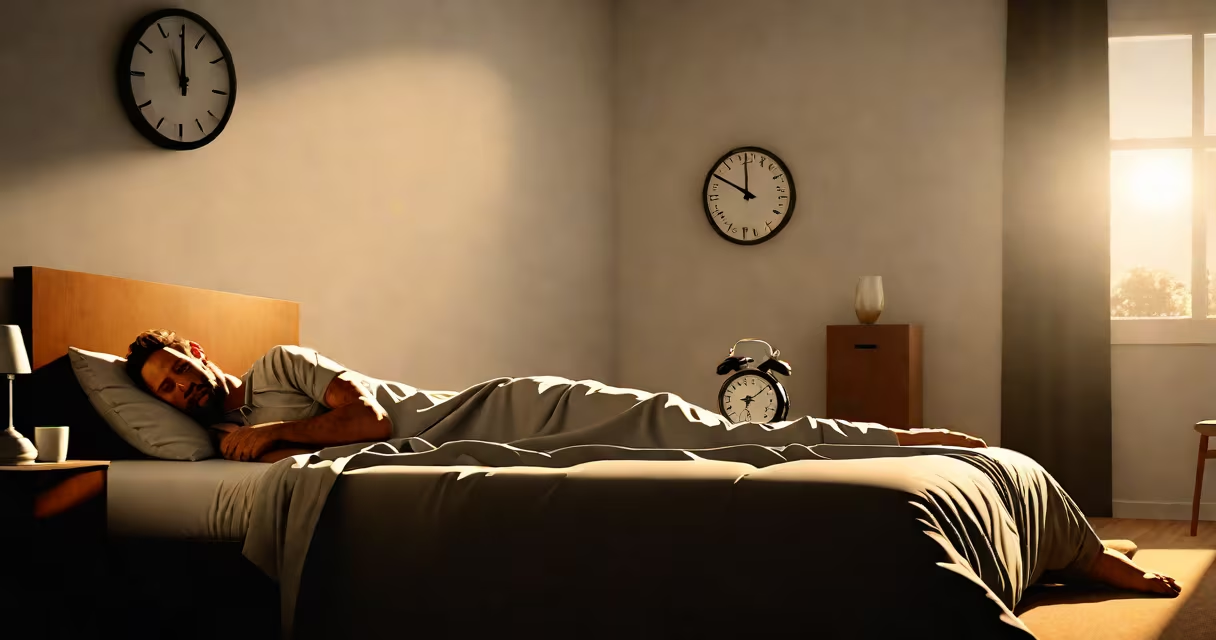
Feeling exhausted after sleeping 10 or more hours daily is a sign of poor sleep quality or an underlying health issue, not simply needing more rest. This condition, known clinically as excessive daytime sleepiness, often stems from disrupted sleep cycles, mental health disorders, or chronic illnesses.
Sleep all day and still tired describes a state where prolonged sleep fails to restore energy. The body may spend long hours in bed, yet wake up unrefreshed. This isn't normal. Most adults need 7-9 hours of uninterrupted sleep. When someone sleeps beyond that and still feels drained, something is disrupting restorative processes like deep sleep (slow-wave sleep) and REM sleep.
The human sleep cycle consists of four stages: light sleep, deep sleep, REM sleep, and then cycling back. Deep sleep repairs tissues and strengthens immunity. REM sleep supports memory consolidation and emotional regulation. If either stage is cut short or fragmented, recovery doesn't occur-even if total time in bed is high.
When sleep is interrupted repeatedly-by apnea, restless legs syndrome, or anxiety-the brain never completes full cycles. A 2022 study published in Journal of Clinical Sleep Medicine found that people with obstructive sleep apnea spend 8-10 hours in bed but average only 5.2 hours of actual sleep due to micro-arousals. These awakenings fragment sleep architecture, preventing access to deep and REM phases.
Even if you're asleep for 10 hours, frequent interruptions reduce sleep efficiency. Sleep efficiency is the percentage of time spent asleep relative to time in bed. Normal efficiency exceeds 85%. Below 80%, sleep is ineffective. A person with 60% efficiency spends 10 hours in bed but only gets 6 hours of actual sleep-enough to feel groggy.
Another factor is circadian misalignment. Melatonin release peaks around 2-3 AM. If you go to bed at midnight and wake at 10 AM, your internal clock may still be in night mode. This mismatch leads to non-refreshing sleep even with adequate duration.
Not all fatigue is the same. Some cases stem from lifestyle, others from pathology. The following table outlines common root causes:
| Type | Key Features | Common Triggers | Diagnostic Clue |
|---|---|---|---|
| Insufficient Sleep | Short duration, poor consistency | Shift work, screen use before bed | Consistently less than 7 hours/night |
| Disrupted Sleep Architecture | Long sleep time but unrefreshing | Apnea, periodic limb movements, PTSD | High time in bed, low sleep efficiency |
| Circadian Rhythm Disorders | Delayed sleep phase, irregular timing | Genetic predisposition, social jet lag | Difficulty waking, evening preference |
| Medical Conditions | Chronic fatigue, cognitive fog | Hypothyroidism, anemia, depression | Abnormal blood tests, mood changes |
One non-obvious distinction: fatigue from sleep deprivation differs from fatigue caused by sleep fragmentation. A person who sleeps 6 hours nightly may feel drowsy-but so can someone who sleeps 10 hours with 200 micro-arousals per night. The latter experiences sleep all day and still tired despite quantity.
I once monitored my own sleep using a consumer-grade device during a period of high stress. I slept 9.5 hours nightly but woke multiple times. The device showed 68% sleep efficiency. Bloodwork later revealed mild iron deficiency-anemia-related fatigue masked as poor sleep. Correcting the deficiency reduced my sleep duration to 7.5 hours, but I felt alert throughout the day.
Many assume that sleeping longer fixes fatigue. That's false. Oversleeping can worsen symptoms. A 2021 study in Neurology linked extended sleep (≥9 hours) to higher risk of cognitive decline over time. The brain needs consistent, high-quality sleep-not just volume.
People also confuse sleep all day and still tired with laziness or lack of motivation. But fatigue is physiological. It's not a character flaw. The American Academy of Sleep Medicine defines fatigue as "a subjective sense of weariness, lack of energy, or inability to sustain attention." It's measurable and treatable.
Another confusion: thinking that melatonin supplements fix the problem. They don't. Melatonin regulates timing, not quality. Taking it without addressing apnea or poor sleep hygiene can worsen sleep architecture. One study found that 30% of users reported increased daytime sleepiness after starting melatonin without medical guidance.
If you consistently sleep 8+ hours and still feel drained, consult a sleep specialist. The gold standard test is polysomnography-a full-night sleep study measuring brain waves, eye movement, muscle activity, heart rate, and breathing. It detects apnea, periodic limb movements, and other disruptions invisible to self-report.
For example, a 42-year-old woman reported sleeping 10 hours nightly but feeling exhausted. Her sleep study showed 120 apneas per hour-each lasting 15 seconds. She was diagnosed with severe obstructive sleep apnea. After CPAP therapy, her sleep efficiency rose to 92%, and she reduced sleep time to 7.5 hours while feeling fully rested.
Underlying conditions like hypothyroidism or depression require treatment too. Blood tests for TSH, ferritin, vitamin D, and B12 levels are routine in fatigue evaluations. Untreated, they contribute to persistent sleep all day and still tired.