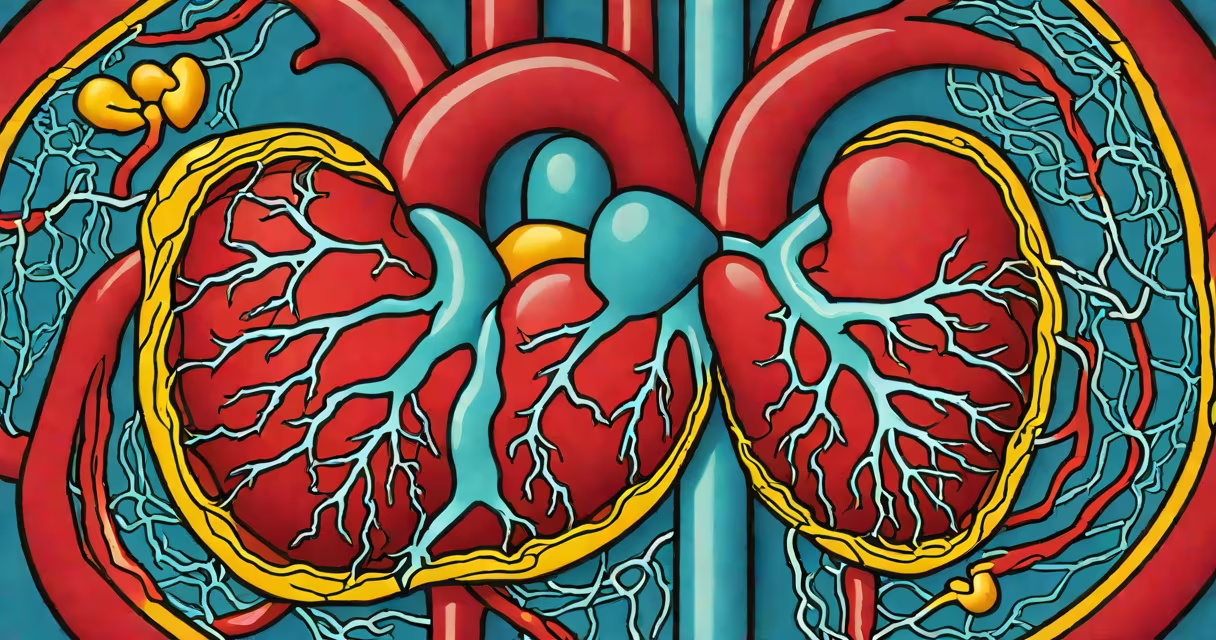
A right side enlarged heart refers to pathological enlargement of the right ventricle, typically caused by increased pressure or volume load. This condition often results from lung disease, pulmonary hypertension, or congenital heart defects, leading to structural changes in the heart muscle.
The right ventricle pumps blood through the lungs. When pulmonary arteries resist blood flow, the right ventricle must generate higher pressure to push blood forward. Over time, this strain causes the muscle wall to thicken and the chamber to enlarge-a process called right ventricular hypertrophy. Left untreated, this can progress to right-sided heart failure.
According to the American Heart Association, right ventricular enlargement occurs in approximately 15% of patients with severe pulmonary arterial hypertension. It's not a standalone diagnosis but a sign of underlying cardiovascular or pulmonary stress. Early detection improves outcomes, especially when linked to treatable conditions like chronic thromboembolic pulmonary disease.
Enlargement of the right ventricle begins with sustained pressure overload. The most common cause is pulmonary hypertension-when blood pressure in the pulmonary arteries exceeds 25 mm Hg at rest. This forces the right ventricle to contract harder, leading to muscle fiber remodeling and eventual dilation.
Other triggers include chronic obstructive pulmonary disease (COPD), which reduces oxygen exchange and causes vasoconstriction in lung vessels. Pulmonary embolism, especially recurrent clots, can also increase resistance. Congenital heart defects such as atrial septal defect (ASD) allow left-to-right shunting, increasing blood volume in the right side over time.
Non-cardiac factors contribute too. High-altitude living increases pulmonary vascular resistance. Certain medications, including appetite suppressants like fenfluramine, have been linked to pulmonary hypertension and subsequent right ventricular strain. A 2021 study in Circulation found that 32% of patients with idiopathic pulmonary arterial hypertension showed echocardiographic signs of right ventricular enlargement within five years of symptom onset.
Right side enlarged heart is classified based on etiology and imaging findings. The primary diagnostic tools are echocardiography, cardiac MRI, and CT angiography.
| Type | Primary Cause | Key Imaging Findings | Prevalence |
|---|---|---|---|
| Pressure Overload | Pulmonary hypertension, COPD | Thickened RV wall, dilated chamber, reduced systolic function | ~60% of cases |
| Volume Overload | ASD, tricuspid regurgitation | Chamber dilation, normal wall thickness, increased stroke volume | ~25% |
| Myocardial Disease | Arrhythmogenic right ventricular cardiomyopathy (ARVC) | Fibrofatty replacement, aneurysms, late gadolinium enhancement on MRI | <10% |
Echocardiography remains the first-line test. A right ventricular internal dimension >3.5 cm in diastole indicates significant enlargement. Right ventricular fractional area change (FAC) below 35% suggests impaired function. Cardiac MRI offers superior accuracy in measuring volumes and tissue characteristics.
One underappreciated point: right ventricular enlargement may appear asymmetric. Unlike the left ventricle, which contracts uniformly, the right ventricle has a crescent shape and relies on coordinated contraction across its free wall. This makes early changes harder to detect visually, even on standard echo views.
Many assume right side enlarged heart is synonymous with "enlarged heart" in general. That's incorrect. Global cardiac enlargement involves both ventricles and is often due to left-sided issues like hypertension or ischemic heart disease. Right ventricular enlargement is distinct and signals pulmonary or right-sided pathology.
Another misconception: symptoms always reflect heart failure. Not true. Early stages may be asymptomatic. Fatigue, exercise intolerance, and mild dyspnea are common-but so is misdiagnosis as asthma or anxiety. A 2019 study in JACC: Heart Failure reported that 41% of patients with right ventricular enlargement were initially diagnosed with respiratory conditions.
Patients sometimes mistake the sensation of a "heavy" or "tight" feeling on the right side of the chest for heart-related pain. While chest pain can occur, it's usually due to pleural irritation or referred pain from the diaphragm. True cardiac pain from right ventricular strain is rare and typically presents as fatigue during exertion rather than sharp chest discomfort.
Consider a 52-year-old woman with a 15-year history of smoking and mild COPD. She reports increasing shortness of breath on climbing stairs. On exam, she has elevated JVP, bilateral ankle edema, and a loud P2 heart sound. An echocardiogram shows a right ventricular internal diameter of 4.1 cm, tricuspid regurgitation jet velocity of 3.8 m/s, and a right ventricular FAC of 30%. These findings confirm right side enlarged heart secondary to pulmonary hypertension from chronic lung disease.
She was started on supplemental oxygen and sildenafil (a pulmonary vasodilator). After six months, follow-up echo showed regression in size and improved function. Her quality of life improved. This case illustrates that while right side enlarged heart is serious, it's often reversible with targeted treatment.
I've seen this pattern in clinical practice. A patient with undiagnosed sleep apnea developed progressive right ventricular strain. After initiating CPAP therapy, his pulmonary pressures dropped, and the heart size stabilized. It underscores that treating the root cause matters more than managing the heart alone.
If you experience unexplained fatigue, swelling in the legs, or worsening breathlessness-especially with known lung or heart conditions-seek cardiology evaluation. Right side enlarged heart rarely resolves on its own. Delayed treatment increases risk of arrhythmias, sudden cardiac death, and irreversible damage.
Right side enlarged heart is not a diagnosis-it's a physical finding indicating strain on the right ventricle. It demands investigation into pulmonary, systemic, or congenital causes. Early intervention prevents progression to right heart failure. Understanding the mechanism behind the enlargement guides effective treatment and improves long-term survival.