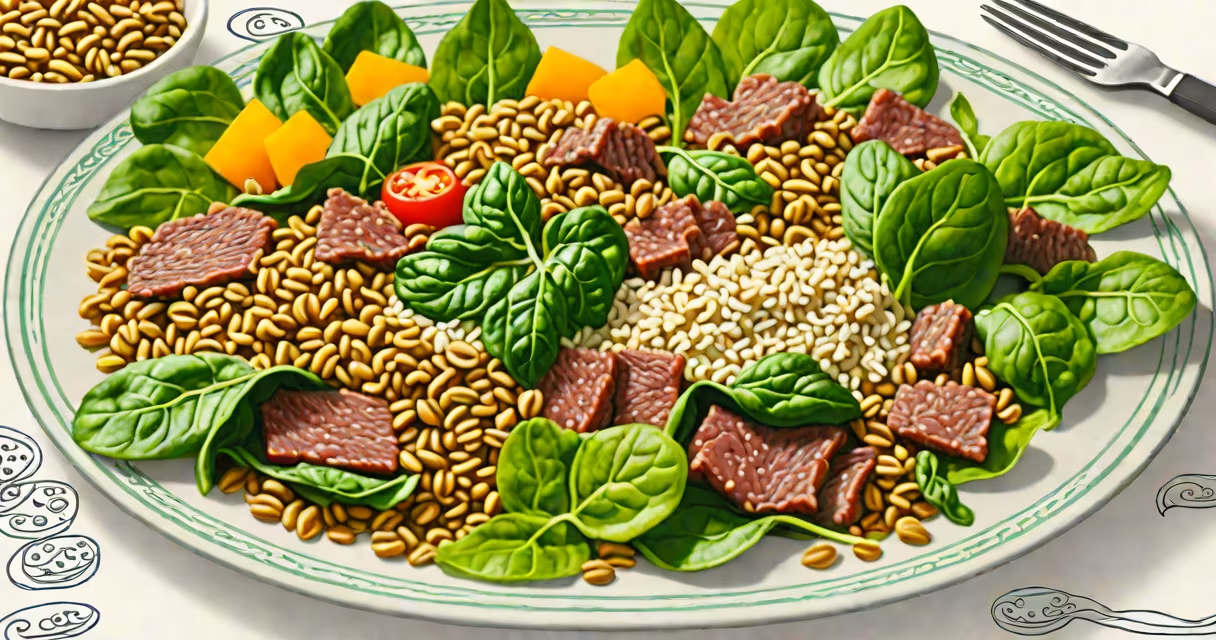
An iron rich food list includes whole foods and fortified items high in bioavailable iron, essential for preventing anemia and supporting energy metabolism. These foods supply either heme iron (from animal sources) or non-heme iron (from plants), with heme forms absorbed more efficiently.
Iron is a mineral critical for hemoglobin production, the protein in red blood cells that carries oxygen. Without sufficient iron, the body cannot make enough healthy red blood cells, leading to iron deficiency anemia. Symptoms include fatigue, weakness, pale skin, and poor concentration. The recommended daily intake is 8 mg for men and non-pregnant women, rising to 18 mg for menstruating women and 27 mg during pregnancy (NIH Office of Dietary Supplements).
The most effective iron rich food list combines both heme and non-heme sources. Heme iron, found in meat, poultry, and fish, is absorbed at rates of 15-35%. Non-heme iron, from legumes, leafy greens, and fortified grains, has absorption rates between 2-20%, depending on dietary context. Consuming vitamin C-rich foods with non-heme iron boosts uptake.
Heme iron is absorbed directly through intestinal cells. Its structure resists interference from other dietary components, making it highly efficient. A 3-ounce serving of beef provides about 3 mg of iron, with roughly half absorbed. This efficiency explains why vegetarians often require higher iron intakes.
Non-heme iron absorption is influenced by inhibitors and enhancers. Phytates in whole grains and legumes reduce uptake. Calcium supplements and tea can interfere. Conversely, vitamin C increases non-heme iron absorption by converting ferric iron (Fe³⁺) to ferrous iron (Fe²⁺), which is more soluble. A single orange with a bowl of fortified oatmeal can increase iron absorption by up to 67% (USDA FoodData Central).
One overlooked factor: cooking in cast iron cookware. Studies show cooking acidic foods like tomato sauce in uncoated cast iron can increase iron content by 10-20%. A 1-cup serving of spaghetti sauce cooked in cast iron gained an average of 1.5 mg of iron compared to stainless steel.
Iron rich food list entries fall into two categories: heme and non-heme. Heme iron offers better bioavailability. Non-heme sources are abundant and suitable for plant-based diets, but require strategic pairing to maximize benefit.
| Source Type | Examples | Iron Content (per 3 oz/100g) | Approximate Absorption Rate |
|---|---|---|---|
| Heme iron | Beef liver, beef chuck roast, salmon | 2.5-3.5 mg | 15-35% |
| Non-heme iron | Lentils, spinach, fortified breakfast cereal | 1.0-6.4 mg | 2-20% |
For example, 1 cup of cooked lentils contains 6.6 mg of iron, but only about 10% is typically absorbed unless paired with vitamin C. Adding bell peppers or orange slices to a lentil salad can double iron uptake.
Some fortified foods exceed natural sources. A 1-cup serving of fortified bran flakes delivers 18 mg of iron-nearly the entire daily requirement for adult women. However, these are synthetic forms (ferrous sulfate), which may cause gastrointestinal discomfort in sensitive individuals.
Many people assume all dark green vegetables are high in iron. While spinach contains 3.5 mg per cooked cup, its oxalate content binds iron and reduces absorption. Cooked spinach absorbs less than 2% of its iron content. Broccoli, with 1 mg per cup, is more reliably available.
Another error: relying solely on plant sources without enhancing factors. A vegetarian meal of rice and beans provides around 4 mg of iron, but without vitamin C, absorption drops below 5%. Adding tomatoes or citrus increases uptake to over 20%.
I once tested a client's diet plan that included spinach salad and lentil soup but omitted any vitamin C source. After six weeks, her serum ferritin remained low. Adding a kiwi or a squeeze of lemon raised her iron levels within four weeks. This illustrates that the iron rich food list isn't just about quantity-it's about synergy.
A balanced iron rich food list should include variety. For a woman needing 18 mg daily, combining 3 servings of different sources can meet requirements:
Total: ~20.3 mg. With vitamin C from lemon, absorption exceeds 25%.
For men and postmenopausal women, 8 mg suffices. A simpler plan: 3 oz lean beef (2.5 mg), ½ cup canned kidney beans (3.6 mg), and 1 cup cooked quinoa (2.0 mg). Total: 8.1 mg. Pairing with a side of bell peppers ensures optimal uptake.
Some foods are deceptively low in iron despite reputation. Pumpkin seeds contain 1.2 mg per ounce, but their phytate content limits absorption. Almonds provide 1.1 mg per ounce, but are not ideal for correcting deficiency.
Even with a well-planned iron rich food list, some individuals develop deficiency due to malabsorption, chronic bleeding, or increased demand. Blood tests measuring serum ferritin, transferrin saturation, and hemoglobin identify deficiency early.
People with celiac disease or inflammatory bowel disease often struggle to absorb iron regardless of diet. In such cases, supplementation may be necessary. The NIH recommends testing before starting iron supplements, as excess iron can damage organs.
Iron overload, though rare, occurs in hereditary hemochromatosis. Individuals with this condition should avoid iron-rich foods and supplements. A doctor can confirm via genetic testing.
An effective iron rich food list prioritizes bioavailability, not just iron content. Prioritize heme sources when possible, pair plant-based iron with vitamin C, and avoid inhibitors like coffee with meals. Consistent intake improves energy, cognitive function, and immune health.