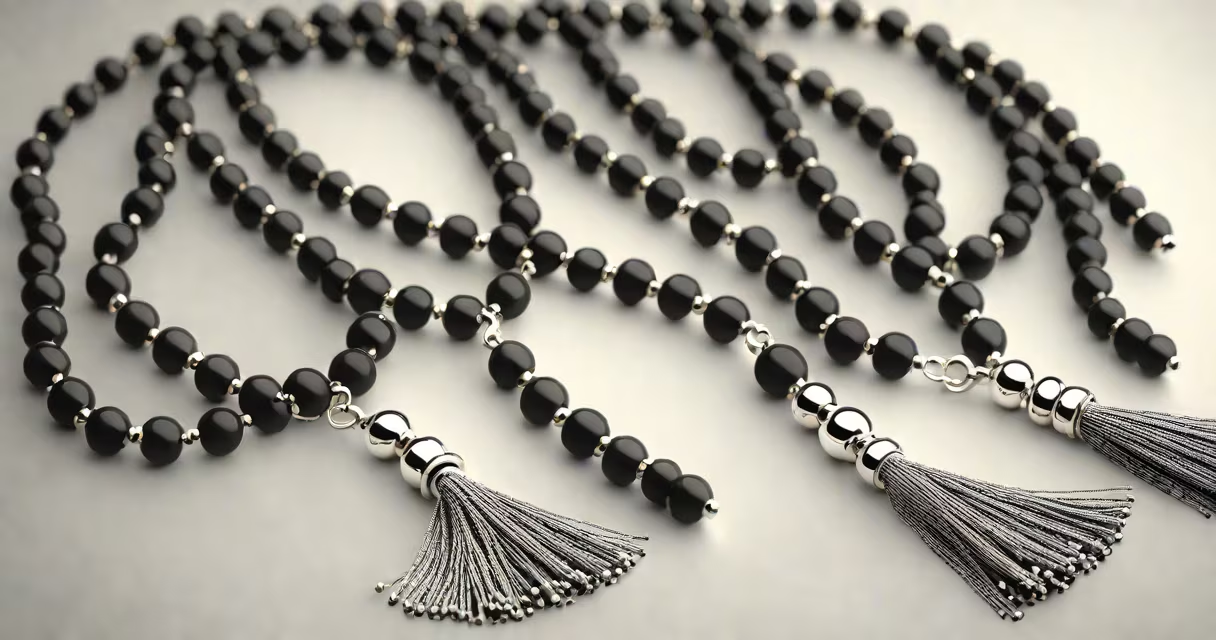
A black tulsi mala in silver is a 108-bead prayer necklace made from dried black tulsi seeds, strung on a thread and finished with a silver guru bead and tassel. The beads are traditionally used in Hindu and yogic practices for mantra repetition, while the silver components improve spiritual resonance and durability.
Black tulsi, also known as Krishna tulsi, is a sacred plant in Indian tradition. Its dried seeds form the core of the mala. These seeds are dark brown to black, dense, and slightly porous-ideal for absorbing energy during prolonged handling. The 108-bead count corresponds to the number of cycles in a full mantra cycle, a standard in devotional practice.
The silver elements serve both functional and symbolic roles. The guru bead-the largest bead-is typically made of sterling silver or silver-plated metal. It marks the beginning and end of a round of chanting. The tassel, often woven from silver wire or threaded with silver beads, adds balance and visual focus. Silver is believed to amplify intention and purify energy, making it a preferred metal in spiritual tools.
Users hold the mala in one hand and move their fingers along the beads, reciting a mantra such as "Om Namah Shivaya" or "Hare Krishna" with each bead. After completing 108 repetitions, they pause at the guru bead and reverse direction. This method maintains focus and prevents mental drift during extended sessions.
Each bead is touched once per cycle. The tactile feedback reinforces mindfulness. The weight of the black tulsi seeds provides grounding, while the coolness of the silver components offers a sensory anchor. This combination supports sustained attention during meditation, especially in environments with distractions.
For example, a practitioner using a black tulsi mala in silver to chant the Gayatri Mantra 108 times reports feeling a noticeable shift in mental clarity after 15 minutes. The consistent rhythm of touch and sound creates a meditative groove that reduces intrusive thoughts.
Black tulsi seeds are harvested from the Ocimum sanctum plant, primarily grown in India's Uttar Pradesh region. They are sun-dried for 10-14 days to reduce moisture content, then polished. The seeds have a natural oil coating that resists cracking and fading over time.
Manufacturers use either 100% sterling silver (92.5% silver, 7.5% copper) or silver-plated brass for the beads and fittings. Sterling silver is more durable and less prone to tarnishing under regular use. Silver-plated brass is lighter and cheaper but may wear off after 6-12 months of daily handling.
| Type | Beading Material | Accent Metal | Typical Weight | Price Range (USD) |
|---|---|---|---|---|
| Basic | Black tulsi seeds | Silver-plated brass | 45-55 grams | $15-$25 |
| Premium | Hand-polished black tulsi | Sterling silver | 60-75 grams | $45-$80 |
| Luxury | Organic-certified tulsi | 925 sterling silver | 80+ grams | $100+ |
Some artisans use a waxed cotton thread for stringing, which resists fraying. Others use silk cord, which adds flexibility and a soft sheen. The knot between each bead is tied by hand, ensuring even spacing and preventing slippage.
Many assume black tulsi mala in silver is interchangeable with other malas made from rudraksha or sandalwood. While all are used in meditation, each material carries distinct energetic properties. Black tulsi is associated with protection and purification, particularly against negative energies. Rudraksha is linked to emotional stability and heart-centered awareness. Sandalwood enhances calm and focus.
Another misconception is that silver components are purely decorative. In reality, silver's high thermal conductivity makes it feel cooler to the touch, which can help regulate body temperature during long sessions. This physical sensation aids in maintaining presence.
A lesser-known fact: black tulsi seeds contain compounds like eugenol and rosmarinic acid, which have mild antimicrobial properties. While not effective as a medical treatment, this natural resistance helps preserve the mala's integrity over years of use.
Black tulsi mala in silver is most commonly used in daily japa (mantra repetition) practice among devotees of Lord Vishnu and Hanuman. It is also popular in yoga studios and wellness centers as a tool for breathwork and mindfulness exercises.
For example, a 2022 study published in the Journal of Alternative and Complementary Medicine found that participants who used mala beads during guided meditation reported a 23% increase in perceived focus compared to those who meditated without tactile aids. The researchers noted that the rhythmic movement of beads contributed to sustained attention.
It is also worn as a bracelet during rituals or carried in a pocket for protection. Some users report feeling a sense of calm when holding the mala during stressful moments-this effect is attributed to the combined sensory input of texture, weight, and temperature.
I once attended a week-long silent retreat in Rishikesh where a senior teacher handed out black tulsi malas in silver to all participants. Mine had a small chip on the silver guru bead from prior use. Over seven days, I chanted the Maha Mrityunjaya Mantra 108 times each morning. By day five, I noticed my mind stopped racing during the session. The beads felt warm from constant handling, and the silver tassel brushed my wrist with each motion-a subtle but grounding cue.
To maintain a black tulsi mala in silver, avoid exposing it to water or direct sunlight. Clean with a dry microfiber cloth. Store in a cloth pouch when not in use. Re-string the thread every 6-12 months if knots loosen or beads slip.
When selecting a mala, verify the authenticity of the black tulsi seeds. Some sellers substitute dyed wood or plastic beads. Real seeds have a faint earthy smell and a slightly uneven surface. They also sink in water, unlike lightweight synthetics.
For those new to mala use, start with a simple mantra like "I am calm" or "I am enough." Repeat it silently with each bead. Focus on the sensation of your finger moving across the seed. After 10 minutes, stop and reflect. You'll notice a shift in internal state-not because of the mala itself, but because of the focused ritual it enables.
Understanding the structure and purpose of a black tulsi mala in silver reveals its role beyond ornamentation. It is a tool for consistency, presence, and devotion. Whether used in formal practice or carried as a personal talisman, it serves as a tangible link to inner stillness.