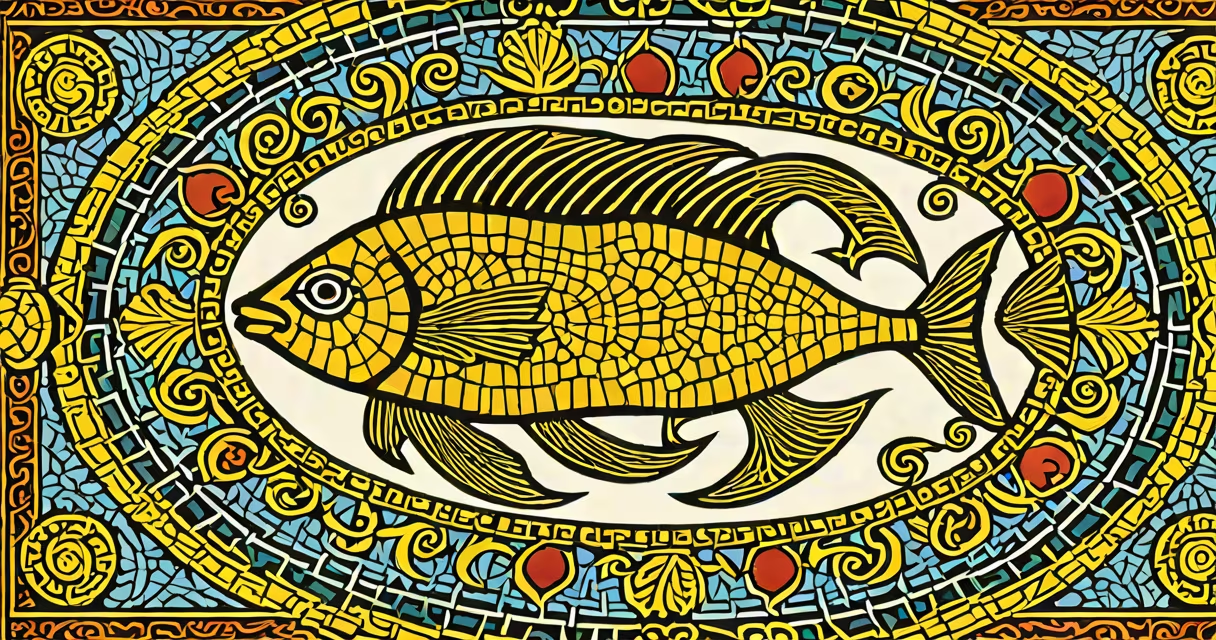
pagan symbols in Christianity refer to pre-Christian religious motifs-such as the sun god, fertility deities, and seasonal cycles-that were adopted or repurposed by early Christian communities to convey spiritual ideas. These elements were integrated into Christian art, liturgy, and symbolism during the Roman Empire's transition to Christianity, often through cultural syncretism.
Early Christians faced a challenge: how to communicate complex theological concepts to people steeped in Greco-Roman and local pagan traditions. Rather than erase those visual languages, church leaders reused familiar imagery. The cross became a symbol of victory, not just death. The fish (ichthys) echoed earlier Mediterranean fertility symbols. Even Christmas, celebrated on December 25, aligns with the Roman festival of Sol Invictus-the Unconquered Sun-celebrated around the winter solstice.
This integration wasn't uniform. Some bishops condemned pagan imagery outright. Others, like Pope Gregory I in the 6th century, encouraged using existing sacred spaces and symbols to ease conversion. His directive to missionaries was clear: "Let the temples of idols be converted into churches." This policy led to the reuse of Roman temples, Celtic standing stones, and Mithraic shrines as Christian sites.
Christianity did not emerge in a cultural vacuum. As it spread across Europe and North Africa, it absorbed regional beliefs. The process was not theft-it was translation. A symbol meant to honor a sky god could now represent Christ's divine nature. A fertility rite celebrating spring rebirth could be reframed as the resurrection of Jesus.
For example, the image of Christ as the Good Shepherd-depicted as a young man carrying a lamb-echoes Greek and Roman depictions of pastoral gods like Hermes or Dionysus. Yet in Christian art, the shepherd becomes a metaphor for Christ guiding souls. The lion, a symbol of strength in Roman culture, was later associated with Saint Mark's Gospel, linking earthly power to divine authority.
Another key example is the use of the circle and the cross. The circle represented eternity in many ancient religions. When placed within a cross, it formed the cruciform symbol seen in early Christian mosaics. This fusion created a new meaning: eternal life through sacrifice. The symbol persisted in church architecture, such as the circular ambulatory in St. Peter's Basilica, which echoes both Roman temple design and Christian notions of eternal return.
The following table outlines major pagan symbols absorbed into Christian tradition, their original meanings, and their Christian reinterpretations.
| Symbol | Original Meaning | Christian Adaptation | Source |
|---|---|---|---|
| Fish (Ichthys) | Water deity, fertility, protection in Greco-Roman cults | Christ's divinity; early Christian identifier (Jesus Christ, Son of God, Savior) | British Museum |
| Sun God (Sol Invictus) | Roman solar deity; associated with renewal and empire | Christ as Light of the World; Christmas date chosen to coincide with winter solstice | JSTOR, "The Date of Christmas" |
| Tree of Life | Celtic and Germanic fertility and cosmic order symbols | Christ as the source of eternal life; linked to the cross and Eden | ScienceDirect, "Sacred Trees in Early Christianity" |
| Lion | Strength, kingship in Egyptian and Persian traditions | Symbol of Saint Mark; Christ as triumphant king | Metropolitan Museum of Art |
These adaptations were not random. They reflected a strategic effort to make Christianity relatable. When a community already revered a sun god, presenting Christ as the true light made theological sense. When people marked the turning of the year with feasts, Christian leaders aligned Easter with Passover and spring equinox rituals.
Many assume that the presence of pagan symbols in Christianity proves the religion is "borrowed" or "syncretic to the core." That's incorrect. Syncretism doesn't imply falsehood-it reflects adaptation. The Catholic Church formally acknowledged this in the 1964 Second Vatican Council document *Gaudium et Spes*, stating that "the Church draws her life from the living God, who speaks through history and culture."
A common misunderstanding is that the use of pagan symbols invalidates Christian doctrine. But theology is not about purity of origin-it's about meaning. The cross, originally a Roman execution device, became a universal sign of redemption. The same applies to the dove, a symbol of peace in Babylonian and Greek myth, now representing the Holy Spirit.
Another misconception is that all holiday customs have pagan roots. While Christmas shares a date with Sol Invictus, the celebration of Christ's birth was established long before the Roman festival was formalized. The choice of December 25 was likely influenced by existing calendars, but the theological focus remained on the Incarnation-not solar worship.
In 2018, while visiting the Basilica of San Vitale in Ravenna, Italy, I stood beneath a mosaic of Christ Pantocrator-Christ as ruler of all. Above his head, rays of light extended outward in a halo. What struck me wasn't the Christ figure, but the background: a golden sunburst patterned with concentric circles and rays.
I recognized the design from Roman imperial art. The sun god Apollo had been depicted this way in earlier mosaics. But here, the same visual language represented Christ as the eternal light. The artist didn't discard the form-he transformed it. The message was clear: Christ is the true source of light, not a mortal deity.
This mosaic exemplifies how early Christian artists didn't reject pagan forms-they recontextualized them. The visual grammar of the Roman world was repurposed to serve a new narrative. The result was not confusion, but clarity for a population familiar with the old images.
Understanding pagan symbols in Christianity helps dispel myths about religious purity. It shows that belief systems evolve through dialogue, not isolation. The Church didn't conquer cultures-it met them halfway.
Modern scholars like Karen Armstrong emphasize that early Christianity's success came from its ability to speak in the language of the people. "The early Church didn't invent new symbols," she writes in *A History of God*, "it transformed existing ones." This process continues today-new generations interpret faith through contemporary lenses, just as Romans once did through their own.