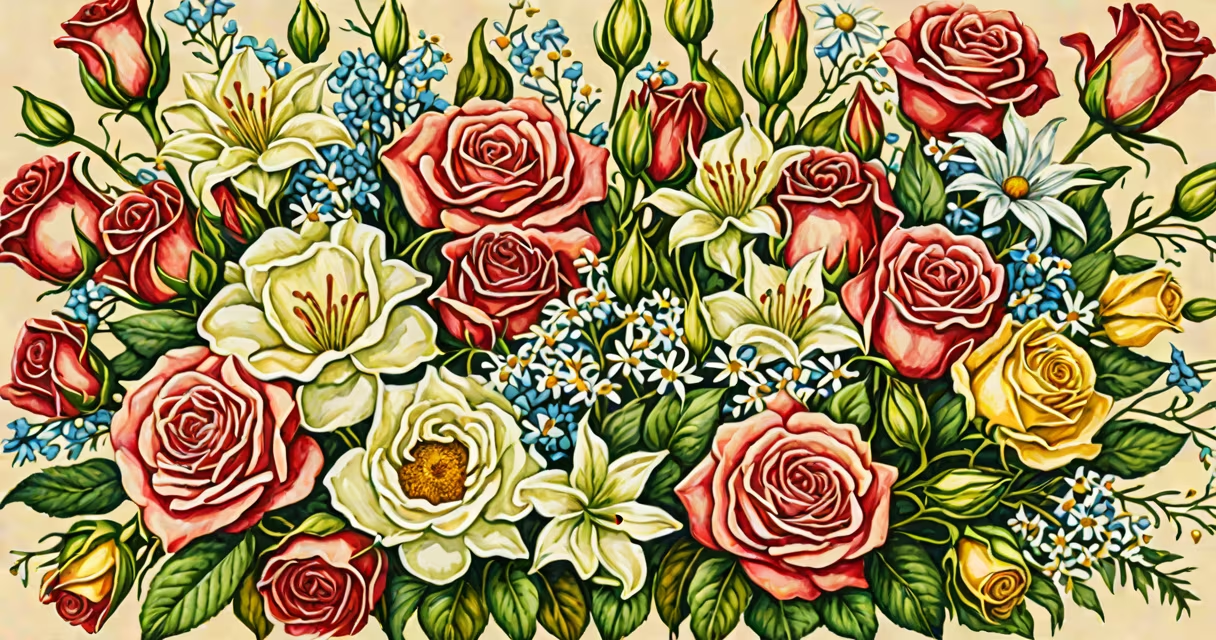
"Nom de fleurs" is a French term meaning "name of flowers," but in practice, it refers to the symbolic language of flowers-where specific blooms carry emotional or cultural meanings. This tradition, rooted in 19th-century Europe, assigns feelings like love, grief, or loyalty to particular species, allowing bouquets to communicate messages without words.
The concept emerged during the Victorian era, when direct expression of emotion was restricted. People used floral arrangements to send coded messages. A red rose meant romantic love; a white lily signified purity and mourning. These associations were formalized in books like *Le Langage des Fleurs* (The Language of Flowers), published in 1818 by Charlotte de la Tour, which cataloged hundreds of flower meanings.
Today, "nom de fleurs" persists in modern floral design, especially in events like weddings, funerals, and anniversaries. Florists use it to guide color and species selection based on intended sentiment. For example, a bouquet for a birthday might include sunflowers (joy) and daffodils (new beginnings), while a sympathy arrangement may feature chrysanthemums (grief) and white carnations (pure love).
Each flower species carries a distinct symbolic weight. These meanings aren't arbitrary-they stem from historical, mythological, and botanical roots. The iris, for instance, derives its name from the Greek word for "rainbow," symbolizing hope and faith. In Christian tradition, it's linked to the Virgin Mary and represents divine communication.
Floral symbolism operates through three layers: species, color, and arrangement. A single red rose speaks of passion. A cluster of pink peonies suggests romance and prosperity. A single white tulip placed at a gravesite denotes remembrance. When combined, these elements create layered messages. A bouquet of yellow daffodils with blue forget-me-nots communicates both new beginnings and enduring memory.
Modern research confirms that people interpret floral messages intuitively. A 2020 study by the University of California, Davis, found that participants correctly identified the emotional intent behind 78% of curated flower arrangements, even when unfamiliar with the specific species involved. This supports the idea that floral symbolism functions as a cross-cultural visual language.
Flowers are grouped by symbolic function. The table below outlines major categories and representative species:
| Category | Flower Examples | Meaning |
|---|---|---|
| Love & Romance | Rose (red), Peony, Cherry Blossom | Passion, devotion, beauty |
| Grief & Mourning | Lily (white), Chrysanthemum (white), Carnation (white) | Purity, sorrow, remembrance |
| Hope & Renewal | Daffodil, Sunflower, Tulip (yellow) | New beginnings, optimism, resilience |
| Friendship & Gratitude | Gerbera Daisy, Lavender, Hydrangea | Joy, appreciation, peace |
These groupings inform seasonal and event-specific designs. For instance, spring bouquets often emphasize daffodils and tulips to reflect renewal. Winter arrangements may use pine sprigs and holly alongside white chrysanthemums to balance festivity with solemnity.
Florists apply "nom de fleurs" not just in aesthetics but in client consultation. When designing a gift for a friend recovering from illness, a florist might choose lavender (calm), snapdragons (gratitude), and baby's breath (innocence) to express care without overt sentimentality.
Many assume that "nom de fleurs" is purely poetic or romantic. In reality, it's a functional system with practical applications. It's not limited to Western traditions-Japanese ikebana, for example, uses similar principles, though with different species and philosophies. The chrysanthemum, sacred in Japan, symbolizes longevity and rejuvenation, not death as it does in much of Europe.
A common error is equating color alone with meaning. While red universally signals love, green doesn't always mean nature-it can indicate envy or jealousy in certain contexts. A green rose, for example, may suggest a desire for reconciliation rather than environmentalism.
Another misunderstanding is that all flowers have standardized meanings. In fact, regional differences exist. In parts of rural France, marigolds are associated with healing and protection, not mourning. The same bloom used in a funeral in Paris might be seen as celebratory in Provence.
Even within the same culture, meanings evolve. The violet, once a symbol of modesty and humility, is now sometimes used ironically in modern art to represent quiet rebellion. This fluidity underscores that "nom de fleurs" is not static-it adapts to social context.
Consider a bride selecting her bouquet for a June wedding in Provence. She wants to convey joy, commitment, and a nod to her heritage. Her florist recommends:
This combination creates a layered message: love (roses), abundance (peonies), cultural continuity (thyme), and eternal bond (forget-me-nots). The bouquet communicates personal and collective values without a single spoken word.
I once designed a bouquet using only native wildflowers from the Scottish Highlands-meadowsweet, foxglove, and heather-for a partner's birthday. The recipient later told me they felt deeply seen. The flowers weren't rare or expensive, but their symbolic weight-resilience, courage, and quiet strength-resonated because they were drawn from a shared field.
"Nom de fleurs" is more than a decorative tradition. It's a living language of emotion encoded in petals and stems. Understanding it allows deeper connection through gifts, rituals, and daily gestures. Whether choosing a birthday bouquet or planning a memorial display, knowing the symbolic weight of each bloom ensures your message lands precisely.