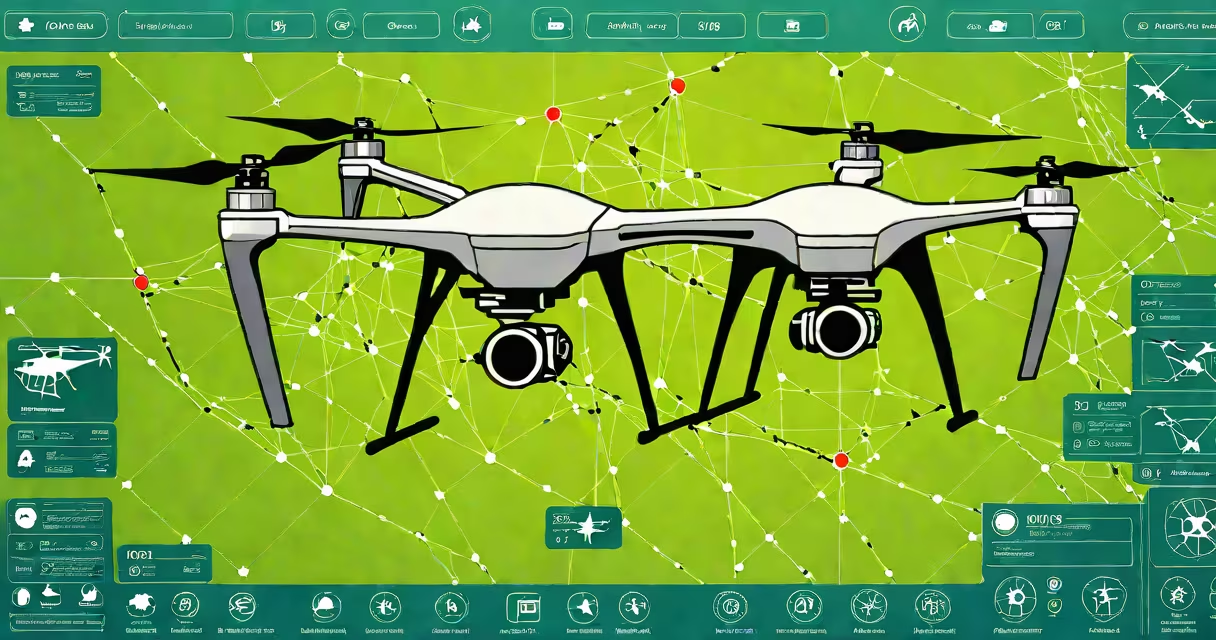
Online drone training is a structured digital curriculum that teaches individuals how to fly unmanned aircraft systems (UAS) legally and safely under Federal Aviation Administration (FAA) regulations, culminating in eligibility to take the FAA Part 107 exam for commercial drone operation.
This training covers airspace rules, weather patterns, emergency procedures, and federal compliance. It includes interactive modules, video demonstrations, and virtual flight simulations. Completion qualifies candidates to apply for the FAA's Remote Pilot Certificate, required for paid drone work in U.S. airspace.
Unlike in-person classes, online drone training allows learners to progress at their own pace using desktop or mobile devices. Courses typically include pre-test quizzes, scenario-based learning, and access to updated FAA guidelines. The format supports both beginners and professionals seeking certification.
Midway through the course, students engage in a flight simulation environment that replicates real-world conditions. These simulations test decision-making under stress-such as sudden wind shifts or GPS signal loss-and track performance metrics like altitude stability and navigation accuracy.
After completing all modules, learners take a proctored practice exam. Scoring above 80% indicates readiness for the official FAA Part 107 test. Many platforms offer retakes and detailed feedback on incorrect answers, helping users identify weak areas before sitting for the actual exam.
Programs differ by depth, focus, and accreditation. The most common categories are foundational, advanced, and specialized tracks.
| Type | Focus | Duration | Accreditation |
|---|---|---|---|
| Basic Certification | FAA Part 107 prep, airspace rules, safety protocols | 15-20 hours | FAA-approved provider |
| Advanced Operations | Photography, thermal imaging, surveying, night flying | 25-35 hours | Industry-specific credentialing |
| Specialized Applications | Environmental monitoring, infrastructure inspection, agriculture | 40+ hours | Vendor or government partnership |
Foundational programs meet minimum FAA requirements. Advanced and specialized tracks build on this base with hands-on project work, such as creating orthomosaic maps from aerial imagery or analyzing crop health using multispectral sensors.
Some providers integrate AI-powered tutoring systems that adapt content based on learner behavior. For example, if a student consistently misidentifies Class G airspace, the system highlights relevant diagrams and offers additional scenarios until mastery is demonstrated.
Commercial operators use online drone training to qualify for jobs in construction site surveys, utility inspections, and real estate photography. Law enforcement agencies deploy trained pilots for search-and-rescue missions and crime scene documentation.
One example is a pipeline company in Texas that adopted online training for its field crews. Before implementation, 60% of new pilots failed their initial FAA exam. After requiring completion of a structured online program, pass rates rose to 94% within six months. The company attributed the improvement to consistent instruction and repeated simulation drills.
Emergency response teams also rely on online training to maintain readiness. During wildfire season in California, volunteer drone units trained remotely to assess fire spread using thermal sensors. Their ability to deploy quickly was tied directly to prior online certification.
A key advantage is scalability. A single course can serve hundreds of users across time zones without scheduling conflicts. This reduces training costs by up to 40% compared to in-person workshops, according to a 2023 study by the National Institute of Standards and Technology (NIST).
Many assume online drone training replaces hands-on flying. That's incorrect. The curriculum teaches theory and regulatory knowledge-but practical flight experience remains separate. Students must still log at least 40 hours of actual flight time under supervision to meet FAA requirements.
There's also confusion about whether online training grants a license. It does not. Passing the course only makes you eligible to sit for the FAA Part 107 written exam. You must then schedule and pass the test at a Pearson VUE testing center to receive certification.
I once observed a group of trainees attempting their first solo flight after finishing an online course. They aced the theoretical exam but struggled with basic maneuvers due to lack of physical coordination. One pilot clipped a tree during descent because they hadn't practiced throttle control under pressure. This reinforced that digital learning complements, but doesn't substitute, real-world experience.
online drone training delivers the foundational knowledge needed to operate drones legally and safely. It is not a standalone solution but a critical step toward FAA certification. When paired with supervised flight practice, it enables individuals and organizations to use drones for professional applications across industries.