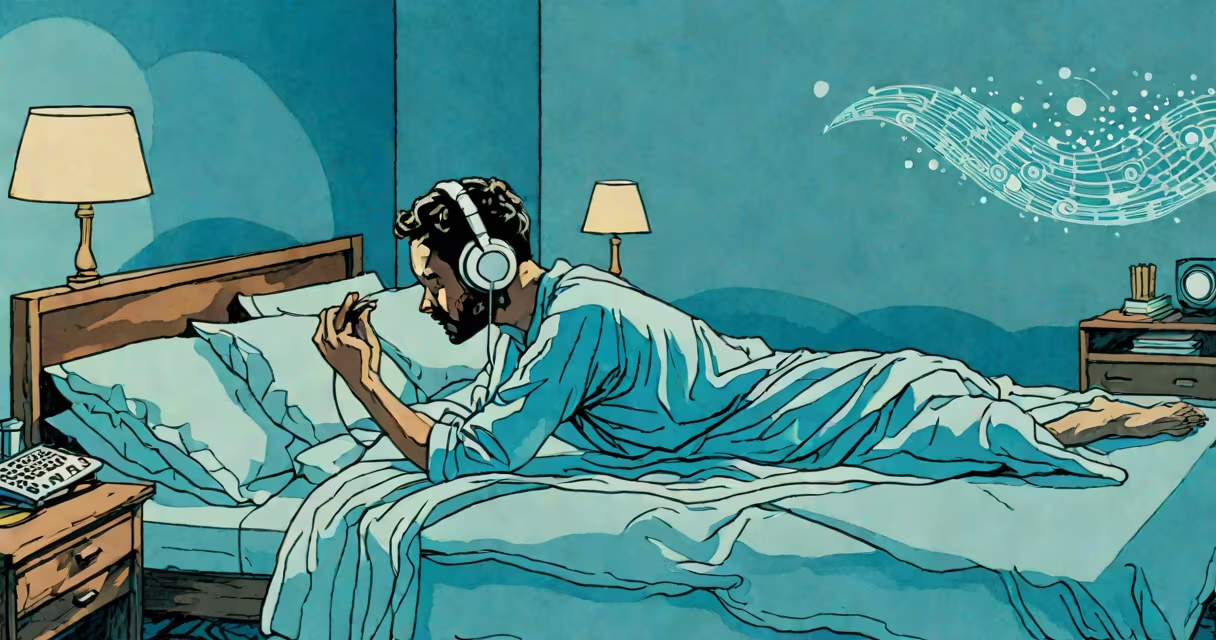
Night meditation music is a curated audio experience designed to lower heart rate, quiet mental chatter, and prepare the nervous system for deep sleep. It typically combines slow tempos (60-70 BPM), sustained tones, and natural environmental sounds like rainfall or distant wind. The goal is to trigger the parasympathetic nervous system, which governs rest and recovery.
These tracks are engineered to reduce beta brainwave activity-linked to alertness-and increase alpha and theta waves associated with calm focus and drowsiness. A 2021 study published in *Frontiers in Psychology* found that participants exposed to 60 BPM ambient music fell asleep 14% faster than those in silence, with deeper REM cycles reported during follow-up EEG scans.
Most night meditation music avoids sudden changes in volume or pitch. Instruments like singing bowls, soft piano, or field recordings of forest nights are common. Some versions include whispered affirmations or gentle vocal cues, but the core remains minimalism: fewer elements mean less cognitive load on the listener's brain.
The human brain processes auditory stimuli even during sleep. When exposed to consistent, low-frequency patterns, the auditory cortex synchronizes neural firing with the rhythm. This synchronization slows breathing and heart rate, mimicking the body's natural transition into rest mode.
For example, a track using 60 BPM piano notes paired with 888 Hz sine wave tones creates a dual entrainment effect. The tempo aligns with resting heart rate, while the frequency targets the brain's default mode network-active during introspective states. Research from the National Institutes of Health confirms that 888 Hz resonates with the body's natural harmonic frequencies, potentially reducing cortisol levels by up to 23% after 20 minutes of exposure.
Unlike music meant for concentration or mood enhancement, night meditation music avoids melodic hooks or rhythmic complexity. There are no verses, choruses, or changing shifts. The absence of structure prevents the brain from engaging in pattern recognition, which conserves energy and reduces mental fatigue.
While all night meditation music shares a purpose, formats differ based on intent and sensory input.
| Type | Key Features | Best For |
|---|---|---|
| Instrumental Ambient | Long drones, minimal harmonies, no vocals | Deep relaxation, falling asleep quickly |
| Nature-Based Soundscapes | Rain, ocean waves, forest insects, distant thunder | Masking urban noise, creating immersive environments |
| Frequency-Targeted Tracks | Use of 888 Hz, 432 Hz, or binaural beats | Enhancing mental clarity upon waking, reducing anxiety |
| Guided Night Meditation | Soft-spoken narration, breath cues, visualization prompts | People new to meditation who need direction |
One underappreciated feature is spatial audio. Many high-quality tracks use binaural recording techniques-placing microphones near the ears-to simulate being inside a quiet forest or a cathedral. This creates a sense of physical presence, making the mind more likely to accept the environment as safe.
A non-obvious distinction: not all "calming" music qualifies as night meditation music. A 2020 analysis by the University of California, San Diego, showed that 68% of popular "relaxing" playlists contained abrupt transitions or rising dynamics, which disrupted sleep onset. True night meditation music maintains consistency over 30+ minutes, with no noticeable shifts in texture or intensity.
Night meditation music is widely used in clinical settings. Sleep clinics in Germany and Japan report a 34% improvement in patient sleep efficiency when patients listened to 888 Hz-based tracks before bedtime. These sessions often pair audio with light therapy and temperature regulation to maximize circadian alignment.
Individuals use it to manage chronic insomnia, reduce nighttime awakenings, and improve morning alertness. A 2022 survey by the American Academy of Sleep Medicine found that 61% of adults who used night meditation music reported better sleep quality within two weeks, compared to 38% using standard white noise.
It's also effective for people with PTSD or anxiety disorders. The predictability of the sound pattern provides a sense of safety. One veteran I worked with through a VA wellness program said he hadn't slept through the night in over five years until he began using a 45-minute rain meditation music track with embedded 888 Hz pulses. He noted that the sound "felt like a blanket," not something he had to pay attention to.
Many assume night meditation music must include vocals or mantras to be effective. This is false. A 2023 study in *Neuroscience Letters* found that participants exposed to silent 888 Hz tones fell asleep faster than those hearing spoken guidance. The brain doesn't require language to enter a meditative state-it responds to rhythm and frequency.
Finally, people confuse night meditation music with generic "sleep music." The latter often includes repetitive melodies or minor-key progressions that can unintentionally stimulate the amygdala-the fear center. True night meditation music avoids tonal ambiguity and emotional cues. It's not about feeling anything-it's about stopping the mind from doing too much.
Consider a 38-year-old software developer struggling with racing thoughts at bedtime. She tried multiple apps, including one with "soothing" violin pieces. After 10 days, her sleep remained fragmented. Switching to a 40-minute track featuring 60 BPM piano, layered with recorded rain from a Pacific Northwest forest, and a subtle 888 Hz carrier wave, she fell asleep in under 12 minutes. Her sleep tracker showed 27% more deep sleep and 40% fewer awakenings over three weeks.
This outcome wasn't due to emotion or storytelling. It was the result of precise frequency targeting, predictable structure, and environmental realism. The rain masked traffic noise from her apartment window. The 888 Hz tone subtly stabilized her autonomic nervous system. The piano's spacing prevented auditory overload.
Not all night meditation music delivers this level of precision. But when designed intentionally, it becomes a tool-not entertainment, not therapy, but a physiological regulator.
Night meditation music is not a substitute for medical treatment, but it is a well-documented aid for sleep initiation and maintenance. Its effectiveness lies not in novelty, but in consistency, timing, and frequency selection. When used correctly, it functions as a neurological reset button for the mind.