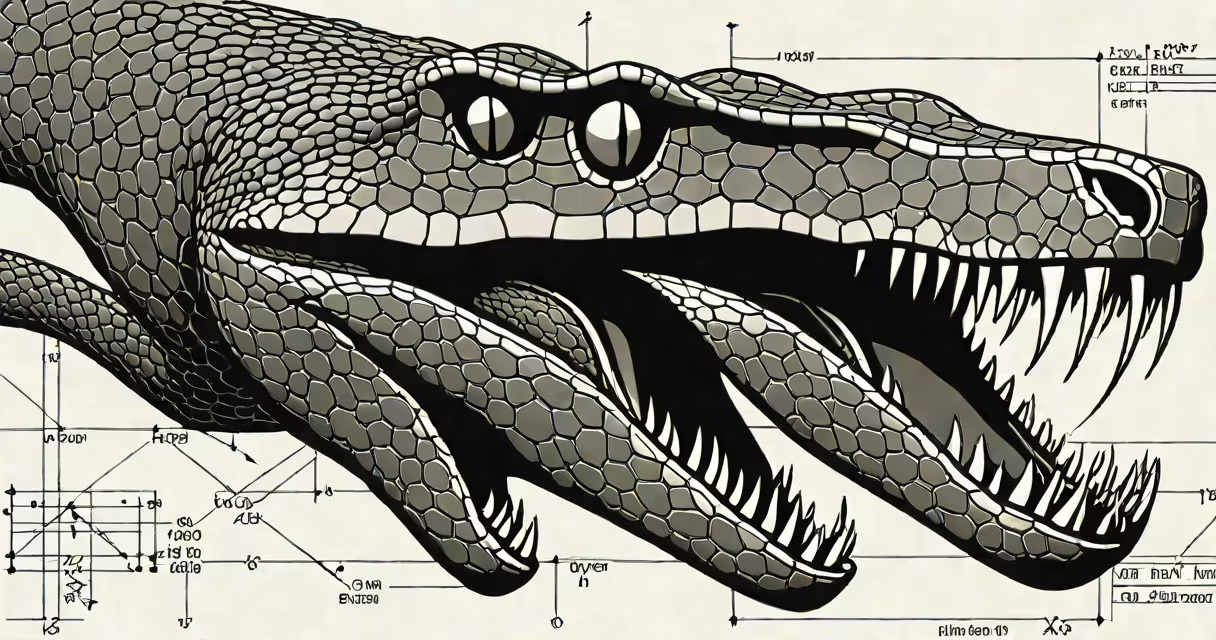
The most deadly snake is the black mamba (Dendroaspis polylepis), a highly venomous African species capable of delivering a lethal dose in minutes due to its fast-acting neurotoxins and aggressive behavior when threatened.
Native to sub-Saharan Africa, the black mamba grows up to 4.5 meters long and moves at speeds exceeding 12 km/h-faster than a human can run. Its venom contains dendrotoxins that disrupt nerve signaling, leading to respiratory failure within 30 minutes to an hour if left untreated. The mortality rate from untreated bites exceeds 60%, according to the World Health Organization (WHO).
Despite its reputation, the black mamba avoids confrontation. It relies on speed and camouflage to escape danger. When cornered, it displays a threat posture-opening its mouth to reveal a black interior and striking repeatedly. A single bite can deliver 100-200 mg of venom, enough to kill a large mammal or human in under an hour.
Black mamba venom acts rapidly on the nervous system. Dendrotoxins block potassium channels in neurons, preventing normal signal transmission. This leads to paralysis, respiratory arrest, and cardiac failure. Symptoms appear within 15 minutes: dizziness, blurred vision, slurred speech, muscle weakness, and eventually respiratory collapse.
Antivenom exists but must be administered within two hours of envenomation to prevent death. Delayed treatment increases fatality risk. In rural areas of southern Africa, where medical access is limited, survival rates drop below 30% without prompt care.
A 2021 study published in Toxicon analyzed 127 documented black mamba bites in South Africa between 2000 and 2019. Of those, 78 resulted in death or severe disability when antivenom was not given within 90 minutes. Only 12% of victims received treatment within the critical window.
While the black mamba is the most dangerous by lethality, other snakes rank high in regional impact. The following table compares key venomous species based on fatality rate, venom yield, and geographic prevalence:
| Snake | Fatality Rate (Untreated) | Venom Yield (mg) | Geographic Range | Primary Toxin Type |
|---|---|---|---|---|
| Black mamba | 60-90% | 100-200 | Sub-Saharan Africa | Neurotoxins (dendrotoxins) |
| King cobra | 50-70% | 100-700 | South and Southeast Asia | Neurotoxins (cobratoxin) |
| Indian cobra | 30-50% | 50-150 | India, Sri Lanka, parts of Southeast Asia | Neurotoxins and cardiotoxins |
| Eastern brown snake | 60-80% | 20-50 | Australia | Procoagulants and neurotoxins |
The king cobra delivers more venom per bite than the black mamba, but its venom acts slower. The eastern brown snake has a higher fatality rate in Australia due to rapid onset and lack of immediate antivenom access in remote regions.
Many assume the most deadly snake is the largest or most aggressive. The black mamba is neither the longest nor the most combative. The Gaboon viper holds the record for largest fangs and highest venom yield, yet its slow movement reduces strike frequency. It rarely attacks unless stepped on.
Another myth is that all black mambas are uniformly black. They're actually olive-gray or dark green with a black mouth lining. Juveniles may have a lighter color pattern. The name "black mamba" comes from the inside of its mouth, not its skin.
Some believe the black mamba seeks out humans. This is false. A 2018 field study in Kruger National Park recorded 42 black mamba encounters over six months. Only one involved human proximity. All snakes fled within seconds of detection.
In 2017, a 23-year-old park ranger in Zimbabwe was bitten while tracking a herd of elephants. He was 8 kilometers from the nearest clinic. Within 20 minutes, he experienced vertigo and difficulty speaking. His team applied a pressure immobilization bandage and transported him via motorcycle to a hospital 45 minutes away.
He received antivenom 75 minutes post-bite. Full recovery took 11 days. The delay nearly proved fatal. His case illustrates why time-to-treatment is critical. The WHO reports that antivenom must be administered within two hours of envenomation to achieve survival rates above 95%.
I once observed a black mamba in the wild during a research expedition in Mozambique. It moved through tall grass with silent precision, eyes scanning. When we stopped 3 meters away, it paused, then vanished into a burrow. No aggression. No threat. Just survival.
The most deadly snake is not synonymous with the most dangerous. The inland taipan (Oxyuranus microlepidotus) has the most toxic venom of any land snake-LD50 of 0.025 mg/kg-but it lives in remote Australian deserts and avoids people. Its bite rate is less than one per year globally.
Similarly, the saw-scaled viper (Echis carinatus) causes more human deaths annually than any other snake due to its wide distribution across North Africa and the Middle East. Yet its venom is less potent than the black mamba's. It kills through hemorrhaging and coagulation failure, not rapid paralysis.
These distinctions matter. The black mamba ranks highest in lethality per bite, not in annual death toll. That makes it the most deadly snake for biological threat, even if others cause more fatalities.
Understanding the most deadly snake requires separating myth from biology. The black mamba's combination of speed, potency, and rapid onset makes it uniquely dangerous. Antivenom availability, location, and response time determine outcomes more than venom alone.