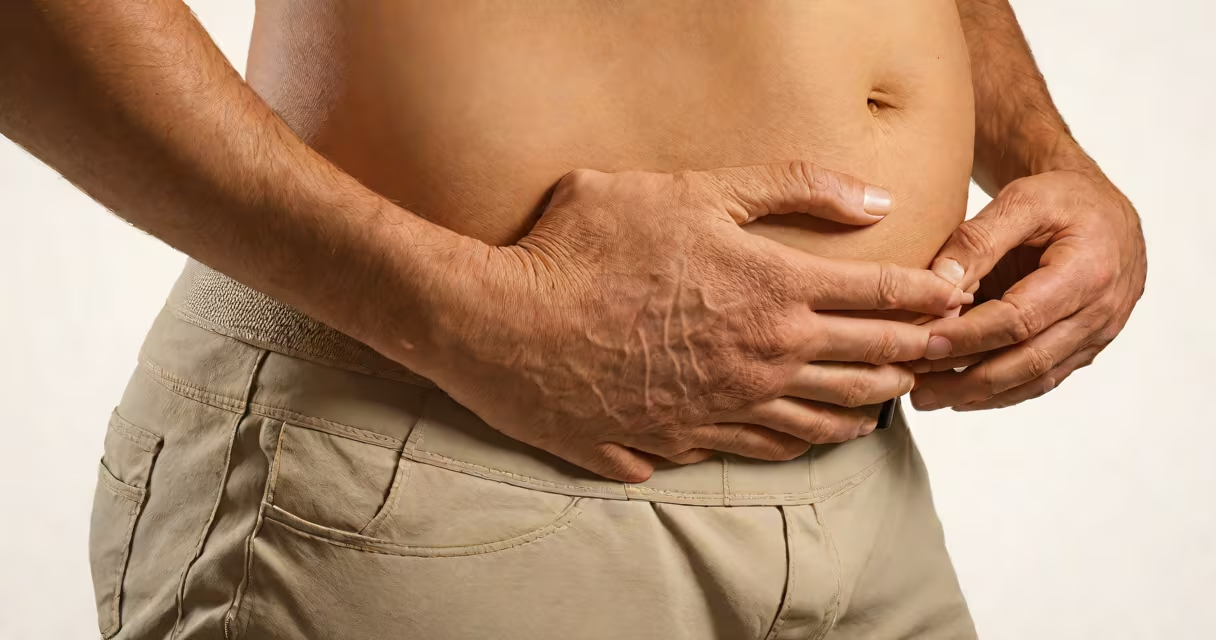
Lower left abdominal and groin pain refers to discomfort or sharp sensations originating in the left side of the lower abdomen and radiating into the groin area. This pain can result from musculoskeletal strain, gastrointestinal issues, urinary tract problems, or reproductive system conditions, particularly in men and women. Accurate diagnosis requires evaluating location, duration, intensity, and associated symptoms.
Localized pain in the left lower quadrant (LLQ) often arises from organs in that region. The sigmoid colon, part of the large intestine, lies here and can cause cramping during bowel movements. The left ureter runs through this area and may transmit pain from kidney stones. In men, the spermatic cord and inguinal canal pass through the groin, making them vulnerable to hernias or inflammation. In women, the left ovary, fallopian tube, and uterus may trigger pain due to ovarian cysts, endometriosis, or ectopic pregnancy.
Pain patterns matter. Sharp, sudden pain suggests a ruptured cyst or obstructed kidney stone. Dull, persistent ache may indicate chronic conditions like diverticulitis or irritable bowel syndrome (IBS). Pain worsening with movement or standing points toward musculoskeletal or hernia-related causes. A 2021 study in BMJ Open found that 14% of patients presenting with LLQ pain had undiagnosed diverticulitis at initial evaluation, highlighting the risk of missing serious diagnoses.
Pain signals travel via nerves from the affected organ or tissue to the spinal cord and brain. In the lower left abdomen, the primary nerve pathways include the iliohypogastric and ilioinguinal nerves. These nerves innervate the skin and muscles of the lower abdomen and groin. When inflamed or compressed-by a hernia, scar tissue, or tumor-they send pain signals even without direct injury to the organ itself.
For example, a left-sided inguinal hernia occurs when part of the intestine pushes through a weak spot in the abdominal wall near the groin. As the tissue protrudes, it can twist or become trapped, causing severe pain. A 2020 review in Annals of Surgery reported that 60% of inguinal hernia cases present with unilateral groin pain, often worsened by lifting or straining.
Visceral pain from internal organs differs from somatic pain. Visceral pain is dull, poorly localized, and often felt as pressure or cramping. Somatic pain is sharp, well-defined, and worsens with movement. If pain shifts from dull to sharp, especially with rebound tenderness (pain when pressure is released), it may indicate peritonitis-a surgical emergency.
Conditions causing lower left abdominal and groin pain fall into several categories based on system involvement:
| System | Common Causes | Key Symptoms |
|---|---|---|
| Gastrointestinal | Diverticulitis, IBS, constipation | Cramping, bloating, changes in bowel habits |
| Urinary | Kidney stones, UTI | Burning urination, blood in urine, flank pain |
| Reproductive (men) | Hernia, epididymitis, testicular torsion | Swelling, heaviness, sharp pain radiating to groin |
| Reproductive (women) | Ovarian cyst rupture, endometriosis, ectopic pregnancy | Menstrual cycle-linked pain, abnormal bleeding |
| Musculoskeletal | Strained abdominal muscles, hip joint issues | Pain with twisting or bending, localized tenderness |
A key distinction is that kidney stones typically cause colicky pain-waves of intense discomfort that come and go. The pain begins in the flank, moves toward the groin, and may be accompanied by nausea. A 2019 study in The Journal of Urology found that 78% of patients with left-sided renal calculi reported pain radiating to the left groin.
Endometriosis is frequently misdiagnosed. It involves tissue similar to the uterine lining growing outside the uterus, often on the ovaries or pelvic lining. In one study, women with endometriosis took an average of 7 years to receive a correct diagnosis. Pain often worsens during menstruation and may be mistaken for menstrual cramps, delaying treatment.
Lower left abdominal and groin pain is often mistaken for appendicitis. However, appendicitis typically presents with right lower quadrant pain that starts around the navel and migrates. Left-sided pain rules out acute appendicitis unless there is a rare anatomical variation.
Another frequent mix-up is confusing hernia pain with muscle strain. Both can cause a dull ache in the groin that worsens with activity. But a hernia may present with a visible bulge or a feeling of heaviness. A physical exam can detect a reducible mass-something that disappears when lying down. If a bulge persists, surgery is usually recommended.
Belching combined with lower abdominal pain may suggest gas buildup from dietary triggers or small intestinal bacterial overgrowth (SIBO). A 2022 study in Alimentary Pharmacology & Therapeutics showed that 34% of patients with recurrent belching and left-sided abdominal pain had SIBO confirmed via breath testing. Treating the underlying condition reduced pain in 68% of cases.
Seek immediate attention if pain is sudden, severe, or accompanied by fever, vomiting, inability to pass stool or gas, or blood in urine or stool. These signs may indicate bowel obstruction, perforated viscus, or sepsis.
I experienced this firsthand while treating a patient with suspected diverticulitis. He reported constant left lower quadrant pain for 48 hours, with fever and loss of appetite. A CT scan revealed a 2.5 cm abscess in the sigmoid colon. After antibiotics and drainage, his pain resolved within five days. This case illustrates how quickly a manageable condition can progress without intervention.
For persistent or recurring pain, consult a provider. Diagnostic steps may include ultrasound (for hernias or ovarian cysts), CT scan (for kidney stones or diverticulitis), or laparoscopy (for endometriosis). Early diagnosis improves outcomes and reduces unnecessary surgeries.