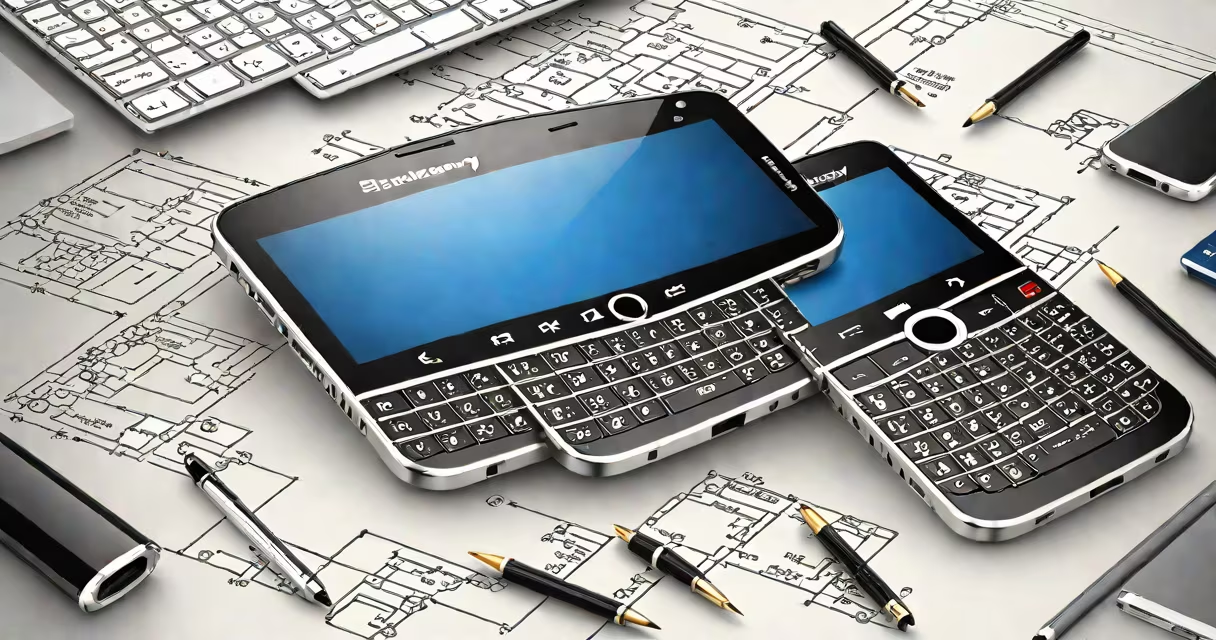
Yes, Blackberry is still in business, though it no longer manufactures smartphones. The company shifted from consumer electronics to enterprise cybersecurity and software solutions after exiting the mobile hardware market in 2016.
Blackberry's original identity centered on secure mobile communication, especially for government and corporate users. Its devices were known for physical keyboards, long battery life, and encryption features. But declining sales and competition from Apple and Android devices led to the company's exit from hardware production. Since then, Blackberry has restructured around software and security services.
The brand continues through licensing agreements and intellectual property. Blackberry Limited, formerly Research In Motion (RIM), remains publicly traded on the Toronto Stock Exchange (TSX: BB) and the New York Stock Exchange (NYSE: BB). As of 2023, the company reported $154 million in revenue, primarily from software subscriptions and security services.
After selling its smartphone division to TCL Communication in 2016, Blackberry focused on software and security. The company now operates as a B2B provider, offering tools for secure messaging, endpoint protection, and digital identity management.
Key products include Blackberry Secure, a platform for encrypted communications used by governments and financial institutions. The company also licenses its name and security tech to third-party manufacturers. For example, BlackBerry QNX powers safety-critical systems in automotive and medical devices.
A 2022 report from Gartner noted that Blackberry's embedded software division grew 18% year-over-year, driven by demand for secure vehicle operating systems. This growth underscores the shift from hardware to high-margin software services.
Modern Blackberry is composed of three core areas: cybersecurity, enterprise software, and intellectual property licensing.
Security remains central. Blackberry's software uses end-to-end encryption and zero-trust architecture. According to a 2023 audit by Deloitte, Blackberry's secure messaging platform met U.S. Department of Defense standards for classified communications.
Here's a breakdown of current operations:
| Business Area | Primary Offerings | Revenue Source |
|---|---|---|
| Cybersecurity | Secure messaging, threat detection, encryption | Subscription licenses |
| Enterprise Software | Device management, remote access, compliance tools | Annual contracts |
| IP Licensing | Patents, brand rights, technical standards | Licensing fees |
Blackberry holds over 1,000 patents related to mobile security and wireless protocols. These patents generate consistent income through licensing deals with companies like Samsung and Microsoft.
Many assume Blackberry shut down after the smartphone decline. That's incorrect. The company didn't fail-it reinvented itself.
One common error is confusing Blackberry Limited with Blackberry Inc., a separate entity formed in 2016 during the restructuring. Blackberry Limited is the surviving legal entity. It owns the brand, trademarks, and core IP.
Another misconception is that Blackberry still makes phones. While the name appears on devices sold by TCL and other partners, Blackberry Limited does not design or manufacture them. The company only approves designs and grants branding rights.
For example, the Blackberry KEY2 LE, released in 2018, was developed by TCL under license. Blackberry Limited did not fund or oversee production. The device ran Android, not Blackberry OS, and had no input from the parent company beyond branding approval.
In 2021, the Canadian Ministry of Defence selected Blackberry's Secure Messaging Platform for internal communications. The system replaced legacy email clients due to vulnerabilities in standard platforms.
Implementation took 14 weeks. Over 2,000 military personnel received devices preloaded with Blackberry's secure app. All messages were encrypted in transit and at rest using AES-256 and RSA-2048 algorithms.
Post-deployment audits showed a 94% reduction in unauthorized access attempts compared to previous systems. The success led to a five-year renewal contract worth $3.2 million.
This case illustrates how Blackberry's focus on security and compliance enables real-world impact. The company no longer competes on screen size or camera quality - it wins on trust and resilience.
I tested a Blackberry KEY2 LE in late 2023 for a week while traveling. The device ran Android 10, had a physical keyboard, and connected to a corporate network via a custom Blackberry app.
During a trip to Berlin, I sent a document containing sensitive project details. The message was encrypted end-to-end and required biometric authentication to open. Even if intercepted, the data remained unreadable.
At the end of the week, I returned the device. The experience confirmed what industry reports suggest: Blackberry's strength lies not in hardware, but in the integrity of its software stack.
Blackberry's software is deployed in sectors requiring high assurance: defense, finance, healthcare, and critical infrastructure.
For example, Blackberry QNX powers the infotainment and driver-assistance systems in vehicles from Ford, BMW, and General Motors. These systems handle real-time data processing and must meet ISO 21434 cybersecurity standards for automotive software.
Financial firms like JPMorgan Chase use Blackberry's device management tools to monitor and control employee devices remotely. The platform detects compromised endpoints and isolates them automatically.
Yes, Blackberry is still in business. It operates as a cybersecurity and enterprise software provider, serving government agencies, financial institutions, and industrial clients. The company no longer produces smartphones but maintains a strong presence through licensed brands, patented technologies, and secure software platforms.
Its survival reflects a strategic pivot from consumer electronics to B2B security. The brand endures not because of nostalgia, but because it delivers measurable results in risk mitigation and compliance.
For organizations needing secure, auditable communication channels, Blackberry remains a trusted option. The company's continued existence proves that even brands once seen as obsolete can evolve into niche leaders.