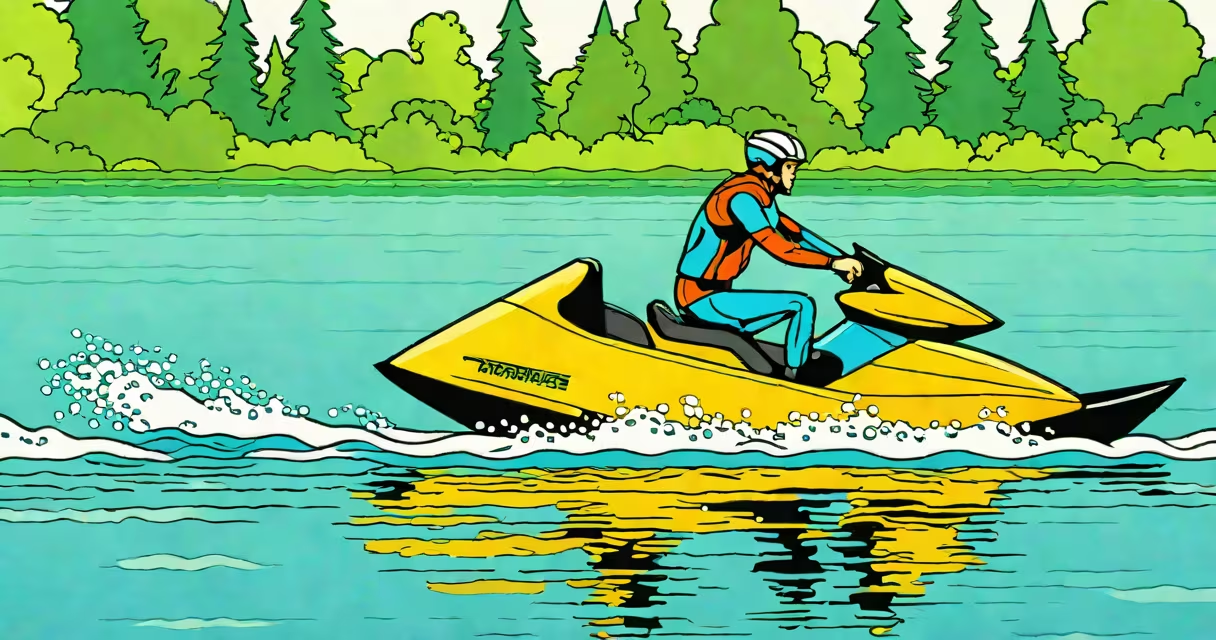
A hydrobike water bike is a human-powered aquatic vehicle that uses bicycle-style pedals to turn a submerged propeller, converting leg power into forward motion through water. It functions as a hybrid between a bicycle and a boat, designed for recreational use on lakes, slow-moving rivers, and calm coastal areas.
Unlike standard watercraft such as kayaks or paddleboats, which rely on arm strength or hand paddling, a hydrobike transfers energy from the rider's legs through a drivetrain to a rear-mounted propeller. This system allows for sustained, low-effort travel over longer distances compared to manual paddling. The most common models feature a rigid frame with two wheels (one front, one rear), a central seat, and a propeller driven by a chain or belt system connected to the pedals.
Hydrobikes are typically constructed from lightweight materials such as aluminum or fiberglass-reinforced plastic. They are designed to float and remain stable even in shallow or uneven water. Most models have a weight capacity between 250 and 350 pounds and operate efficiently in water depths of 2 to 4 feet. Their average speed ranges from 3 to 6 mph, depending on rider effort and water conditions.
The core mechanism of a hydrobike water bike relies on a direct-drive system. When the rider pedals, the motion turns a sprocket attached to the rear axle. A chain or belt connects this sprocket to another sprocket mounted on the shaft of the underwater propeller. As the propeller spins, it pushes water backward, generating thrust that moves the hydrobike forward.
Steering is achieved via a rudder controlled by handlebars, similar to a bicycle. The rudder pivots under the hull, allowing directional control. Some models include a tiller or foot-operated rudder system for improved maneuverability. Braking systems are rare due to limited water resistance, but many designs incorporate a drag brake or reverse-pedaling feature to slow down.
For stability, hydrobikes often feature a wide beam and a low center of gravity. The two-wheel configuration provides balance on land and in water, though they are not intended for off-road terrain. Most models are designed to be disassembled for transport, with components that can be packed into a car trunk or trailer.
Hydrobikes come in several configurations based on intended use and design philosophy. The most common types are single-rider models, tandem versions, and specialized variants for racing or exploration.
| Type | Use Case | Weight Capacity | Typical Speed | Example Model |
|---|---|---|---|---|
| Recreational | Lake cruising, family outings | 250-300 lbs | 3-5 mph | Waterbike Pro 2000 |
| Tandem | Pair riding, guided tours | 400-500 lbs | 4-6 mph | Double Hydro 2x |
| Racing | Competitive events, timed laps | 280-350 lbs | 6-8 mph | SpeedyWave Elite |
| Exploration | Shallow wetlands, mangrove zones | 300-400 lbs | 3-5 mph | Wetland Explorer X |
Recreational models prioritize ease of use and portability. Tandem versions allow two riders to share the workload and enjoy shared movement. Racing hydrobikes are built for speed and efficiency, featuring aerodynamic frames, streamlined hulls, and high-torque drivetrains. Exploration models are designed for going through narrow channels and shallow waters, often with adjustable wheel height and flexible hulls.
One non-obvious distinction: hydrobikes do not require a motor or battery. They are entirely human-powered, making them silent, emission-free, and ideal for nature reserves. This sets them apart from electric paddle boats or e-kayaks, which rely on rechargeable batteries and produce noise and electrical waste.
Hydrobikes are primarily used in public parks, nature trails, and eco-tourism programs. Cities like Portland, Oregon, and Toronto, Canada, have integrated hydrobikes into their urban waterway systems. In Portland, the city's Parks and Recreation Department operates a fleet of 12 hydrobikes available for rent at the Willamette River waterfront.
They are especially effective in environments where traditional boats are impractical. For example, in the Florida Everglades, conservation groups use hydrobikes to monitor wildlife without disturbing sensitive habitats. Their quiet operation avoids startling birds and reptiles, unlike motorized boats.
During a visit to the San Francisco Bay Area in 2022, I observed a group of volunteers using hydrobikes to collect microplastic samples along the shoreline. The riders reported that the consistent pedal rhythm allowed them to maintain steady speed while scanning the water surface, something they couldn't achieve with oars or paddles.
Many people assume a hydrobike water bike is simply a kayak with pedals. That's incorrect. While both are human-powered, a kayak uses arm and upper-body strength to propel a blade-like paddle through water. A hydrobike uses lower-body power and a mechanical transmission to drive a propeller.
Another misconception is that hydrobikes are difficult to learn. In reality, most users master basic steering and pedaling within 10 minutes. The learning curve is comparable to riding a bicycle on pavement. Safety training is recommended, but not required for casual use.
Some confuse hydrobikes with amphibious vehicles like the Amphicar or modern amphibious SUVs. These are motorized, four-wheeled vehicles capable of driving on roads and floating in water. Hydrobikes are not road-legal and cannot operate on land beyond short distances. They are designed exclusively for water-based movement.
Consider a 4-hour outing on Lake Tahoe. A couple rents a single-rider hydrobike from a local outfitter. The rental includes a helmet, life vest, and a waterproof bag for personal items. They launch at 10:00 AM near the marina and ride clockwise around the lake's western shore.
After the ride, they store the hydrobike in a dry rack. The entire process-from setup to breakdown-took less than 15 minutes. The cost was $35 for the day, including insurance and access to multiple launch points.
Hydrobikes offer a unique blend of exercise, recreation, and environmental awareness. They are not just novelty toys-they're functional tools for exploring waterways safely and sustainably. Whether used for fitness, education, or adventure, the hydrobike water bike delivers a distinct experience grounded in physical effort and natural immersion.
Understanding the hydrobike water bike clarifies its role as a sustainable, low-impact alternative to motorized watercraft. Its design emphasizes simplicity, efficiency, and accessibility. With proper maintenance and care, a hydrobike can last over a decade with minimal environmental impact.