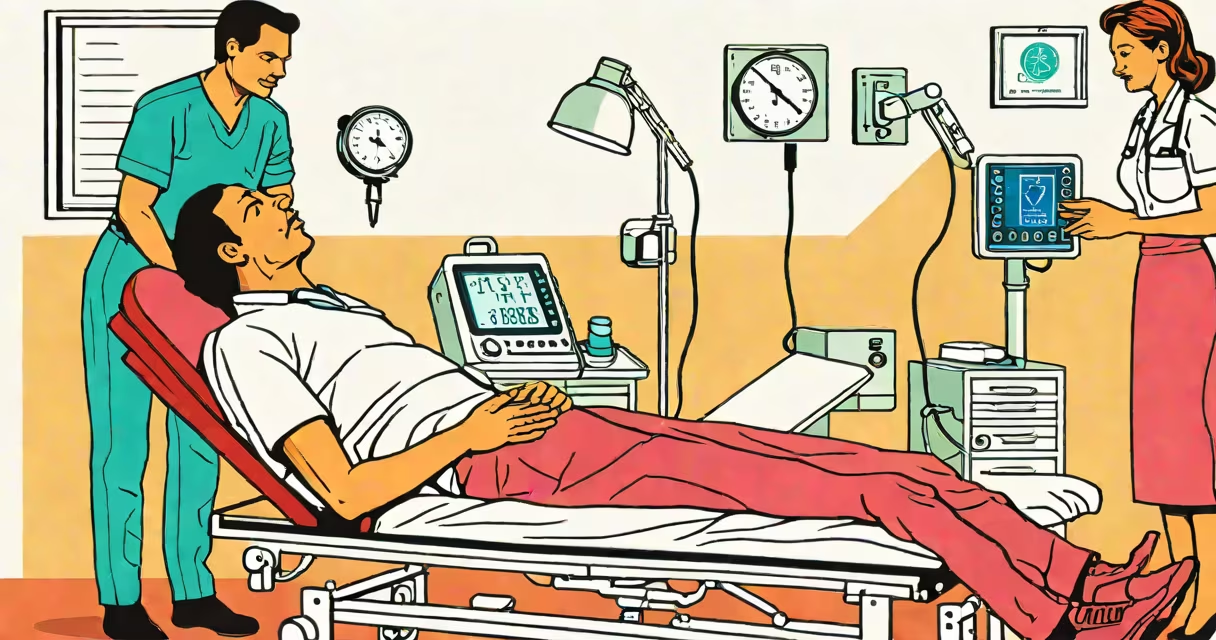
Orthostatic blood pressure (BP) is measured by recording systolic and diastolic pressure while lying down, then again after standing for 1 to 3 minutes. A drop of 20 mm Hg or more in systolic pressure or 10 mm Hg in diastolic pressure indicates orthostatic hypotension.
This test identifies a common cause of dizziness and falls in older adults and people with autonomic disorders. It's performed in clinical settings and sometimes at home using validated devices. The procedure takes less than five minutes and requires no special preparation.
The American Heart Association notes that orthostatic hypotension affects 10-20% of adults over 65 and increases fall risk by 50%. It often goes undiagnosed because symptoms are subtle or attributed to aging.
When a person stands, gravity pulls blood toward the legs. Healthy circulation compensates by increasing heart rate and constricting blood vessels. If this response fails, blood pressure drops, causing lightheadedness or fainting.
During the test, the patient lies flat for at least 5 minutes. Blood pressure is recorded, then the patient rises slowly to a standing position. A second reading occurs after 1 to 3 minutes of standing. The difference between lying and standing values determines the result.
For accuracy, the patient must remain still during both readings. Movement or talking can distort results. The test is repeated if initial standing pressure shows a significant drop.
Use a properly sized blood pressure cuff and a validated digital or manual sphygmomanometer. Cuffs should fit the upper arm circumference within 2 cm. Using a too-small cuff inflates pressure artificially high.
Standard steps:
A 2022 study in JAMA Internal Medicine found that 3-minute standing intervals detected 94% of cases missed at 1 minute. Clinicians should wait at least 3 minutes for reliable results.
Orthostatic hypotension is classified as primary (due to neurological conditions like Parkinson's or pure autonomic failure) or secondary (caused by medications, dehydration, or diabetes).
Common errors include:
Some patients report "dizziness" but have normal orthostatic responses. Others show a drop without symptoms. The absence of symptoms does not rule out the condition.
One non-obvious fact: orthostatic BP changes can occur even in young, healthy individuals after prolonged bed rest or during acute illness. A 2021 study in Clinical Autonomics Research found 15% of hospitalized patients under 50 had abnormal responses due to infection-induced inflammation.
Healthcare providers use orthostatic BP testing to evaluate dizziness, syncope, fatigue, and unexplained falls. It's part of the assessment for patients on antihypertensives, antidepressants, or antipsychotics-drugs known to affect blood pressure regulation.
Primary care clinics, geriatric centers, and emergency departments perform the test routinely. In research, it's used to assess autonomic function in neurology and cardiology trials.
For example, a 72-year-old man presented with recurrent falls. His lying BP was 130/80 mm Hg. After standing for 3 minutes, his BP dropped to 105/70 mm Hg-a 25 mm Hg systolic drop. He was diagnosed with orthostatic hypotension. Adjusting his medication and adding compression stockings reduced fall episodes by 70% over six months.
| Measurement Condition | Systolic Pressure Drop | Diastolic Pressure Drop | Interpretation |
|---|---|---|---|
| Lying down | 130 mm Hg | 80 mm Hg | Baseline |
| Standing (3 min) | 105 mm Hg | 70 mm Hg | Confirmed orthostatic hypotension |
Home monitoring devices are available but require validation. The American Society of Hypertension recommends only FDA-cleared devices for home use. Over-the-counter cuffs may misread by 10-15 mm Hg due to poor calibration.
Orthostatic BP is not the same as routine blood pressure checks. Routine measurements are taken while seated, not lying or standing. They don't detect posture-related changes.
It's also not a substitute for tilt-table testing, which measures longer-term hemodynamic responses under controlled conditions. Orthostatic BP is a screening tool, not a diagnostic gold standard.
I once observed a patient who reported dizziness after standing. Initial clinic reading showed 120/80 mm Hg while sitting. After lying down for 5 minutes, the reading was 118/78 mm Hg. Upon standing, it dropped to 98/70 mm Hg. The 20 mm Hg systolic drop confirmed orthostatic hypotension. The patient had been on a beta-blocker for hypertension. Dose reduction resolved symptoms.
Understanding how to take orthostatic BP correctly ensures accurate detection of a treatable condition. Early diagnosis prevents falls, improves mobility, and reduces hospitalization risk.