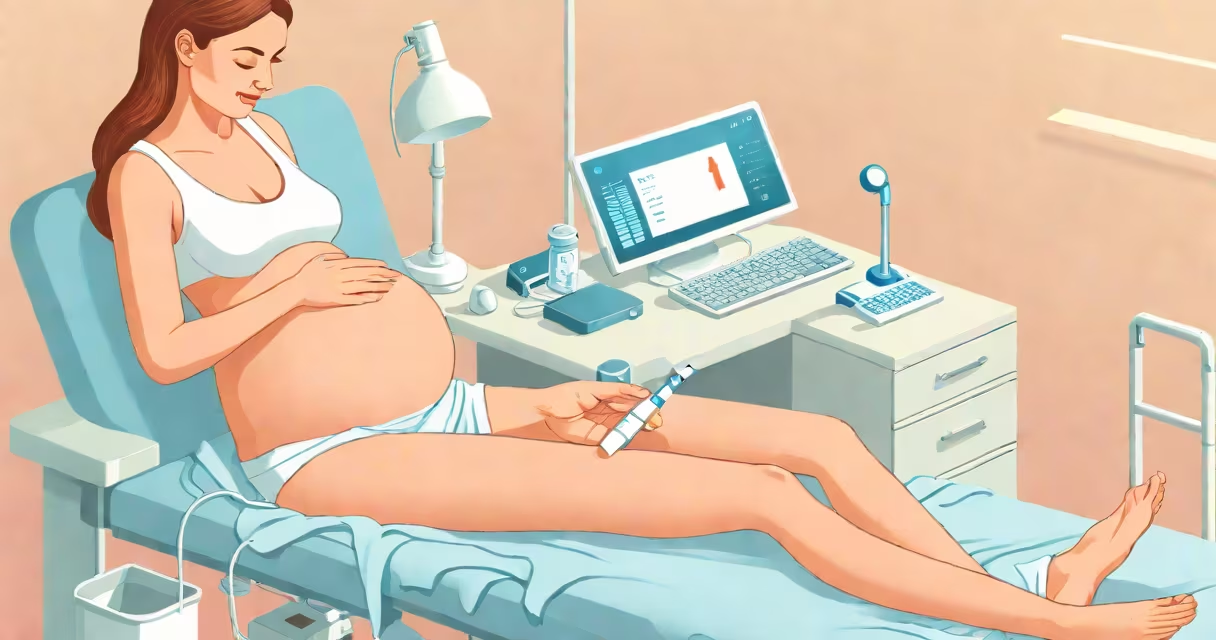
Group B streptococcus (GBS) is a bacterium commonly found in the digestive, urinary, and reproductive tracts of healthy adults. During pregnancy, it can colonize the vagina and rectum in 10-30% of people, posing a risk of transmission to the newborn during delivery. A gbs pregnancy definition centers on screening between 35 and 37 weeks gestation to identify carriers and prevent early-onset neonatal sepsis through intravenous antibiotics during labor.
GBS is not a sexually transmitted infection. It's part of normal flora in many individuals and often goes undetected. The bacteria don't cause symptoms in the parent, but they can cross the placenta or enter the baby's bloodstream during birth. Without treatment, GBS can lead to pneumonia, meningitis, or sepsis in infants under 7 days old. The CDC recommends universal screening because prevention is effective.
Screening involves a swab from the lower vagina and rectum, collected by a healthcare provider. Results are typically available within 24 hours. A positive result means the person carries GBS and will receive antibiotics during labor-usually penicillin-starting at least four hours before delivery. This reduces the risk of infant infection by about 80%. A negative result means no treatment is needed unless labor begins prematurely or membranes rupture early.
Testing occurs between 35 and 37 weeks of gestation. Timing matters: earlier testing may miss colonization that develops later. The swab is placed in a culture medium and incubated for 24-48 hours. A positive result indicates the presence of GBS bacteria in sufficient quantity to pose a risk.
Some labs use rapid antigen tests or nucleic acid amplification tests (NAATs), which detect bacterial DNA. These methods are faster but less widely available. The gold standard remains culture-based testing due to higher accuracy and lower false-positive rates.
For example, a woman at 36 weeks receives her swab. The lab identifies GBS growth after 48 hours. She is notified before labor and informed she'll receive ampicillin IV during delivery. Her baby is born at 39 weeks, receives no antibiotics, and shows no signs of infection. This outcome reflects the success of current protocols.
GBS status is categorized as positive or negative based on culture results. A positive result doesn't mean illness-it means carrier state. The goal is prevention, not treatment of the parent.
| GBS Status | Prevalence | Intervention | Outcome |
|---|---|---|---|
| Positive | 10-30% | IV antibiotics during labor | Reduces infant infection risk by ~80% |
| Negative | 70-90% | No antibiotics required | Infant risk remains low |
People with a history of GBS-positive pregnancy or previous infant GBS infection are considered high-risk even if current screening is negative. The American College of Obstetricians and Gynecologists (ACOG) advises offering antibiotics in such cases, though evidence for benefit is modest.
Penicillin remains the first-line antibiotic. For those with severe penicillin allergy, alternatives like cefazolin or clindamycin are used-but resistance patterns vary. Clindamycin resistance occurs in about 15% of GBS strains, making susceptibility testing essential before use.
GBS is not a virus. It's a bacterium. Antibiotics treat bacterial infections, not viral ones. Misunderstanding this leads some to avoid treatment or demand unnecessary interventions.
Another myth: "I had GBS last time, so I'll definitely have it again." But GBS carriage is transient. Studies show only about 50% of people who were positive in one pregnancy remain positive in a subsequent one. The CDC notes that GBS status can change between pregnancies.
A third error: "My baby will get sick if I'm positive." This is incorrect. With timely IV antibiotics during labor, the chance of the baby developing early-onset GBS disease drops from 1 in 200 to fewer than 1 in 4,000. The risk is not automatic.
I observed this firsthand during a hospital rotation. A woman with a positive GBS screen was given penicillin at 38 weeks. Her labor progressed quickly. She received the first dose 30 minutes before delivery. The newborn was admitted to the NICU briefly for monitoring but showed no signs of infection. Follow-up at 48 hours confirmed health. This case illustrates how screening and treatment work together.
Understanding the gbs pregnancy definition ensures accurate communication between patients and providers. It prevents panic over a positive test and promotes adherence to guidelines. The term "GBS positive" refers only to carrier status-not disease.
Parents often confuse GBS with other conditions like HIV or hepatitis B. Unlike those, GBS doesn't require long-term management. It's not a chronic condition. Treatment is limited to labor and doesn't affect future fertility or pregnancy outcomes.
For context, the CDC estimates that without screening and treatment, approximately 1.7 per 1,000 live births develop early-onset GBS disease. With current practices, that number drops to 0.3 per 1,000. That's a 82% reduction in incidence.
When a patient asks, "What does gbs stand for in pregnancy?" the answer is Group B Streptococcus. It's a bacterium named for its antigenic properties. The "B" refers to the Lancefield group B antigen, discovered in the 1930s. The name persists despite advances in molecular diagnostics.
Knowing the gbs pregnancy definition enables informed decisions. It shifts focus from fear to action. Prevention is straightforward, effective, and widely accessible. Screening is routine. Treatment is safe. Outcomes are overwhelmingly positive.