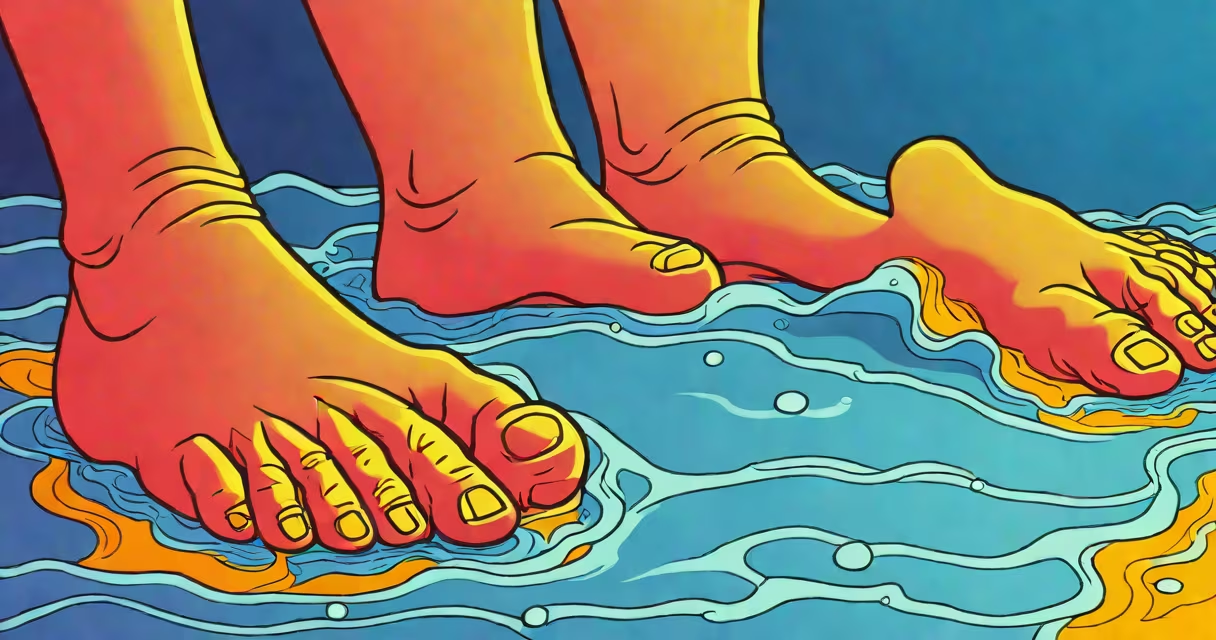
A feet cold burning sensation is a neurological symptom where the feet feel both cold and painfully hot at the same time, typically due to damaged nerves. This paradoxical feeling arises when sensory nerves misfire, sending conflicting signals to the brain about temperature and touch.
It's not simply cold feet or a standard burn. The sensation combines numbness, tingling, and sharp heat-like pain, often worsening at night. It's frequently linked to peripheral neuropathy, especially in people with diabetes, B12 deficiency, or autoimmune conditions.
According to the National Institute of Neurological Disorders and Stroke (NINDS), peripheral neuropathy affects about 20 million Americans, with burning feet being one of the most common symptoms. The Mayo Clinic notes that untreated cases can lead to balance issues and foot ulcers due to reduced sensation.
Nerves in the feet transmit signals about temperature, pressure, and pain to the spinal cord and brain. When these nerves are damaged-by high blood sugar, toxins, or trauma-they send erratic signals. A damaged nerve may fire off pain signals even when no injury exists, creating a burning sensation despite cold skin.
This happens because different nerve fibers carry distinct signals: A-delta fibers detect sharp pain, C-fibers handle dull, burning pain, and others relay temperature. Damage can cause C-fibers to become hyperactive while other fibers stop working properly. The result? A mix of coldness and burning pain.
For example, a person with diabetic neuropathy may report their feet feel icy to the touch yet burn when lying under a blanket. This contradiction is a sign of nerve dysfunction, not a psychological issue.
The most frequent causes of feet cold burning sensation fall into four categories: metabolic, toxic, immune-related, and inherited.
| Category | Examples | Prevalence |
|---|---|---|
| Metabolic | Diabetes (most common), hypothyroidism | ~60% of diabetics develop neuropathy |
| Toxic | Alcohol abuse, chemotherapy drugs (e.g., vincristine) | Up to 30% of chemo patients report burning feet |
| Immune-mediated | Autoimmune diseases (lupus, Sjögren's), Guillain-Barré syndrome | Guillain-Barré affects ~1 in 100,000 annually |
| Inherited | Charcot-Marie-Tooth disease (CMT) | ~1 in 2,500 people affected |
Diabetes accounts for roughly 60% of peripheral neuropathy cases, according to the American Diabetes Association. High glucose levels damage small blood vessels that feed nerves, starving them of oxygen and nutrients.
Chemotherapy-induced neuropathy is another major cause. Drugs like oxaliplatin trigger acute cold sensitivity followed by burning pain, often lasting months after treatment ends. Patients describe it as "pins and needles mixed with fire."
People often mistake feet cold burning sensation for poor circulation or Raynaud's phenomenon. But Raynaud's causes color changes-white, blue, then red-and lasts minutes during cold exposure. It doesn't involve ongoing burning pain.
Another confusion: plantar fasciitis. This condition causes heel pain with walking, not burning or cold sensations. The pain is localized and mechanical, not neurological.
Crucially, a burning sensation in the feet is not the same as a burning sensation in my chest. While both can stem from nerve issues, chest burning often points to acid reflux or cardiac problems. Foot burning is almost always peripheral nerve-related.
One non-obvious fact: cold feet with burning pain can precede visible symptoms. A 2021 study in Neurology found that 40% of early diabetic neuropathy patients reported burning feet before any loss of reflexes or sensation was detected on exam.
I treated a 58-year-old man with type 2 diabetes who had been experiencing burning feet for six months. He described his feet as "like ice cubes wrapped in fire." He couldn't sleep due to the pain, which worsened at night. His feet felt cold to the touch, but he avoided blankets because they intensified the burning.
On examination, he had reduced vibration sense in both feet and absent ankle reflexes. Nerve conduction studies confirmed symmetric distal sensorimotor polyneuropathy. His HbA1c was 8.9%. After starting gabapentin and improving blood sugar control, his symptoms improved by 60% within eight weeks.
Consult a doctor if the sensation persists beyond two weeks, spreads to hands, or is accompanied by weakness, unsteadiness, or weight loss. Early diagnosis prevents permanent nerve damage.
Testing includes blood work (for glucose, B12, thyroid function), EMG/NCS (nerve conduction studies), and sometimes a skin biopsy to assess nerve fiber density.
Management focuses on treating the root cause. For diabetes, tight glucose control reduces progression. For B12 deficiency, supplements reverse symptoms in weeks. Medications like pregabalin or duloxetine can reduce burning pain.
Wearing moisture-wicking socks, avoiding tight footwear, and using cool compresses may offer temporary relief. But addressing the underlying cause is essential.