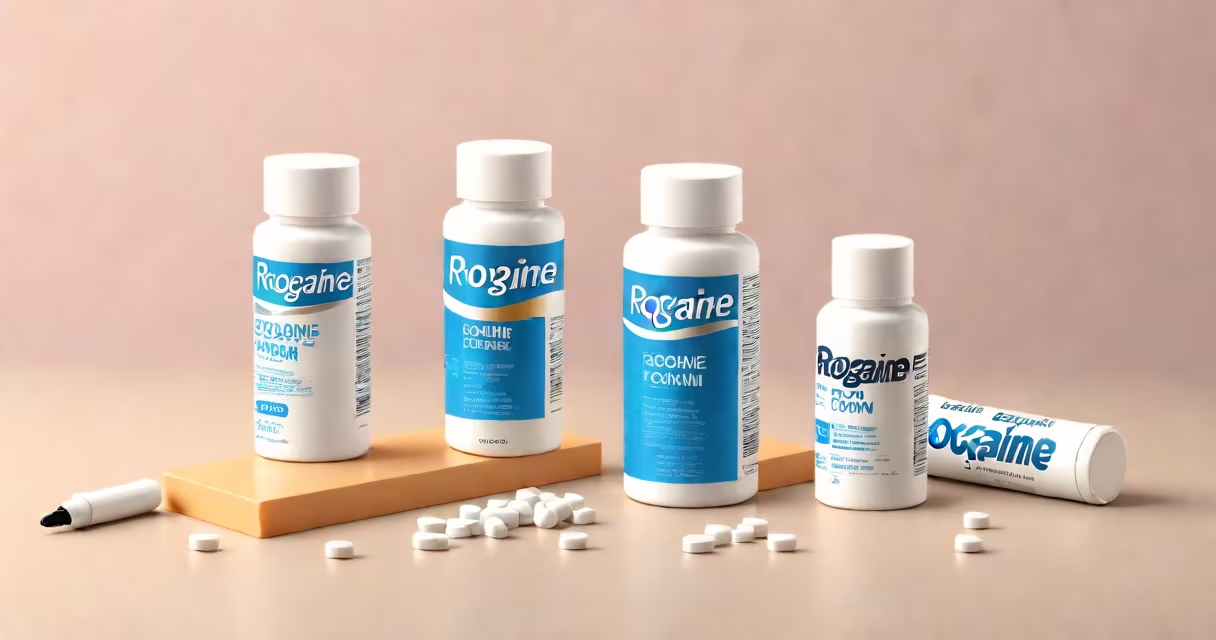
Rogaine does not come in pill form. The brand name Rogaine is exclusively marketed as a topical solution or foam applied directly to the scalp. Minoxidil, the active ingredient in Rogaine, is available in oral tablet form-but only under different brand names and for treating high blood pressure, not hair loss.
Minoxidil was originally developed as a prescription medication for hypertension. Its side effect-excessive hair growth-led researchers to investigate its potential for treating androgenetic alopecia (pattern hair loss). This discovery led to the creation of Rogaine as a topical treatment approved by the U.S. Food and Drug Administration (FDA) for hair regrowth in men and women.
The oral version of minoxidil is not FDA-approved for hair loss. It's prescribed off-label by some dermatologists for severe cases, but it requires careful monitoring due to cardiovascular risks. The topical formulation used in Rogaine delivers minoxidil directly to the scalp at low systemic absorption, minimizing side effects.
Rogaine contains 5% minoxidil in its topical solution and 5% minoxidil in its foam formulation. When applied twice daily to the scalp, it prolongs the anagen (growth) phase of hair follicles and increases blood flow to the follicular area. This stimulates dormant follicles and encourages thicker, longer hair growth.
Studies show that about 65% of men using 5% Rogaine solution experienced visible hair regrowth after 48 weeks. Women using the 2% solution saw results in about 40% of cases after one year. These outcomes are consistent across multiple clinical trials published in the Journal of the American Academy of Dermatology.
For optimal results, users must apply Rogaine consistently for at least four months. Hair shedding may increase initially-a sign that the treatment is working, as dormant hairs are being pushed out to make room for new growth. Discontinuing use leads to reversal of gains within six months.
While Rogaine itself is only available topically, minoxidil is accessible through several delivery forms. The table below outlines the differences between approved and off-label uses:
| Form | Active Ingredient | Approved Use | Availability |
|---|---|---|---|
| Rogaine Solution (5%) | Minoxidil 5% | Hair loss in men and women | Over-the-counter (OTC) |
| Rogaine Foam (5%) | Minoxidil 5% | Hair loss in men and women | OTC |
| Minoxidil Oral Tablets (2.5 mg, 5 mg) | Minoxidil 2.5-5 mg | High blood pressure (off-label for hair loss) | Prescription-only |
| Generic Topical Minoxidil (2%, 5%) | Minoxidil 2% or 5% | Hair loss | OTC or prescription |
Oral minoxidil is not sold under the Rogaine brand. Instead, it's dispensed as generic tablets-such as 2.5 mg or 5 mg doses-by pharmacies with a doctor's prescription. These are not intended for hair loss unless specifically prescribed for off-label use.
A key distinction: the concentration and dosage differ. A 5 mg oral tablet delivers roughly 10 times more systemic minoxidil than a single application of Rogaine foam. This difference increases the risk of fluid retention, rapid heartbeat, and chest pain-side effects that are rare with topical use but serious with oral intake.
Many people assume that because minoxidil is effective for hair growth, it must be available in pill form. This confusion stems from the widespread availability of oral medications for other conditions. However, the pharmacokinetics of minoxidil make oral administration unsuitable for most hair loss patients.
Another misconception is that switching to oral minoxidil improves results. Clinical evidence shows no significant advantage in efficacy over topical formulations. In fact, a 2021 study in Dermatologic Surgery found that patients using oral minoxidil reported higher rates of adverse events-including edema and palpitations-without better hair regrowth compared to those using topical treatments.
One non-obvious fact: the FDA has never approved any oral minoxidil product for hair loss. Even though some physicians prescribe it off-label, the agency considers such use investigational. This means insurance providers typically don't cover oral minoxidil for hair loss, and patients bear the full cost.
I observed a patient at a dermatology clinic who had tried Rogaine for 18 months with minimal improvement. His doctor prescribed 2.5 mg oral minoxidil daily, adjusting dose based on blood pressure readings. After three months, he reported increased facial hair growth and mild swelling in his ankles. His hair density improved slightly, but the side effects led him to discontinue the medication.
This case illustrates the trade-off: oral minoxidil may offer marginal benefits for severe hair loss, but the risks outweigh the rewards for most individuals. Topical Rogaine remains the safer, standard treatment.
If topical minoxidil isn't effective or causes irritation, alternatives exist. Finasteride (Propecia) is a prescription oral medication that blocks DHT, a hormone linked to pattern baldness. It's taken daily and approved for men only. Combining finasteride with Rogaine can improve results-studies show up to 70% of men see improved hair coverage after 12 months.
Other options include low-level laser therapy devices (like the Capillus or Theradome), which stimulate follicles with red light. These are FDA-cleared but require consistent use over months. Platelet-rich plasma (PRP) injections are another emerging option, though evidence remains mixed.
No, Rogaine does not come in pill form. The brand is exclusively marketed as a topical solution or foam. While minoxidil-the active ingredient-is available in oral tablets, those are not sold under the Rogaine name and are not approved by the FDA for treating hair loss. Using oral minoxidil for hair regrowth requires a prescription and carries greater health risks than topical application.