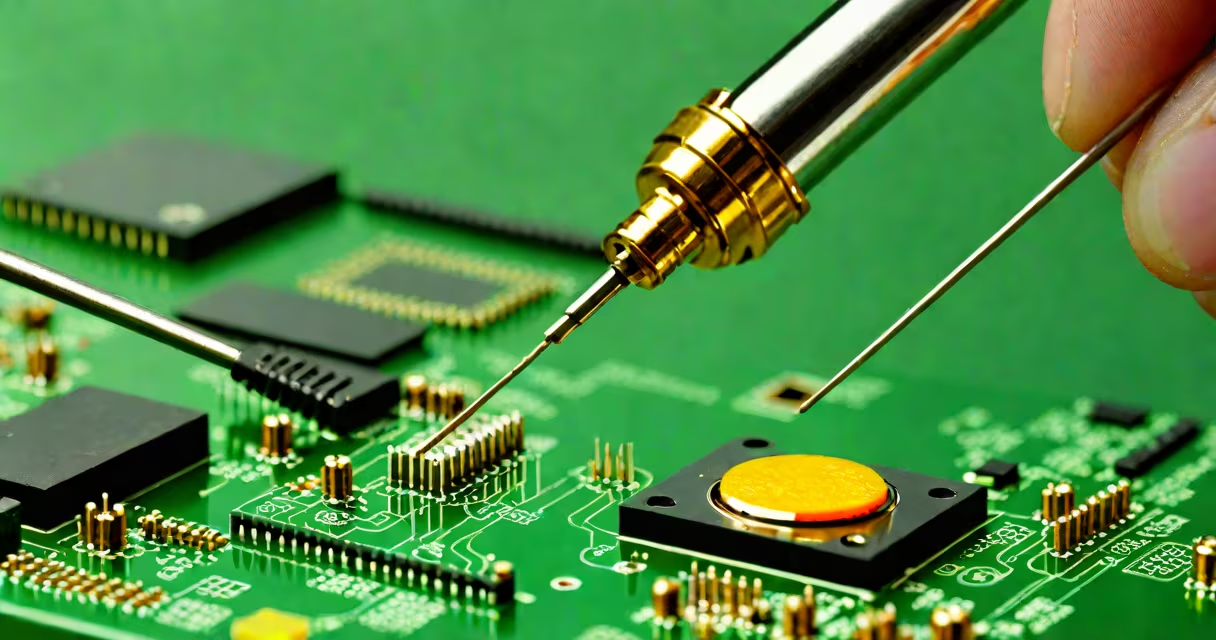
Yes, you do need flux when using rosin core solder, though the solder's built-in flux handles basic tasks. For consistent, high-quality solder joints-especially in challenging conditions-you often require additional flux.
Rosin core solder contains a small amount of flux inside the solder wire's core. This flux melts at soldering temperatures and cleans metal surfaces, preventing oxidation and improving wetting. However, the quantity and strength of this internal flux are limited. It may not be sufficient for heavily oxidized components, high-temperature joints, or repeated rework.
According to the National Institute of Standards and Technology (NIST), proper flux application reduces intermetallic growth and improves joint reliability. The International Soldering Association notes that insufficient flux leads to cold joints, poor conductivity, and long-term failure in electronics assemblies.
Rosin core solder uses a low-residue, non-corrosive flux derived from pine tree resin. As the solder heats, the flux liquefies and flows into the joint, removing oxides and allowing molten solder to bond effectively with the metal surface.
The flux in rosin core solder is designed for typical through-hole and surface-mount soldering on clean, well-prepared copper traces. It performs adequately for hobbyists building simple circuits or replacing components on PCBs with minimal contamination.
However, the flux volume is fixed-typically 1-3% of the solder wire's weight. Once consumed, it cannot replenish. Repeated heating cycles or prolonged soldering times deplete the flux before the joint cools, leaving behind weak or incomplete connections.
Additional flux becomes necessary in four common scenarios:
A practical example: When replacing a 20-pin IC on a prototype board, the pins are often oxidized from handling and storage. Using only rosin core solder results in dry joints that fail under vibration. Adding a dab of liquid flux with a brush before soldering ensures complete wetting and reliable electrical contact.
Fluxes differ in composition, activity level, and residue. Understanding their differences prevents damage and ensures quality results.
| Type | Activity Level | Residue | Best For |
|---|---|---|---|
| Rosin (R) | Low | Non-conductive | General electronics, low-risk applications |
| Rosin Mildly Activated (RMA) | Moderate | Slight residue | Most consumer electronics, repair work |
| Activating (RA) | High | Corrosive | Industrial metal joining, not recommended for electronics |
| Liquid flux (e.g., water-soluble) | High | Water-soluble | Prototyping, rework, cleaning required post-soldering |
For most electronic work, RMA or water-soluble flux applied separately offers better performance than relying solely on rosin core. Water-soluble flux, while effective, must be cleaned after soldering to prevent corrosion. RMA flux leaves minimal residue and doesn't require cleaning, making it ideal for field repairs.
I once replaced a corroded power connector on a weatherproof sensor module. The original solder had degraded due to moisture exposure. Using only rosin core solder failed to form a solid joint. After applying a drop of RMA flux with a syringe tip, the solder flowed smoothly and created a durable connection. The module passed environmental testing afterward.
Many beginners assume "rosin core" means "flux is included and sufficient." This is incorrect. The term refers to the delivery method-not the adequacy of flux for all situations.
Another misconception is that flux is only needed for large joints. In reality, flux is critical for any joint where surface cleanliness is uncertain. A 0.5mm wire on a PCB may still have microscopic oxidation that prevents wetting.
Also, some believe flux residue damages electronics. While corrosive residues can cause long-term issues, rosin and RMA flux leave non-conductive, stable residue. NIST confirms that properly cured rosin residue poses no risk to standard circuit operation.
Apply flux before heating. Dab a small amount on the pad and component lead using a flux pen, brush, or syringe. Let it sit for 10-15 seconds to activate. Then apply solder. The flux will flow into the joint as the solder melts.
Use flux sparingly. Excess flux can create voids, attract dust, and interfere with insulation resistance. Clean excess residue with isopropyl alcohol and a cotton swab if needed.
For routine soldering, consider using flux-coated solder wire. These wires have a thin outer layer of flux applied during manufacturing, offering more consistent coverage than rosin core alone.
Always check your work under magnification. A good joint shows shiny, smooth solder with no gaps or dull patches. Dull or grainy appearance indicates poor wetting-likely due to insufficient flux.
Flux is not optional when working with rosin core solder in demanding applications. It ensures clean, conductive, mechanically strong joints. Relying solely on the solder's internal flux risks failure in real-world conditions.