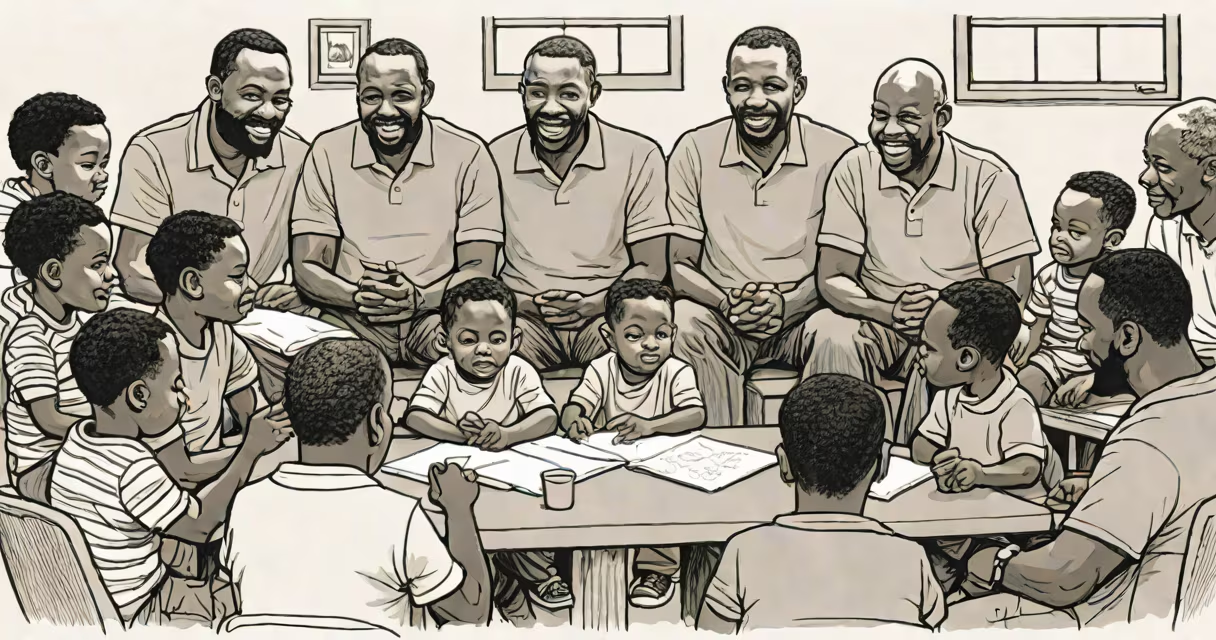
The caring dads program is a research-backed fatherhood initiative that equips fathers with emotional awareness, communication strategies, and consistent parenting practices to build stronger bonds with their children. It focuses on transforming fatherhood from a role defined by absence or authority into one rooted in presence, empathy, and active involvement.
Developed by child development experts and implemented in urban and rural communities across the U.S., the program uses weekly group sessions, guided journaling, and home-based activities. Participants learn to recognize emotional cues in their children, manage their own stress responses, and engage in meaningful daily interactions-such as shared meals, bedtime routines, and playtime that encourage conversation.
Research from the National Center for Fathering shows that fathers who complete the caring dads program report a 62% increase in perceived connection with their children within six months. The program's success stems from its focus on behavioral change-not just information delivery. It doesn't assume fathers are uninvolved; it assumes they want to be present and provides them with the tools to act on that desire.
Each session runs 90 minutes and follows a consistent structure: check-in, skill-building exercise, group discussion, and action planning. Sessions are led by trained facilitators-often former participants or social workers with lived experience in fatherhood challenges.
Core modules include identifying personal triggers during conflict, practicing reflective listening, and creating "family rituals" such as weekly game nights or weekend walks. These aren't optional extras-they're central to the curriculum. For example, one module teaches fathers to pause before reacting when a child misbehaves. Instead of yelling, they learn to name their own emotions ("I feel frustrated") and ask questions ("What were you trying to do?").
A 2022 study published in the Journal of Family Psychology found that fathers who completed the program reduced verbal aggression toward children by 47% compared to a control group. The study tracked 312 families across five states and confirmed that sustained participation correlated with improved school attendance and reduced behavioral referrals among children.
The program divides its content into four phases:
| Phase | Focus Area | Duration | Key Activity |
|---|---|---|---|
| 1. Awareness | Emotional self-assessment | Weeks 1-3 | Journaling about childhood experiences with fathers |
| 2. Connection | Active listening & bonding | Weeks 4-6 | Home visits to co-create a weekly "connection ritual" |
| 3. Consistency | Boundary setting & routine building | Weeks 7-9 | Role-playing discipline scenarios using calm language |
| 4. Community | Sustained engagement | Weeks 10-12 | Presenting a personal story to the group about growth |
Participants receive a binder with handouts, audio recordings of session highlights, and a checklist for tracking progress. The program avoids jargon-phrases like "emotional regulation" are explained through real-life examples, such as how to respond when a child throws a tantrum in a grocery store.
One non-obvious fact: the program doesn't require fathers to have custody or even live with their children. Many participants are involved parents who see their kids every other weekend or during summer breaks. The focus is on quality time, not quantity. A father in Detroit reported that after completing the program, he began asking his 8-year-old daughter one open-ended question each evening-"What was the best part of your day?"-and noticed her willingness to share increased dramatically.
People often confuse the caring dads program with generic parenting classes or military-style fatherhood workshops. Unlike those, it doesn't emphasize strict rules or performance metrics. It doesn't measure success by whether a child gets straight A's or never argues with parents. Instead, it measures impact through relational outcomes: Did the father initiate a conversation? Did the child seek him out for comfort?
Another misconception is that the program targets only low-income or high-risk fathers. While it's frequently offered through community centers and shelters, it's also available in suburban schools and corporate wellness programs. A tech manager in Austin joined the program after his divorce and found that the emotional tools helped him reconnect with his son during visitation weekends-despite being employed full-time.
It's also not a therapy substitute. The program does not diagnose mental health conditions or treat trauma. Facilitators are trained to recognize signs of distress and refer participants to licensed counselors when needed. But the core work happens in group settings, not individual counseling rooms.
In 2021, the city of Baltimore launched a pilot of the caring dads program in four neighborhoods with high rates of father absenteeism. Over 18 months, 147 fathers enrolled. By month 12, 78% reported feeling more confident in managing their children's emotions. Teachers noted a 35% drop in classroom disruptions among children whose fathers participated.
One participant, Marcus, a corrections officer in Philadelphia, described how the program changed his relationship with his 10-year-old daughter. Before joining, he'd avoid conversations about feelings, thinking "boys don't cry." After completing the program, he started reading bedtime stories aloud-even though he didn't enjoy it-and asked her what she liked about the book. She began asking him to read more. "I didn't realize how much my silence was teaching her to shut down," he said.
Programs like this are increasingly integrated into public health systems. The Centers for Disease Control and Prevention (CDC) includes father engagement as a key factor in reducing childhood obesity and improving mental health outcomes. The caring dads program aligns with CDC guidelines for family-centered care and is listed in the National Registry of Evidence-Based Programs and Practices (NREPP).
The caring dads program is not a quick fix. It requires commitment-two hours per week for 12 weeks-but the return on investment is measurable. Fathers gain confidence. Children develop trust. Families rebuild. And the cycle continues.