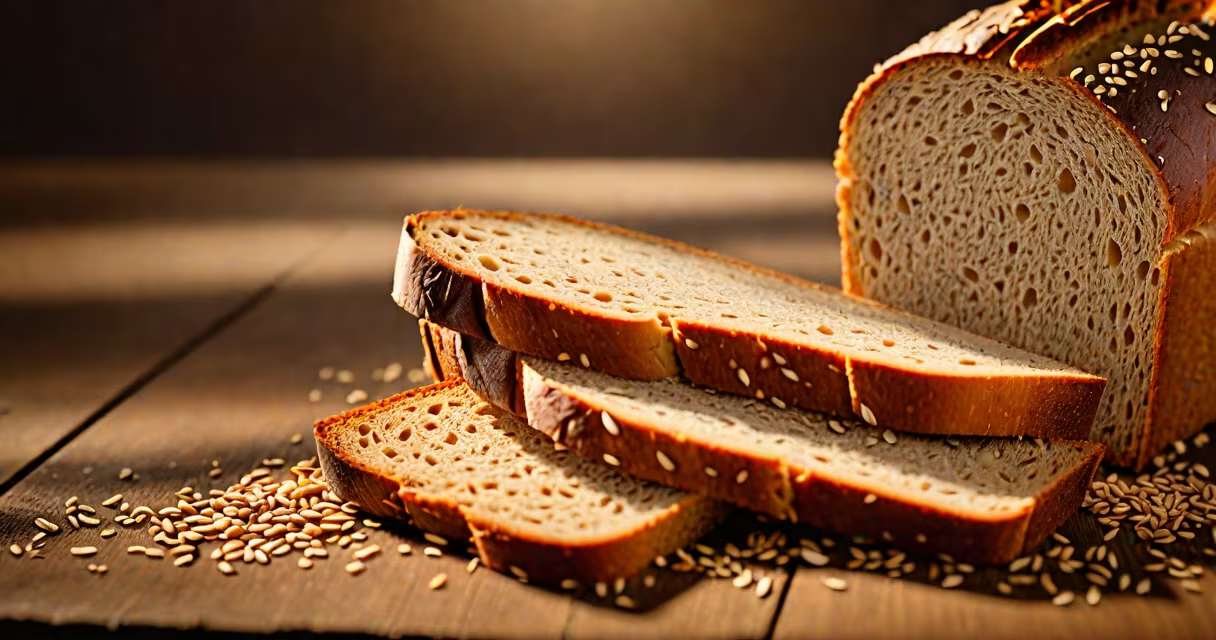
Daily bread is the essential loaf of bread eaten regularly as a core part of a person's diet, historically representing both physical sustenance and cultural continuity. It is not a specific type of bread but a concept rooted in necessity, tradition, and survival.
The term originates from the Lord's Prayer in Matthew 6:11: "Give us this day our daily bread." This biblical reference established bread as a metaphor for basic needs, not just food. The phrase evolved beyond religious context to describe any food that forms the foundation of a meal, especially in low-income or agrarian societies.
In modern usage, "daily bread" denotes the most common type of bread consumed in a region-such as sourdough in San Francisco, injera in Ethiopia, or tortillas in Mexico. It is not about luxury or variety, but about consistency, availability, and nutritional reliance. A family eating cornbread every evening in rural Mississippi or a worker in Tokyo grabbing a rice bun from a convenience store during lunch may be consuming their daily bread, even if the form differs.
Bread provides complex carbohydrates, fiber, and often B vitamins. When made from whole grains, it contributes to sustained energy release. The average adult needs 200-300 grams of grain-based foods per day, with bread being a primary delivery method in many countries.
For example, in France, the average person eats 50 kilograms of bread annually-about 137 grams per day. In India, where wheat and millet-based flatbreads dominate, consumption averages 150 grams per day per capita. These numbers reflect bread's role not as a treat, but as a baseline for caloric intake.
Historically, bread was central to survival. During the Great Famine in Ireland (1845-1852), the failure of the potato crop led to mass starvation because potatoes were the daily bread for much of the population. When that staple failed, so did the food system. This illustrates how deeply tied "daily bread" is to food security.
Bread varies widely by region, but all serve the function of daily bread when they are eaten regularly and form the base of meals. The following table outlines major types and their regional roles:
| Region | Common Bread Type | Role as Daily Bread |
|---|---|---|
| Middle East | Pita | Used to scoop hummus, hold falafel, and wrap meat. Eaten at every meal. |
| Sub-Saharan Africa | Injera (fermented teff flatbread) | Serves as plate, utensil, and food. 80% of Ethiopian households consume it daily. |
| East Asia | Rice cakes, steamed buns | Replaced wheat-based breads in regions where rice dominates. Still fulfill the role of daily sustenance. |
| Western Europe | Baguette, rye, sourdough | Consumed at breakfast, lunch, and dinner. Often paired with cheese or butter. |
Some cultures do not use wheat at all. In parts of Papua New Guinea, people rely on sago, a starchy paste made from palm tree flour, as their daily bread. This shows that "daily bread" is not defined by ingredients but by function: it is the food that appears consistently, supports energy needs, and forms the structure of a meal.
"Daily bread" is often confused with artisanal or specialty breads. A sourdough loaf from a local bakery may be delicious-but unless it is eaten regularly and forms the basis of a meal, it is not daily bread. The term is about frequency and function, not quality or origin.
Another misconception is that daily bread must be baked. In many places, it is made from dried or fermented dough. For example, in parts of West Africa, fufu-a starchy paste made from cassava-is shaped into balls and eaten with soup. Though not baked, it functions as daily bread due to its role in meal structure and nutrient provision.
A key distinction: daily bread is not synonymous with "staple food." While all daily bread is a staple, not all staples are daily bread. Rice is a staple in Japan, but not always eaten daily in every household. However, when a family eats rice every day, it becomes their daily bread. The difference lies in regularity and centrality to the diet.
Consider Maria, a single mother in Guatemala City. Her day begins at 5:30 a.m. with a small pot of beans and a warm tortilla made from masa harina (corn flour). She eats two tortillas with beans for breakfast. At noon, she packs a lunch of grilled chicken wrapped in another tortilla. In the evening, her children eat tortillas with scrambled eggs and onions.
Over 24 hours, Maria consumes approximately 300 grams of corn tortillas-her daily bread. They provide 150 grams of carbohydrates, 6 grams of protein, and 2 grams of fiber. This is not a rare or special meal. It is routine, affordable, and nutritionally sufficient. Her family's health, energy levels, and ability to work depend on this consistent intake.
This example demonstrates that daily bread is not about flavor or presentation-it is about reliability. It is the food that shows up when you need it, every day.
I once visited a village in southern Italy where families still bake bread in wood-fired ovens every morning. The ritual began at 4 a.m., with women kneading dough using hands passed down through generations. By 6 a.m., the loaves emerged-crusty on the outside, soft inside. Each family took home a loaf to last until the next baking day.
When I asked a grandmother why they still did this, she said, "Because we don't want to live without bread. Not just to eat, but to remember who we are." That moment clarified something deeper: daily bread is not just food. It is identity, memory, and continuity.
Food security experts at the World Food Programme define "basic food access" as having consistent, affordable, and culturally appropriate food. Daily bread meets all three criteria. It is affordable (in most cases, under $1 per loaf), accessible (available in markets, bakeries, or homes), and culturally resonant.
According to the FAO, over 800 million people globally face chronic hunger. For them, daily bread is not symbolic-it is literal survival. In refugee camps, organizations distribute ready-to-eat bread packets because they are easy to store, transport, and consume without cooking.
Even in wealthier nations, daily bread remains important. In the U.S., the USDA reports that 12% of households experienced food insecurity in 2022. Among those, 73% cited bread as a consistent food source during shortages. This shows that daily bread is not a relic-it is a living necessity.
Understanding "define daily bread" means recognizing it as both a material and symbolic foundation. It is not a luxury. It is not optional. It is the food that holds people together, meal after meal, year after year.