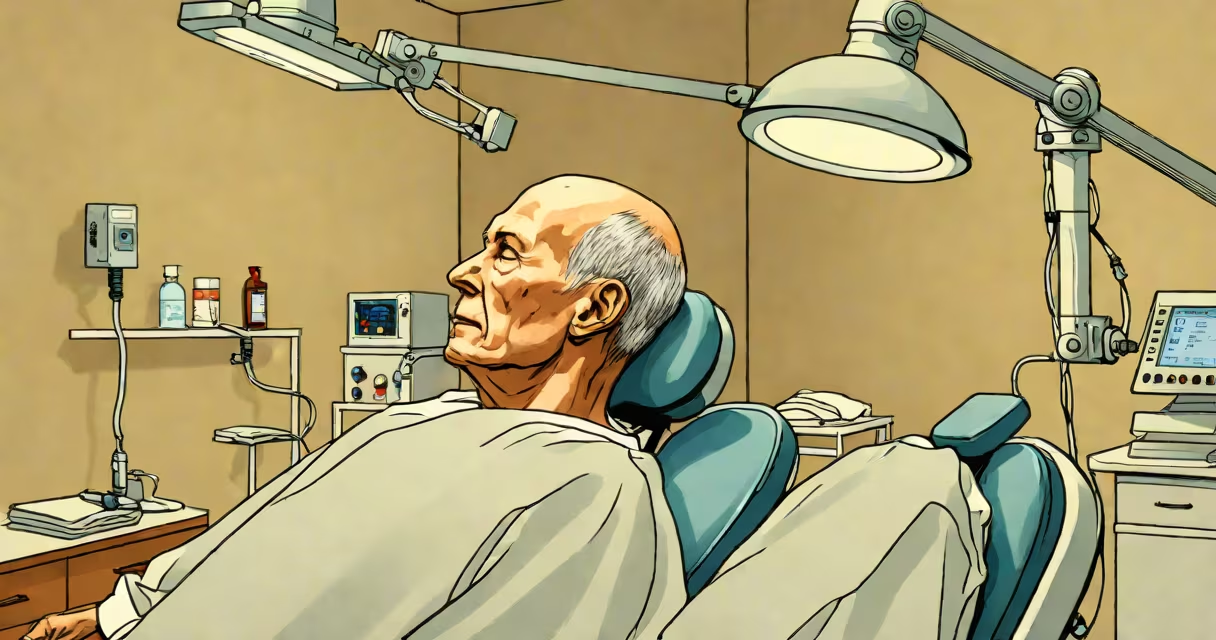
Radiation therapy can cause hair loss in the specific area being treated, typically resulting in partial or complete baldness within 2-4 weeks of starting sessions. The effect is localized and does not affect hair on other parts of the body.
Radiation damages rapidly dividing cells, including those in hair follicles. When radiation targets the head or neck, it disrupts the growth phase of hair, leading to shedding. This process is called alopecia and is a common side effect of cranial or cervical radiation.
According to the American Cancer Society, hair loss from radiation occurs only in the treatment field. For example, if radiation is directed at the left side of the head, only the hair on that side will thin or fall out. Hair regrows gradually after treatment ends, though regrowth may take several months and sometimes results in different texture or color.
Radiation therapy uses high-energy beams-such as X-rays or protons-to destroy cancer cells. These beams damage DNA in targeted tissues. Hair follicles are among the most sensitive cells due to their rapid division rate. When exposed, they stop producing new hair, leading to shedding.
The timing of hair loss depends on dose and fractionation. Most patients begin noticing thinning around week 3 of treatment. By week 6, significant hair loss often occurs. The severity correlates with the total radiation dose: higher doses increase the likelihood of permanent follicle damage.
A study published in Cancer journal found that 85% of patients receiving >30 Gy to the scalp experienced moderate to severe hair loss. Doses below 20 Gy were less likely to cause lasting effects. This shows that intensity matters-lower-dose treatments may preserve some hair.
Different forms of radiation therapy carry varying risks of hair loss based on beam direction and precision.
| Type | Target Area | Hair Loss Risk | Notes |
|---|---|---|---|
| External Beam (EBRT) | Head, neck, brain tumors | High | Standard method; hair loss predictable in treated zone |
| Intensity-Modulated Radiation Therapy (IMRT) | Complex head/neck cancers | High | Spots radiation precisely; still affects scalp if beam passes through |
| Brachytherapy | Brain or skin lesions | Low to moderate | Internal implants; limited scatter; lower risk unless near scalp |
| Proton Therapy | Skull base or pediatric brain tumors | Moderate | Less exit dose; reduces risk beyond target zone |
Proton therapy, while more expensive, delivers less radiation to healthy tissue behind the tumor. A 2021 analysis in International Journal of Radiation Oncology* Biology* Physics showed that proton therapy reduced hair loss incidence by 30% compared to photon-based EBRT in pediatric brain tumor cases.
Hair loss occurs only in the region receiving direct radiation. If the treatment field includes the scalp, hair falls out. If the beam avoids the scalp-such as targeting the spine or pelvis-hair remains unaffected.
For instance, a patient undergoing radiation for a pituitary tumor may have minimal hair loss if the beam enters through the forehead and exits through the back of the skull. However, if the treatment includes the vertex of the skull, hair loss becomes likely.
Some patients report temporary hair thinning even outside the field due to systemic stress from treatment. But this is rare and usually mild. True radiation-induced alopecia is confined to the beam path.
Many assume radiation therapy causes full-body hair loss like chemotherapy. This is incorrect. Chemotherapy affects all rapidly dividing cells systemically. Radiation acts locally.
Another myth is that hair loss from radiation is always permanent. In reality, most patients see regrowth within 6-12 months after treatment ends. Permanent loss occurs only if the follicle stem cells are destroyed-typically at very high doses (>50 Gy).
A lesser-known fact: some patients develop "patchy" hair loss rather than uniform baldness. This happens when the beam is angled or when shielding blocks part of the scalp. The result is uneven thinning, which can be distressing but is not uncommon.
I observed a 58-year-old man with stage III nasopharyngeal cancer who received IMRT to the head and neck. He was treated with 70 Gy in 35 fractions over seven weeks. By week 4, he began losing hair along the left temple and crown. By week 6, he had a distinct bald patch on the left side of his scalp.
After completing treatment, he noticed new hair growing back at week 10. The regrown hair was initially gray and finer than before. Over 12 months, density improved, though the left side remained slightly thinner. His oncologist confirmed this outcome matched expected patterns for high-dose cranial radiation.
Hair loss from radiation is expected in the treatment area. Patients should discuss concerns with their radiation oncologist before starting therapy. Some clinics offer scalp cooling during treatment, though evidence for effectiveness is limited and not widely recommended.
Wigs, scarves, and hats are practical options for managing appearance. Support groups and counseling services are available through organizations like the National Cancer Institute and the American Society for Radiation Oncology (ASTRO).
Patients should understand that hair loss is reversible in most cases. Regrowth may take time, but it typically begins within 3 months after treatment ends. If no regrowth occurs after 12 months, consult a dermatologist to rule out scarring or fibrosis.
can radiation therapy cause hair loss? Yes-but only in the treated area. The extent varies by dose, technique, and individual biology. With proper planning and follow-up, patients can expect recovery and manage expectations effectively.