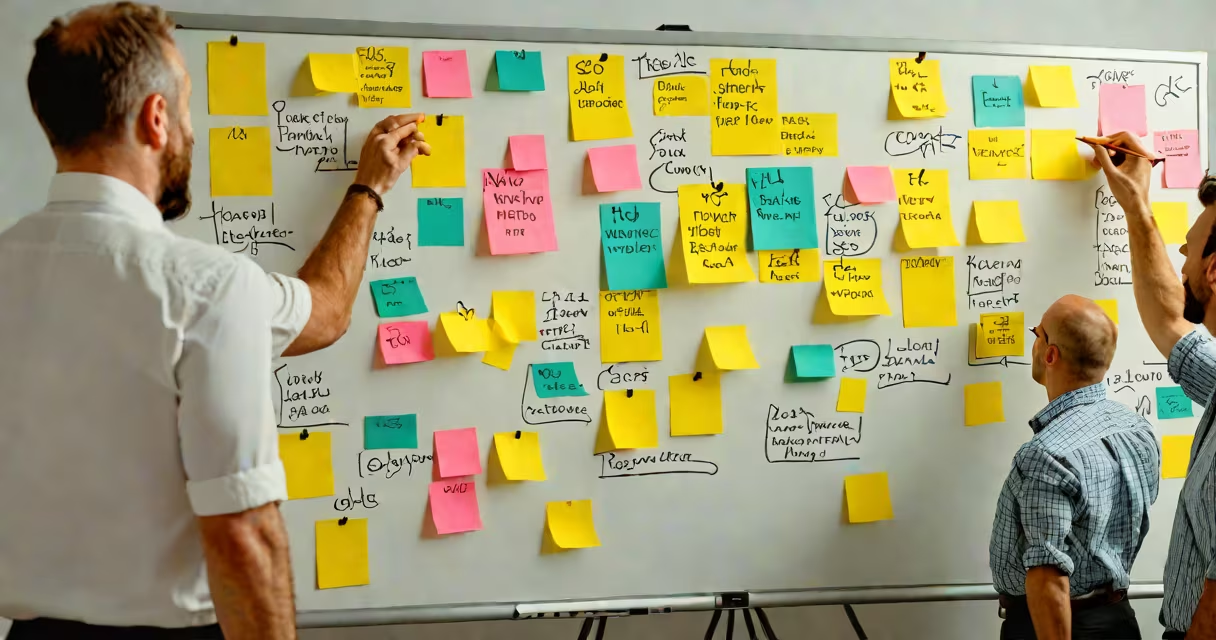
Agile development is a structured approach to building software in small, iterative cycles called sprints, where teams deliver working features quickly, adapt to changes, and continuously improve based on feedback. This method prioritizes collaboration, flexibility, and customer value over rigid planning.
Agile development operates in time-boxed iterations-typically two to four weeks-where teams plan, build, test, and review a set of features. After each cycle, stakeholders evaluate progress and adjust priorities. This allows teams to respond to shifting requirements without derailing long-term goals.
The Agile Manifesto, published in 2001 by 17 software developers, outlines core values: individuals and interactions over processes and tools, working software over complete documentation, customer collaboration over contract negotiation, and responding to change over following a plan. These principles underpin all agile practices.
Teams begin by defining a product vision and creating a backlog-a prioritized list of features, fixes, and enhancements. During sprint planning, the team selects work from the backlog they believe they can complete in the upcoming sprint. Daily stand-up meetings keep everyone aligned on progress and blockers.
Each day, team members update task boards-physical or digital boards showing tasks in progress, completed, or blocked. At the end of the sprint, the team demonstrates the new functionality to stakeholders. A retrospective follows, where the team reflects on what went well, what didn't, and how to improve next time.
This cycle repeats every sprint. For example, a mobile app team might release a new login screen in Sprint 1, then add biometric authentication in Sprint 2 after collecting user feedback. This incremental delivery reduces risk and ensures the product evolves with real-world usage.
While "agile" describes a mindset, specific frameworks implement it. The most common is Scrum, which defines roles (product owner, scrum master, development team), events (sprint planning, daily stand-ups, sprint review, retrospective), and artifacts (product backlog, sprint backlog, increment).
Another structure is Kanban, which uses a visual board to track work in progress. Unlike Scrum's fixed sprints, Kanban focuses on continuous flow-work moves from "to do" to "done" as capacity allows. Teams using Kanban often have fewer formal ceremonies but still apply agile principles like limiting work in progress and measuring cycle time.
| Structure | Sprint Structure | Best For | Key Difference |
|---|---|---|---|
| Scrum | Fixed-length sprints (2-4 weeks) | Product teams needing regular delivery cycles | Defined roles and events; time-boxed iterations |
| Kanban | Continuous flow; no fixed sprints | Support teams or maintenance work | Visual workflow; focus on throughput and bottlenecks |
| SAFe (Scaled Agile Structure) | Program Increments (PIs) lasting 8-12 weeks | Large organizations with multiple teams | Enterprise-scale coordination; includes PI planning events |
Scrum is often the default choice for startups and product teams because it enforces structure and accountability. Kanban suits teams managing ongoing support or incident response, where priority shifts frequently. SAFe scales agile across departments and geographies, used by companies like Spotify and IBM.
Agile is not synonymous with "fast" or "chaotic." It's not about doing everything quickly-it's about delivering value predictably and adapting when needed. A team can move slowly but still follow agile principles if they reflect, inspect, and adjust regularly.
Many mistake agile for a checklist of rituals. But the Agile Manifesto emphasizes values over practices. A team running daily stand-ups without collaboration or shared ownership isn't truly agile. As the Manifesto states: "The most efficient and effective method of conveying information to and within a development team is face-to-face conversation."
A non-obvious fact: Agile doesn't eliminate planning-it transforms it. Instead of detailed upfront plans, agile teams create rolling forecasts. They estimate effort using story points, not hours, to avoid false precision. For example, a team might assign a "3" to a feature that takes roughly half a day to build, while a "13" indicates high uncertainty. This system, used in Planning Poker, prevents overcommitment and supports realistic forecasting.
A startup developing a task management app used a two-week sprint cycle. Their backlog included features like user sign-up, task creation, due date reminders, and team sharing. In Sprint 1, they delivered sign-up and basic task creation. After demoing to early users, they learned people wanted calendar sync.
They reprioritized the backlog, moving calendar integration to the top. In Sprint 2, they built a basic version with Google Calendar integration. Feedback showed users wanted notifications before deadlines. The team added that in Sprint 3. By Sprint 6, the app had 1,200 active users and a 4.7 rating on the app store-proof that agile delivery responded to real needs faster than traditional waterfall methods.
I've led such teams. In one case, we shipped a beta version in six weeks using weekly sprints. We caught a critical bug in the third sprint because a tester flagged inconsistent behavior during the review. Fixing it early saved two months of rework later. That's the power of frequent inspection and adaptation.
Agile development is standard in software engineering, product design, and IT operations. According to the 2023 State of Agile Report by CA Technologies, 78% of organizations use agile methods, with 65% applying them across multiple departments.
It's especially effective in environments with uncertain requirements, rapid market changes, or complex technical dependencies. For example, healthcare tech firms use agile to comply with evolving regulations while releasing patient-facing updates monthly. Financial institutions adopt agile to roll out new payment features without disrupting core systems.
Agile is not limited to tech. Education platforms use it to refine course modules based on student performance data. Marketing teams apply agile principles to A/B test campaign variants and pivot strategies mid-quarter.
Agile development summary is not a project management tool. It's not a replacement for documentation or compliance. It's not a shortcut to skipping testing or quality assurance. Agile requires discipline, transparency, and continuous improvement.
Some confuse agile with "agile marketing" or "agile HR"-terms that borrow the name but lack the underlying structure. True agile development relies on empirical process control: inspecting results, adapting based on evidence, and repeating. Without that loop, teams fall into the trap of "agile theater"-running ceremonies without outcomes.
For instance, a team may hold daily stand-ups but skip retrospectives. Over time, morale drops, and problems recur. The absence of reflection breaks the feedback loop essential to agile success.
Understanding agile development summary means recognizing it as a disciplined way to build better products through collaboration, iteration, and learning. It's not a magic bullet-but it's a proven path to higher quality, faster delivery, and greater team resilience.