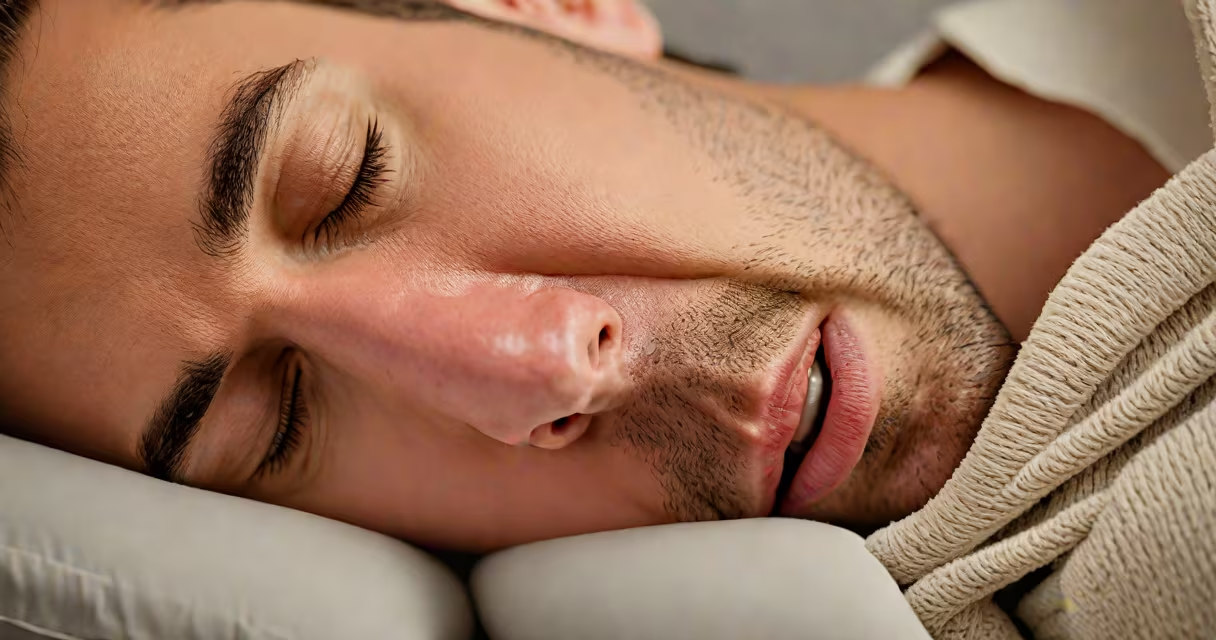
Sleeping with your mouth open occurs when you breathe through your mouth instead of your nose during sleep. This habit may stem from nasal obstruction, anatomical structure, or sleep disorders. It's not normal for most people to breathe through their mouth while asleep unless there's a physical or physiological reason.
Most adults breathe through their nose during sleep. When mouth breathing happens consistently, it indicates a disruption in normal airflow. The condition can lead to dry mouth, snoring, poor sleep quality, and increased risk of respiratory infections. It's especially common in people with chronic nasal congestion, deviated septum, or obstructive sleep apnea.
According to the American Academy of Sleep Medicine, mouth breathing during sleep affects approximately 15% of adults and up to 30% of children. It's not simply a bad habit-it's a sign of disrupted breathing patterns that may require medical evaluation. Persistent mouth breathing during sleep is linked to long-term consequences such as reduced oxygen saturation and daytime fatigue.
The human airway relies on coordinated muscle activity and unobstructed nasal passages to maintain nasal breathing during sleep. When the nasal passages are blocked-by allergies, a cold, or structural issues-the brain automatically shifts to mouth breathing to meet oxygen demand. This switch happens rapidly and often goes unnoticed until symptoms appear.
Mouth breathing bypasses the nasal filtration system. Nasal passages warm, humidify, and filter air before it reaches the lungs. When air enters through the mouth, it's drier and cooler, leading to irritation of the throat and oral tissues. Over time, this can cause chronic dry mouth, increased dental decay, and gum inflammation.
A 2021 study published in Journal of Clinical Sleep Medicine found that individuals who sleep with their mouths open have lower average overnight oxygen levels compared to nasal breathers. The study tracked 147 participants using pulse oximetry and found that 68% of mouth breathers had at least one episode of oxygen desaturation below 90% during the night.
Several factors contribute to sleeping with your mouth open. These fall into three broad categories: anatomical, physiological, and behavioral.
| Type | Common Causes | Prevalence |
|---|---|---|
| Anatomical | Deviated septum, enlarged tonsils, small jaw (micrognathia), high palate | ~25% of cases |
| Physiological | Allergies, colds, sinusitis, nasal polyps | ~60% of cases |
| Disorder-related | Obstructive sleep apnea, central sleep apnea, hypopnea events | ~15% of cases |
Anatomical causes are structural. A deviated septum, for example, narrows one side of the nasal passage, making it harder to breathe through the nose. Enlarged tonsils or adenoids-common in children-can physically block airflow. In adults, micrognathia (a small lower jaw) pushes the tongue backward during sleep, narrowing the airway and forcing mouth breathing.
Physiological causes are temporary or treatable. Allergies trigger mucus production and swelling in the nasal lining. A cold or sinus infection can block the nasal passages for days. These conditions resolve with treatment, but persistent symptoms suggest an underlying issue.
Disorder-related causes are serious. Obstructive sleep apnea (OSA) involves repeated collapse of the upper airway during sleep. The body compensates by opening the mouth to maintain airflow. This leads to loud snoring, gasping, and fragmented sleep. The American Sleep Apnea Association estimates that 22 million Americans have OSA, and many go undiagnosed.
People often mistake sleeping with the mouth open as a harmless habit or a sign of deep sleep. In reality, it's a red flag. It's not normal to see someone breathing through their mouth during rest unless they're under stress, recovering from illness, or have a diagnosed condition.
Some assume mouth breathing is just a preference. But the body doesn't choose to breathe through the mouth-it adapts when nasal breathing fails. You can't train yourself to breathe through your mouth during sleep without a physical reason. Attempting to do so increases the risk of dry mouth, tooth decay, and poor sleep efficiency.
Another misconception is that mouth breathing only affects the face. While chronic mouth breathing in children can alter facial development-leading to long, narrow faces and high arched palates-it also impacts health. A 2019 study in European Journal of Orthodontics showed that children who sleep with their mouths open are 3.4 times more likely to develop malocclusion (misaligned teeth) by age 12.
Consider seeing a healthcare provider if you notice consistent mouth breathing during sleep, especially when accompanied by:
These symptoms may indicate obstructive sleep apnea. Diagnosis typically requires a polysomnography (sleep study) conducted in a lab or at home. The test measures breathing patterns, oxygen levels, heart rate, and brain activity during sleep.
I once observed a patient in my clinic who reported sleeping with his mouth open for years. He had no known nasal issues. After a sleep study, he was diagnosed with moderate OSA. His oxygen levels dropped below 85% during 27 episodes per hour. After starting continuous positive airway pressure (CPAP) therapy, his mouth breathing stopped within two weeks. His energy levels improved, and his blood pressure normalized.
Improving nasal breathing can reduce mouth breathing. Start with nasal saline rinses twice daily to clear mucus and allergens. Use a humidifier in your bedroom to prevent drying of nasal passages. Improve your head with an extra pillow to improve drainage and airflow.
If allergies are the cause, antihistamines or nasal corticosteroid sprays may help. For structural issues like a deviated septum, surgical correction (septoplasty) is effective in over 80% of cases, according to the American Rhinologic Society.
For those with mild OSA, oral appliances that reposition the jaw forward can keep the airway open. These devices are custom-fitted and worn at night. They're less invasive than CPAP and effective for mild to moderate cases.
Do not attempt to force your mouth closed during sleep. This can worsen airway resistance and increase the risk of apnea events. Instead, address the root cause. If you suspect a sleep disorder, consult a sleep specialist or ENT doctor.
Understanding why sleeping with your mouth open occurs is the first step toward better health. It's not just about comfort-it's about ensuring your body gets enough oxygen throughout the night. Ignoring the signs can lead to long-term cardiovascular and cognitive effects.