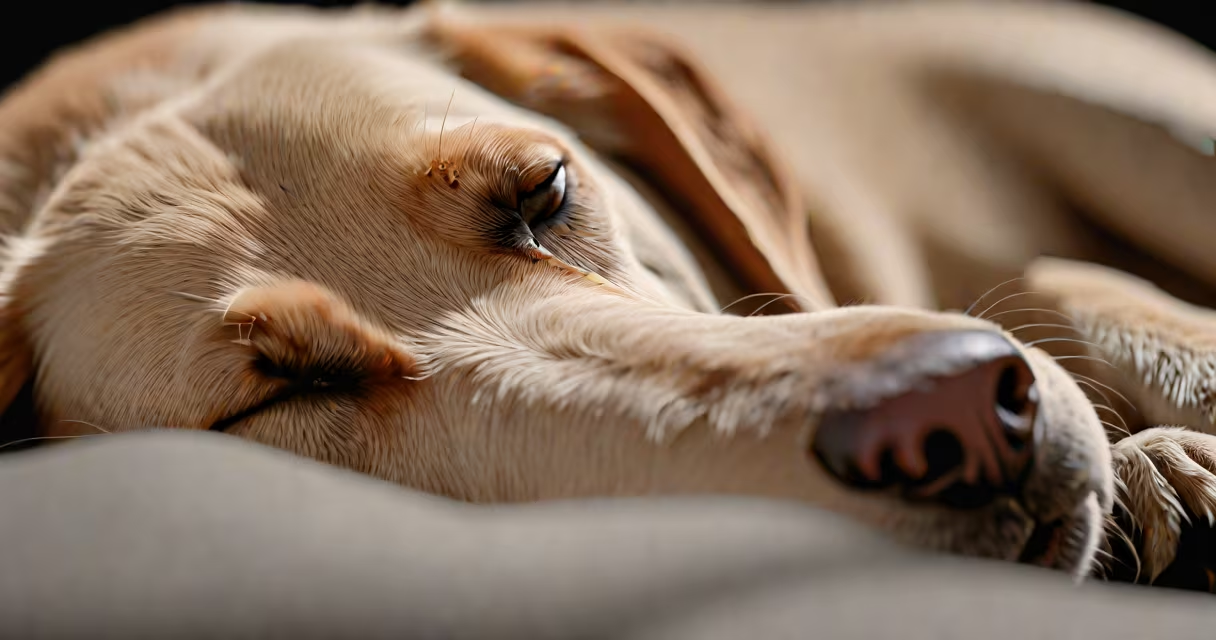
Dogs shake in their sleep due to normal brain activity during REM (rapid eye movement) sleep, when they process dreams. This behavior is usually harmless and reflects neural patterns similar to human dreaming. However, persistent or intense shaking may indicate illness, injury, or neurological issues requiring medical attention.
During REM sleep, a dog's brain activates motor neurons even though the body remains mostly paralyzed. This triggers small muscle contractions-twitches, leg movements, or full-body shakes-that mimic running, barking, or chasing prey. These movements occur in bursts and typically last seconds to minutes. The frequency increases during deeper REM phases, which happen multiple times per night.
Most dogs exhibit mild shaking or twitching during sleep. A 2020 study published in Frontiers in Veterinary Science found that 68% of healthy adult dogs displayed some form of limb movement during REM sleep, with no correlation to breed size or age. These motions are involuntary and do not disrupt sleep quality.
REM sleep occurs in cycles lasting 10-20 minutes, repeating throughout the night. As the cycle progresses, dream intensity increases. Brain regions like the hippocampus and amygdala fire rapidly, triggering motor responses in the spinal cord. The cerebellum suppresses full-body movement to prevent acting out dreams-a protective mechanism shared across mammals.
When a dog shakes in her sleep, the nervous system sends signals to muscles without conscious control. This is why a dog may appear to run or bark in her sleep-her brain simulates action, but her body stays still. The movements are brief, localized, and often stop when she wakes.
A 2019 study from the University of California, Davis, monitored 42 dogs using EEG and EMG sensors. Researchers observed that 83% of recorded tremors occurred during REM phases, with no significant difference between breeds. Movements were most frequent in the hind legs and tail, suggesting activation of lower motor pathways.
Shaking during sleep falls into two categories: normal physiological responses and abnormal symptoms linked to disease. Distinguishing between them helps determine whether veterinary evaluation is needed.
| Type | Characteristics | Common Causes | When to Seek Help |
|---|---|---|---|
| Normal REM Twitching | Mild, brief jerks; occurs in bursts; stops when awake | Dreaming, natural brain activity | None-this is typical |
| Abnormal Tremors | Prolonged shaking; whole-body involvement; occurs during wakefulness | Hypoglycemia, seizures, hypothermia, neurological disorders | Repeated episodes, confusion, weakness, or loss of coordination |
Normal shaking happens during deep sleep stages and resolves quickly upon waking. Abnormal shaking persists beyond sleep, may be accompanied by drooling, stiffness, or disorientation, and can recur daily. If your dog shows signs of distress during or after shaking, consult a veterinarian.
Many owners assume all shaking during sleep is a sign of epilepsy or anxiety. This is incorrect. Epileptic seizures during sleep are rare and involve full-body convulsions, loss of bladder control, and prolonged unconsciousness. Dogs with seizure disorders rarely display isolated limb movements.
Another misconception is that shaking in sleep indicates fear or trauma. While fear-related tremors exist, they occur during wakefulness or in response to stimuli. A dog who shivers when startled or hears loud noises is reacting to external input-not internal brain activity.
I once observed a 3-year-old Border Collie named Luna who shook violently during sleep for nearly five minutes. Her owner brought her in after noticing she was unresponsive afterward. Blood tests revealed low blood sugar (hypoglycemia), likely due to insulin imbalance. After treatment, the shaking stopped. This case highlights that while most sleep tremors are benign, underlying conditions can mimic them.
Seek veterinary care if your dog exhibits any of the following:
Conditions such as Addison's disease, hypothyroidism, or early-stage dementia can cause tremors. A vet may perform blood work, urinalysis, or imaging to rule out metabolic or neurological causes. Early diagnosis improves outcomes.
why is my dog shaking in her sleep? Most of the time, it's a normal part of REM sleep. The brain replays experiences, and the body responds with micro-movements. This behavior is evolutionarily preserved-wild ancestors needed to stay alert during rest, so motor readiness remained active.
However, when shaking becomes prolonged, frequent, or is paired with other symptoms, it may signal a health issue. Monitor patterns closely. If uncertainty remains, consult a veterinarian for a physical exam and diagnostic testing.
Understanding your dog's sleep behavior helps distinguish between natural processes and potential problems. Normal sleep tremors don't require intervention. Abnormal ones do. When in doubt, seek professional guidance.