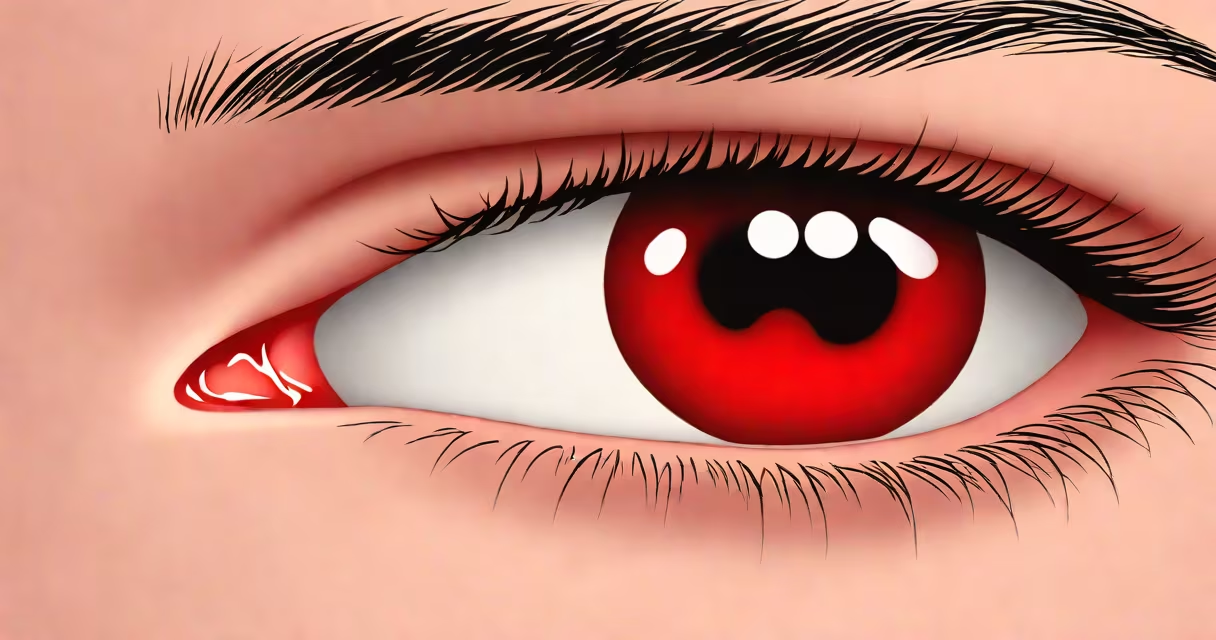
A black eye with blood in the eye occurs when trauma ruptures small blood vessels beneath the conjunctiva-the clear membrane covering the white of the eye-causing visible redness or pooling of blood. This condition, medically known as subconjunctival hemorrhage, often follows a direct blow to the face or eye area.
Subconjunctival hemorrhage appears as a bright red or dark red patch on the sclera (white of the eye), typically confined to one area. The blood doesn't affect vision and usually resolves within 10 to 14 days without treatment. It's common after minor injuries such as rubbing the eye too hard, coughing violently, or being hit during sports.
According to the American Academy of Ophthalmology, subconjunctival hemorrhages occur in about 1 in 100 outpatient eye visits and are rarely serious. However, they can mimic more urgent conditions like hyphema (blood in the anterior chamber), which requires immediate medical evaluation.
Blood pools beneath the transparent conjunctiva because the tiny capillaries in this tissue are fragile and easily damaged. When injured, they leak blood into the space between the conjunctiva and the sclera. Because the conjunctiva is translucent, the blood becomes visible as a red or purplish patch.
The body gradually absorbs the blood over time. As absorption progresses, the color changes from bright red to yellow or green-similar to how a bruise fades. This process takes roughly 10 to 14 days, though some people report it lasting up to three weeks.
Unlike bruises on skin, subconjunctival hemorrhages don't cause pain or swelling. Vision remains normal. The absence of pain, discharge, or vision changes strongly indicates this is a benign condition.
There are two primary scenarios leading to black eye blood in the eye:
When blood appears in the eye after trauma, it may be accompanied by swelling, discoloration, and tenderness around the eye socket-classic signs of a black eye. The bruising spreads due to gravity and tissue fluid movement, turning from purple to blue, then yellow-green as healing progresses.
| Condition | Appearance | Common Cause | Urgency Level |
|---|---|---|---|
| Subconjunctival hemorrhage | Red or dark red patch on white of eye | Minor trauma, high pressure, medication | Low (usually resolves on its own) |
| Hyphema | Blood pooling in front of the iris, visible as a red layer in the eye | Blunt trauma to the eye, rare in children | High (requires emergency care) |
| Periorbital hematoma | Swelling and discoloration around the eye | Direct impact to the orbital area | Moderate (may require monitoring) |
Subconjunctival hemorrhage is most common in adults aged 30 to 60, especially those taking blood thinners. A 2021 study published in Journal of Clinical Medicine found that 17% of patients presenting with subconjunctival hemorrhage were on anticoagulants, compared to 3% in the general population.
It frequently happens during routine activities. For example, a man in his 40s reported waking up with a red eye after a night of vigorous coughing during a cold. No injury occurred, but the sudden increase in intrathoracic pressure ruptured a small vessel in the conjunctiva.
Another common scenario involves contact sports. A high school soccer player sustained a black eye during a match. The initial exam showed both periorbital bruising and a distinct red patch on the sclera. After 12 days, the blood had fully absorbed, and the eye returned to normal appearance.
Many assume that blood in the eye always indicates severe injury. That's false. Subconjunctival hemorrhage is generally harmless and doesn't damage vision. It's not contagious, nor does it require antibiotics.
Some people worry that it's a sign of internal bleeding or stroke. There's no evidence linking isolated subconjunctival hemorrhage to systemic conditions unless it recurs frequently or occurs without any apparent cause. Persistent episodes may suggest undiagnosed hypertension or clotting disorders.
One non-obvious fact: the presence of blood in the eye does not mean the retina is affected. Retinal bleeding presents with floaters, blurred vision, or vision loss-symptoms absent in subconjunctival hemorrhage. If vision changes, seek care immediately.
Most cases resolve without intervention. But consult an ophthalmologist if:
I once treated a patient who reported a red eye after a minor fall. He had no pain or vision changes. The redness was confined to the sclera. After confirming no internal damage via slit-lamp exam, I advised observation. The blood resolved completely in 11 days.
Black eye blood in eye refers to subconjunctival hemorrhage-a harmless pooling of blood under the conjunctiva following minor trauma or pressure changes. It appears as a red or purple patch on the white of the eye and clears within two weeks. It does not impair vision and rarely needs treatment. However, if blood is visible in the iris or vision changes, seek immediate care. Understanding the difference between superficial and deep ocular bleeding prevents unnecessary anxiety and ensures timely treatment when needed.