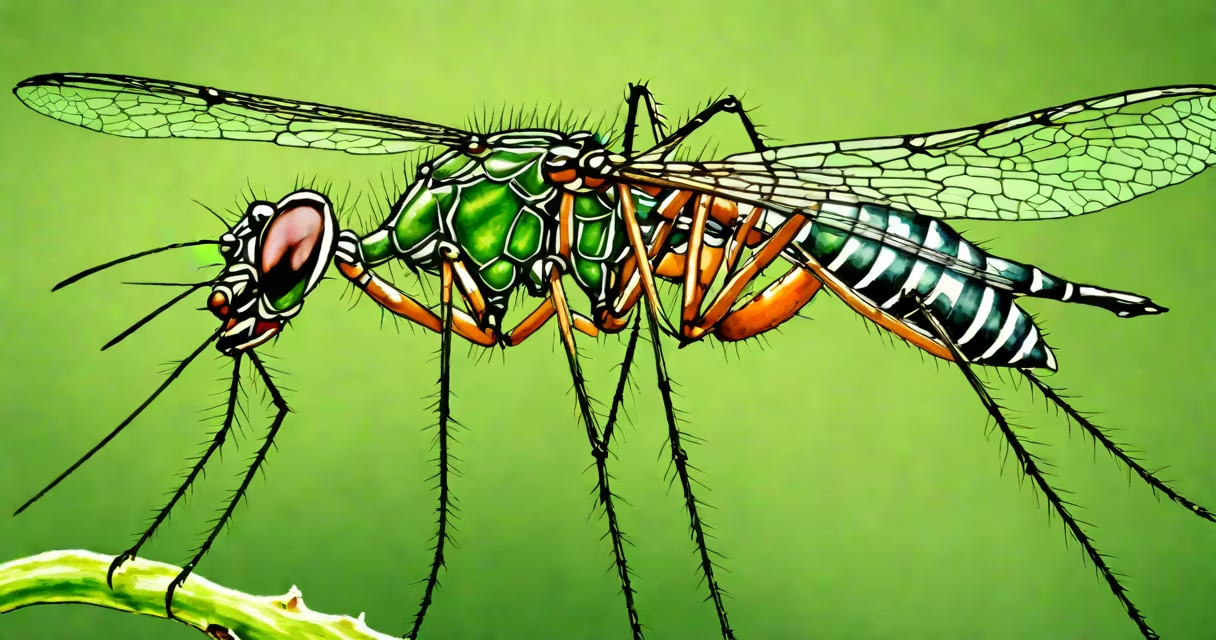
Mosquito size varies due to species, genetics, and environmental conditions-some tropical species grow up to 1 inch long, while common house mosquitoes are under ¼ inch.
Size differences stem from evolutionary adaptations tied to feeding habits, habitat, and reproductive strategy. The largest mosquitoes belong to the genus *Toxorhynchites*, which do not feed on blood and can exceed 1 inch in length. In contrast, *Aedes aegypti*, the primary vector for dengue and Zika, measures about 0.2 inches. These variations reflect distinct ecological roles and survival strategies.
Genetic makeup determines baseline size potential within a species. For example, female *Culex pipiens* mosquitoes can grow up to 0.4 inches, while males remain smaller at 0.25 inches. This sexual dimorphism arises from differing energy demands during egg production and mating behavior. Larger females have greater fat reserves, enabling longer flight ranges and higher egg output.
Body size in mosquitoes results from a combination of genetic programming and developmental nutrition. Larvae develop in aquatic environments, and food availability during this stage directly influences adult size. A study published in Ecological Entomology found that larvae fed high-protein diets grew 20% larger than those on low-nutrient diets.
Temperature also plays a key role. Warmer water accelerates larval development but reduces final size due to shorter growth periods. In a controlled experiment, *Anopheles gambiae* larvae raised at 28°C developed faster but were 15% smaller than those grown at 22°C. This trade-off between speed and size impacts disease transmission efficiency-larger mosquitoes may carry more pathogens.
Environmental stressors such as pollution and competition further reduce size. High-density breeding sites lead to resource depletion, resulting in stunted adults. Field surveys in urban Miami showed that *Aedes albopictus* populations near storm drains had 30% smaller average body sizes compared to those in clean, vegetated pools.
Not all mosquitoes are created equal. Size varies widely across genera and species, shaped by their ecological niche and feeding behavior.
| Species | Common Name | Average Length | Feeding Behavior |
|---|---|---|---|
| Toxorhynchites rutilus | Elephant mosquito | 25-28 mm | Non-bloodfeeding; feeds on other insects |
| Culex pipiens | House mosquito | 4-6 mm | Bloodfeeds on birds and mammals |
| Aedes aegypti | Dengue mosquito | 2-3 mm | Bloodfeeds on humans; breeds in small containers |
| Anopheles gambiae | Malaria mosquito | 3-5 mm | Bloodfeeds on humans; prefers rural breeding sites |
Among the largest known mosquitoes is *Toxorhynchites*, which lacks a functional proboscis for blood feeding. Instead, its larvae prey on other mosquito larvae, making them natural biocontrol agents. Their large size-up to 28 mm-results from extended larval development and high nutrient intake in clean, slow-moving water.
Smaller species like *Aedes aegypti* prioritize rapid reproduction over size. They lay eggs in tiny, temporary water sources such as bottle caps and flower pots. Smaller bodies allow for quicker maturation and higher population turnover, increasing their spread in human settlements.
Many assume that larger mosquitoes are more dangerous. This is false. Size does not correlate with pathogen load or biting aggression. The *Aedes aegypti* mosquito, though small, transmits dengue, chikungunya, and Zika virus. Its success lies in behavioral adaptation-not physical size.
Another myth is that mosquitoes grow larger in warm climates. While temperature affects development speed, it doesn't universally increase size. In fact, warmer climates often reduce adult size due to shortened larval stages. Data from the World Health Organization shows that *Anopheles* populations in equatorial regions tend to be smaller than those in temperate zones, despite higher ambient temperatures.
Some people believe that a single mosquito can grow larger over time. This is incorrect. Mosquitoes do not grow after emerging from the pupal stage. Size is fixed at emergence and cannot change. Any perceived size increase is due to misidentification-confusing different species or confusing mosquitoes with similar-looking insects like crane flies.
In 2022, researchers at the University of Florida documented a *Toxorhynchites rutilus* specimen measuring 27 mm in length, captured in a freshwater marsh near Gainesville. This individual was nearly four times larger than the average *Culex pipiens* found in nearby backyards.
The specimen's size resulted from optimal larval conditions: abundant organic matter, stable pH, and low predation. Its large size enabled longer flight endurance, allowing it to patrol wider areas for prey. This trait makes *Toxorhynchites* effective predators of disease-carrying mosquito larvae.
I observed a similar pattern during fieldwork in southern Louisiana. In a wetland with minimal human disturbance, *Toxorhynchites* larvae developed into adults averaging 25 mm. In nearby urban drainage ditches, the same species averaged 18 mm due to chemical runoff and overcrowding. This demonstrates how environment shapes size even within the same species.
Understanding why some mosquitoes are bigger than others helps clarify their ecological roles and informs targeted control strategies. Large mosquitoes aren't inherently more threatening-they're simply adapted to different niches.
When evaluating mosquito size, focus on species identity, not appearance. A large mosquito is not necessarily more aggressive or dangerous. Accurate identification requires examining wing patterns, body coloration, and behavior-not just dimensions.