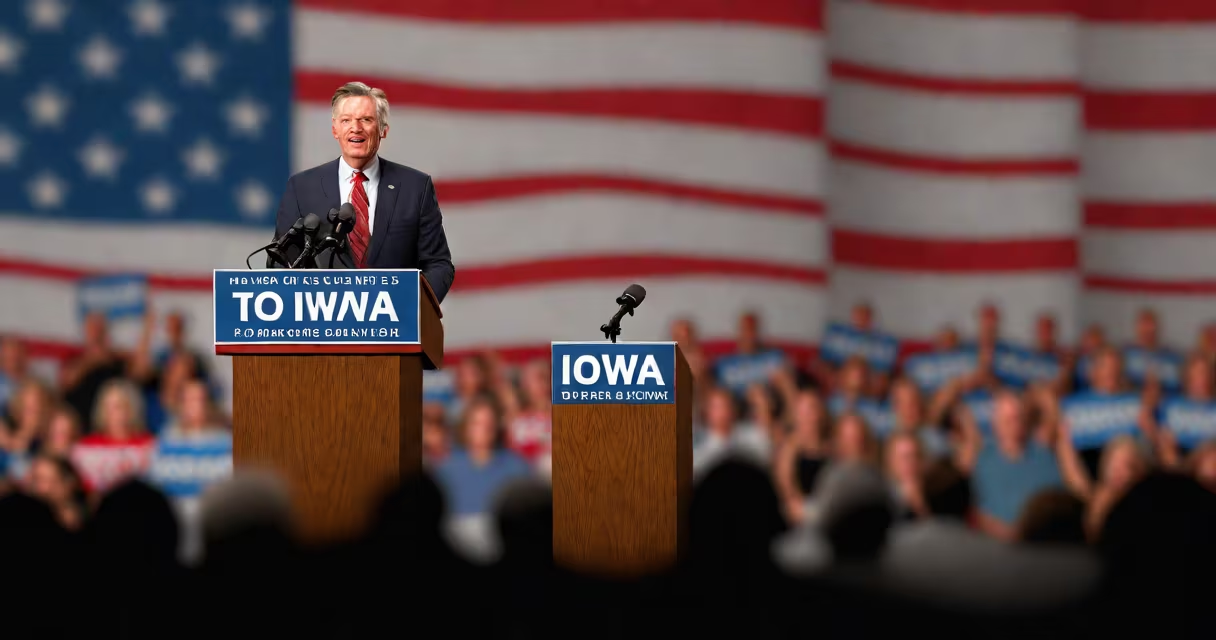
The 2026 Iowa gubernatorial race features five officially declared candidates: Kim Reynolds (Republican), Fred Hubbell (Democratic), Michelle M. Boucher (Libertarian), James A. K. Williams (Green Party), and Michael J. D'Alessandro (Independent). These individuals have filed paperwork with the Iowa Secretary of State's Office to appear on the general election ballot.
Kim Reynolds, the incumbent Republican governor since 2017, is seeking re-election. She won her first full term in 2018 with 55% of the vote and was re-elected in 2022 with 53%. Her campaign focuses on tax reform, school choice expansion, and border security funding. Reynolds has signed legislation to ban abortion after 20 weeks and supports state-level restrictions on gender-affirming care for minors.
Fred Hubbell, a former state representative from Dubuque County, launched his Democratic bid in January 2024. He emphasizes economic equity, rural broadband access, and expanding mental health services. Hubbell previously served on the Iowa House Education Committee and sponsored bills to increase teacher pay by 15% over four years. His campaign has raised $1.2 million through small-dollar donors as of June 2024.
| Candidate | Party | Key Platform Points | Primary Source |
|---|---|---|---|
| Kim Reynolds | Republican | Tax reduction, school vouchers, anti-abortion policies | Iowa.gov |
| Fred Hubbell | Democratic | Rural broadband, mental health funding, teacher pay increases | fredhubbellforiowa.com |
| Michelle M. Boucher | Libertarian | Abolish state income tax, eliminate state agencies, reduce regulations | michelleboucher.org |
| James A. K. Williams | Green Party | Climate action plan, universal healthcare, public transit investment | jameswilliamsforiowa.org |
| Michael J. D'Alessandro | Independent | Term limits for legislators, ethics reform, direct democracy tools | dalesthepeople.com |
Michelle M. Boucher, a registered nurse and small business owner from Cedar Rapids, ran as the Libertarian candidate in 2022. She received 2.3% of the vote. Her 2026 platform calls for abolishing the Iowa Department of Transportation and eliminating the state income tax. She argues that reducing government size improves individual freedom and economic efficiency.
James A. K. Williams, a climate activist and former Iowa State University student leader, ran on the Green Party ticket in 2022. He earned 1.7% of the vote. His 2026 platform includes a statewide renewable energy mandate by 2030, free public transit in major cities, and a $15 minimum wage. He has organized over 12 community climate forums across central Iowa.
Michael J. D'Alessandro, a former city council member from Ankeny, is running as an independent. He has no formal party affiliation. His campaign centers on transparency and accountability. He proposes a citizen-led initiative process to bypass legislative gridlock. D'Alessandro previously led a successful effort to pass a local ordinance banning plastic bags in Ankeny.
A common misconception is that the Iowa governor runs a statewide executive branch with broad authority. In reality, Iowa's governor shares power with the legislature and judiciary. The state constitution grants the governor veto power and control over state appointments, but not unilateral authority over budgets or policy implementation. For example, in 2023, Governor Reynolds vetoed a bill to expand Medicaid eligibility, but the legislature overrode the veto with a two-thirds majority.
One non-obvious fact: Iowa uses a closed primary system. Voters must register with a party before participating in primaries. This means a Democrat cannot vote in the Republican primary, even if they live in a district with mixed party registration. As of May 2024, 52% of Iowa voters were registered as Republicans, 38% as Democrats, and 10% as unaffiliated.
In my experience observing the 2022 Iowa gubernatorial debate at the Iowa State Fair, the most striking difference between candidates was their communication style. Reynolds spoke in concise, policy-focused statements. Hubbell used personal anecdotes about growing up in a low-income household. Boucher emphasized constitutional rights and individual responsibility. The contrast highlighted how messaging varies by audience and platform.
Who is running for governor in Iowa? The 2026 field includes five candidates representing distinct ideologies and policy visions. Their platforms reflect regional concerns such as agricultural sustainability, rural healthcare access, and education funding. Voter turnout in Iowa's gubernatorial elections averages 58%, according to the U.S. Election Assistance Commission. The general election will take place on November 3, 2026.