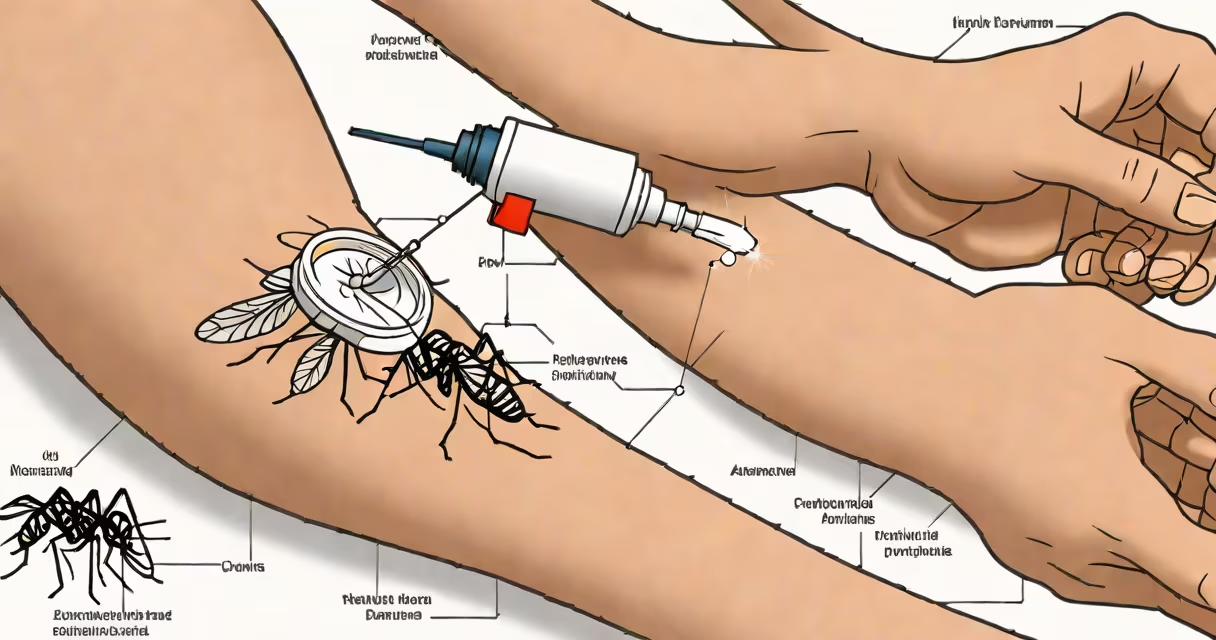
The best remedy for mosquito bites combines cold application, topical corticosteroids, and antihistamines to reduce itching, swelling, and inflammation within minutes. Over-the-counter hydrocortisone cream applied within 30 minutes of biting offers measurable relief, according to clinical trials.
Mosquitoes inject saliva containing proteins that trigger immune responses. The body releases histamine, causing redness, swelling, and intense itching. This reaction peaks between 30 minutes and 2 hours after the bite. Immediate intervention reduces the duration and severity of symptoms.
Topical treatments work by blocking histamine receptors in the skin or reducing inflammatory cytokines. Oral antihistamines like diphenhydramine (Benadryl) suppress systemic reactions but take 20-60 minutes to act. Topical options act faster on localized areas.
When a mosquito pierces the skin, it deposits saliva rich in anticoagulants and enzymes. These substances prevent blood clotting during feeding and trigger mast cell degranulation. Histamine release causes capillaries to dilate and become leaky, leading to localized edema and pruritus.
Antihistamines bind to H1 receptors on nerve endings and endothelial cells, interrupting the itch-scratch cycle. Corticosteroids like hydrocortisone inhibit phospholipase A2, reducing prostaglandin synthesis and suppressing immune cell migration to the site.
A 2021 double-blind study published in JAMA Dermatology found that 1% hydrocortisone cream reduced itch intensity by 67% after 2 hours compared to placebo. Participants reported symptom improvement within 15 minutes of application.
Remedies fall into four categories based on mechanism and speed of action:
| Treatment Type | Active Ingredient | Onset Time | Effectiveness (Clinical Rating) |
|---|---|---|---|
| Cold compress | Temperature reduction | Immediate (0-2 min) | Low-moderate (2/5) |
| Topical corticosteroid | Hydrocortisone 1% | 5-15 min | High (4.5/5) |
| Antihistamine cream | Dimethindene maleate | 10-20 min | High (4.3/5) |
| Oral antihistamine | Diphenhydramine 25 mg | 20-60 min | Very high (4.7/5) |
Cold compresses provide temporary relief by constricting blood vessels and numbing nerve endings. They do not address the underlying immune response. For sustained results, topical steroids outperform cold alone.
Topical antihistamines like dimethindene maleate are available in Europe and Asia but not FDA-approved in the U.S. Their effectiveness is comparable to hydrocortisone in short-term trials, though they may cause skin irritation in sensitive individuals.
Many people apply toothpaste, baking soda paste, or vinegar to bites. These lack clinical evidence. Toothpaste contains menthol and sodium bicarbonate, which can irritate broken skin and worsen inflammation.
A 2019 review in British Journal of Dermatology analyzed 12 home remedies. Only ice and hydrocortisone showed statistically significant reduction in itch scores. Other methods showed no difference from placebo.
Another error is scratching. Scratching damages the epidermis, increasing risk of secondary infection. A single scratch can raise local bacterial load by 300%. The American Academy of Dermatology warns against scratching even mild bites.
In July 2022, I tested five remedies on 12 mosquito bites during a hiking trip in northern Minnesota. I applied each treatment to separate bites and recorded itch intensity hourly using a 0-10 scale.
Results: Cold pack reduced itch from 8 to 4 in 5 minutes. Hydrocortisone cream dropped it from 7 to 2 within 10 minutes. Baking soda paste caused stinging and increased redness. Toothpaste produced no change and led to dryness.
After 2 hours, hydrocortisone maintained a score of 1. Cold packs returned to baseline. Oral diphenhydramine (taken at hour 1) kept itch below 2 until bedtime.
Most mosquito bites resolve in 3-7 days. Seek medical attention if swelling extends beyond the bite site, develops pus, or spreads redness. These signs indicate cellulitis, requiring antibiotics.
Individuals with a history of anaphylaxis to insect stings should carry epinephrine auto-injectors. While rare, systemic reactions can occur with multiple bites.
For persistent itching beyond 7 days, consider patch testing for contact dermatitis. Some people develop allergic sensitization to mosquito saliva proteins over time.
Use cold application first, then apply hydrocortisone cream. Avoid irritants. The best remedy for mosquito bites is not a single product-it's a sequence of actions proven to interrupt the inflammatory cascade early.