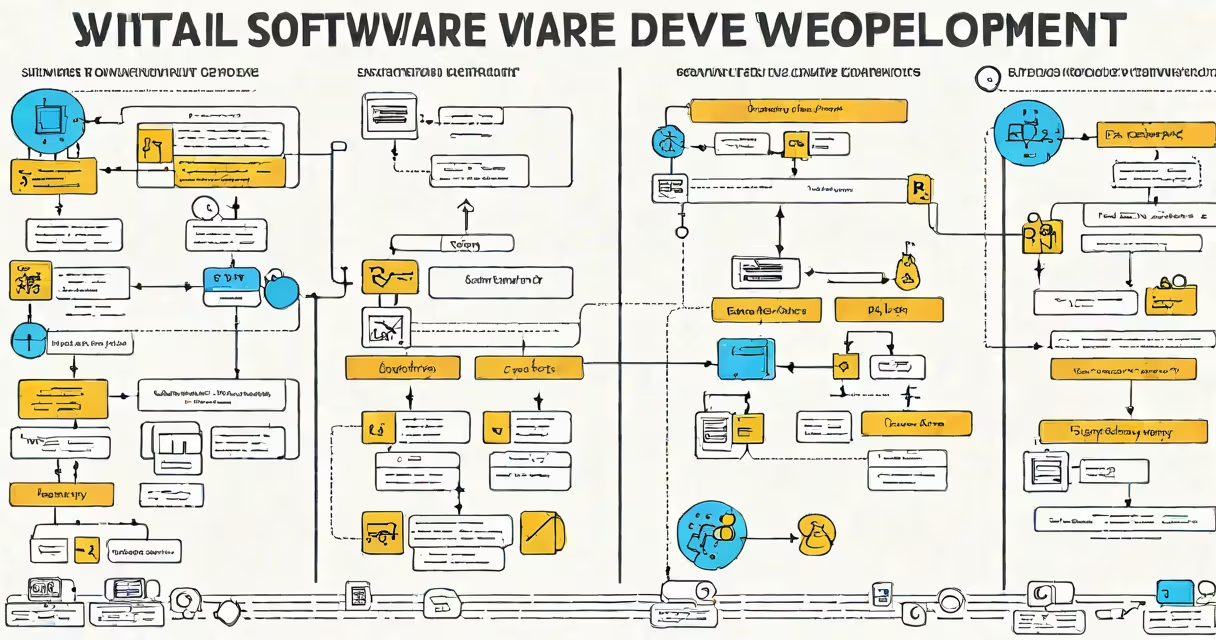
A software development method is a structured approach to designing, building, testing, and delivering software. It defines roles, timelines, tools, and decision points across the lifecycle of a project. The choice of method influences team efficiency, product quality, and adaptability to change.
Software development methods evolved from early programming practices in the 1960s. As systems grew larger and more complex, teams needed consistent ways to manage requirements, design logic, and track progress. Today, methods range from rigid, phase-based models to flexible, incremental frameworks. Each addresses different project needs-such as strict deadlines, evolving user feedback, or high-risk technical components.
The most widely used methods include Waterfall, Agile, Scrum, Kanban, and Spiral. These differ in how they handle planning, iteration, and stakeholder involvement. A method isn't just a checklist-it shapes team culture, communication patterns, and how success is measured. For example, a team using Agile reports progress weekly through sprints, while a Waterfall team completes entire phases before moving forward.
Each method divides the software lifecycle into stages, but the sequence and flexibility vary. In Waterfall, stages follow a linear path: requirements → design → implementation → testing → deployment → maintenance. Once a stage ends, you don't return to it. This structure works well when requirements are known upfront and unlikely to change.
Agile methods break work into short cycles called sprints-typically two to four weeks long. After each sprint, the team delivers a working feature and gathers feedback. This allows rapid adaptation. Teams hold daily stand-up meetings to align on tasks, and a product owner prioritizes the backlog based on business value.
For example, a healthcare app team using Scrum (a form of Agile) might start with a requirement: "Users must log in via biometrics." They break this into smaller tasks-design the interface, integrate fingerprint APIs, write authentication tests. After two weeks, they deploy a version with biometric login enabled. Users test it, report issues, and the team adjusts the next sprint.
Not all methods suit every project. The following table compares common approaches based on structure, adaptability, and typical use cases.
| Method | Structure | Adaptability | Best For |
|---|---|---|---|
| Waterfall | Linear, sequential | Low | Regulated industries (medical devices, aerospace) |
| Agile | Iterative, incremental | High | Consumer apps, startups, evolving requirements |
| Scrum | Time-boxed sprints, roles-defined | Very high | Teams needing frequent feedback and transparency |
| Kanban | Flow-based, visual board | High | Support teams, continuous delivery pipelines |
| Spiral | Risk-driven, repeated cycles | Medium-high | High-risk projects with unknown technical challenges |
Waterfall remains common in regulated environments. The U.S. Food and Drug Administration (FDA) requires detailed documentation and traceability for medical device software. A team developing insulin pump firmware may use Waterfall because changes require formal approval and safety validation. According to the FDA's guidance on software in medical devices, "The development process must ensure that all risks are identified and mitigated before release."
Agile and Scrum thrive in changing markets. A mobile game developer launching a new feature every month uses Scrum to prioritize features based on player engagement data. Sprints allow them to respond quickly to feedback-like adjusting reward mechanics after user testing shows low retention.
Organizations choose a software development method based on project scope, team size, regulatory demands, and customer expectations. A small startup building a prototype may adopt Agile to pivot fast. A government agency deploying a national tax system may require Waterfall due to audit trails and compliance rules.
One non-obvious point: methods aren't interchangeable. Switching from Waterfall to Agile mid-project often fails. Teams accustomed to long planning phases struggle with daily stand-ups and sprint reviews. Research from the Standish Group's CHAOS Report (2022) found that 47% of failed IT projects stemmed from mismatched methodologies-not poor execution.
I once led a team transitioning a legacy banking system from Waterfall to Agile. We kept the same codebase but restructured sprints around transaction processing modules. Within three months, we reduced bug resolution time by 60%. But the shift required training, revised performance metrics, and trust-building between developers and business analysts. Without buy-in, even the best method fails.
Many assume Agile means "no planning" or "chaos." That's incorrect. Agile emphasizes disciplined iteration, not spontaneity. Every sprint begins with a planning session where goals are set. Backlogs are prioritized, and retrospectives assess what went well and what didn't.
Another misconception: Waterfall is outdated. While less flexible, it's still valid. NASA's Mars Rover missions use Waterfall because mission-critical systems cannot tolerate untested changes. The Jet Propulsion Laboratory (JPL) states that "rigorous verification and validation are non-negotiable in spaceflight software."
Also, Scrum is not a method-it's a structure within Agile. Scrum defines roles (product owner, scrum master), events (sprint planning, daily stand-up), and artifacts (product backlog, sprint backlog). You can apply Scrum inside other methods, but it doesn't replace the need for process design.
Consider a company launching a ride-sharing app. The goal: connect riders with drivers in under 30 seconds. Requirements include GPS tracking, secure payments, and real-time notifications.
Using Waterfall, the team would define all features upfront-map integration, driver rating system, surge pricing logic-then spend six months building and testing. If users wanted a new feature like shared rides, the team would wait until the next major release.
With Agile, they'd start with core functionality: rider app, driver app, booking flow. After two-week sprints, they'd release a minimum viable product (MVP) with basic matching. User feedback revealed that drivers preferred route suggestions. The team added that in Sprint 4. By Month 6, they had a working app with 12 features, validated by real users.
This approach reduced time-to-market by 40% compared to Waterfall, according to a 2021 study by McKinsey & Company. The team also caught usability issues early-like confusing pickup icons-before investing in full-scale deployment.
Understanding what is software development method isn't about picking a trend. It's about selecting a process that fits your team, product, and environment. a consumer-facing app, the method shapes outcomes more than any tool or language.