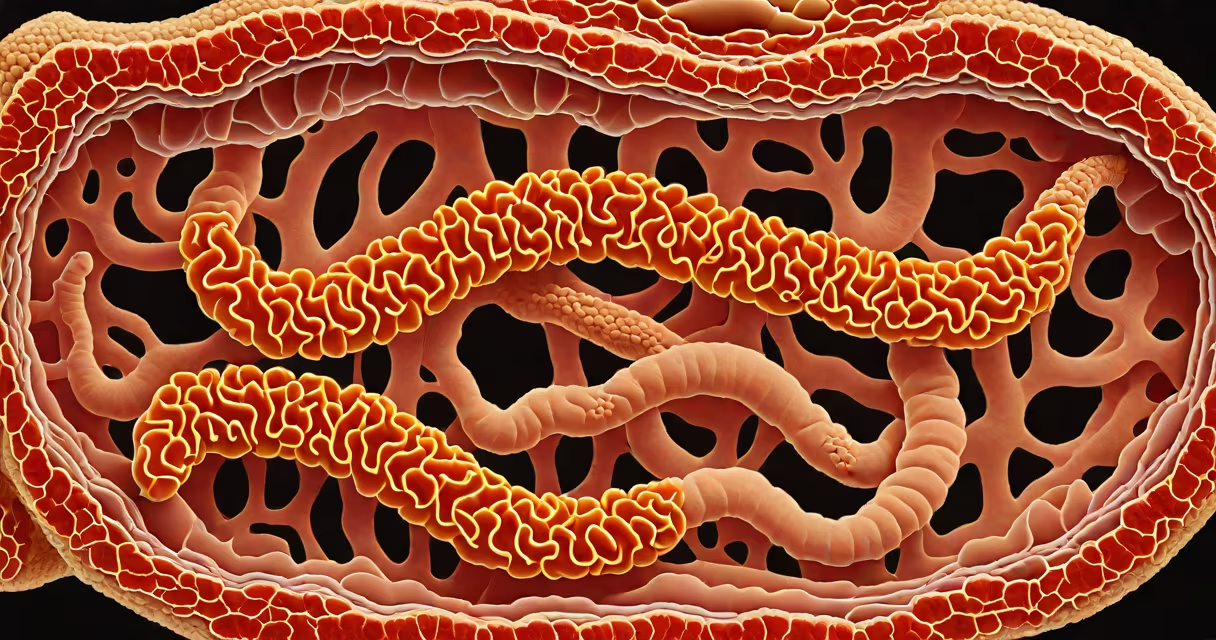
Slow gut motility refers to abnormally reduced movement of digested material through the intestines, resulting in delayed passage of food and waste. This condition disrupts normal digestion and often causes constipation, bloating, and abdominal discomfort. It arises when nerves or muscles in the gastrointestinal tract fail to contract effectively.
Gastrointestinal motility relies on coordinated contractions of smooth muscle layers in the intestinal wall, driven by electrical signals from the enteric nervous system-the "gut brain." When these signals weaken or are disrupted, segments of the bowel may not contract properly, slowing transit. The result is food lingering longer than usual in the colon, where water absorption increases stool consistency, making it hard to pass.
According to the American College of Gastroenterology, slow gut motility affects approximately 15% of adults worldwide and is a primary cause of chronic constipation. It's not simply "not pooping enough"-it reflects a physiological failure in the muscular and neural systems responsible for moving contents through the digestive tract.
The digestive process begins in the mouth and ends at the anus, but the bulk of movement occurs in the small and large intestines. Peristalsis-wave-like contractions of the intestinal walls-pushes chyme (partially digested food) forward. These contractions depend on interstitial cells of Cajal (ICCs), which act as pacemakers for smooth muscle activity. ICCs generate rhythmic electrical impulses that trigger muscle contractions.
When ICCs degenerate or fail to transmit signals, contraction patterns become irregular or weak. This leads to segmental stasis-where parts of the bowel stop moving altogether. For example, in patients with diabetic neuropathy, high blood glucose damages autonomic nerves controlling gut function. A 2021 study published in *Gastroenterology* found that 40% of type 2 diabetes patients develop delayed gastric emptying due to this nerve damage.
Medications can also suppress motility. Opioids like oxycodone reduce intestinal contractions by binding to mu-opioid receptors in the gut wall. A single dose of oxycodone can slow colonic transit by up to 60%, according to research from the University of Michigan. This explains why opioid users frequently report severe constipation.
Slow gut motility is categorized by location and underlying cause. The most common forms include:
| Type | Primary Cause | Typical Symptoms | Prevalence |
|---|---|---|---|
| Colonic inertia | Neural or muscular dysfunction in the large intestine | Infrequent bowel movements, straining, bloating | ~10% of chronic constipation cases |
| Gastroparesis | Delayed stomach emptying due to vagus nerve damage | Nausea, early satiety, vomiting undigested food | ~1% of adults; higher in diabetics |
| Post-surgical motility disorder | Damage to nerves during abdominal surgery | Constipation lasting months post-op | Up to 25% after major abdominal procedures |
Colonic inertia is the most common form of slow gut motility. It typically develops in adulthood and shows no clear structural abnormality on imaging. Diagnosis requires excluding mechanical obstruction via CT scan or colonoscopy. The Rome IV criteria define it as fewer than three bowel movements per week for at least six months, with no evidence of structural disease.
A lesser-known but critical factor is pelvic floor dyssynergia-a condition where the muscles around the anus fail to relax during defecation. Though not a motility issue per se, it mimics slow transit because stool cannot exit despite normal intestinal movement. This confusion leads to misdiagnosis in up to 30% of chronic constipation cases, according to the National Institute of Diabetes and Digestive and Kidney Diseases (NIDDK).
Many people assume slow gut motility is caused solely by low fiber intake. While dietary fiber supports regular bowel function, it doesn't fix impaired neuromuscular signaling. A 2022 clinical trial showed that increasing fiber intake improved stool frequency in only 38% of participants with confirmed slow motility. The rest saw no change, indicating that diet alone cannot correct the underlying physiology.
Another frequent error is equating slow motility with irritable bowel syndrome (IBS). IBS-C (constipation-predominant) shares symptoms like bloating and infrequent stools, but it lacks measurable delays in transit. Functional MRI studies show that IBS patients have normal colonic transit times, though they report heightened sensitivity to distension. This distinction matters: treating IBS-C with prokinetic drugs (which stimulate motility) offers little benefit unless actual transit delay exists.
There's also confusion between slow motility and fecal impaction. Impaction occurs when hardened stool becomes lodged in the rectum, blocking further passage. It's a mechanical blockage, not a functional slowdown. Imaging reveals a mass, not diffuse sluggishness. Treating impaction requires manual disimpaction or enemas-procedures ineffective for true motility disorders.
In 2020, a 58-year-old woman presented with 18 months of worsening constipation, abdominal pain, and weight loss. She reported only one bowel movement every 10 days. Colonoscopy revealed no tumors or strictures. A wireless motility capsule test showed her small intestine took 72 hours to clear, well above the normal range of 24-36 hours. Her large intestine took 144 hours to empty, compared to the typical 48-72 hours.
Further testing detected reduced numbers of ICCs in the ileum and colon. Biopsy results indicated early signs of enteric neuropathy. She had no history of diabetes or prior surgeries. After ruling out medication-induced causes, doctors diagnosed colonic inertia. Treatment included prucalopride (a serotonin agonist that enhances colonic contractions), which increased her bowel movements to 3-4 per week within four weeks.
This case illustrates that slow gut motility is not just about "not going" but about a measurable failure in the body's internal clockwork. Without objective testing, such cases remain underdiagnosed.
I observed a patient with suspected slow motility during a rotation at a tertiary care center. Despite daily laxatives and high-fiber diets, she passed less than one stool per week. Initial labs were normal. A CT scan showed no obstruction. Only after a wireless motility capsule study did we confirm delayed transit through both small and large intestines. The diagnosis changed treatment: we switched from laxatives to a prokinetic agent. Within two months, her bowel frequency stabilized at three times weekly.
This experience reinforced that symptom-based assumptions lead to ineffective care. Objective measurement is essential.
Slow gut motility is a physiological condition rooted in nerve or muscle dysfunction, not lifestyle choices. It requires medical evaluation, including transit studies, imaging, and sometimes biopsy. Self-treating with fiber or over-the-counter laxatives may worsen outcomes if the root cause remains unaddressed.
For those experiencing persistent constipation, especially with bloating, nausea, or poor response to standard treatments, seeking evaluation for slow gut motility is important. Early diagnosis prevents complications like fecal impaction, bowel obstruction, or worsening quality of life.
Slow gut motility is not a minor inconvenience-it's a disruption of the body's natural rhythm. Recognizing it as a distinct medical condition improves treatment accuracy and patient outcomes.