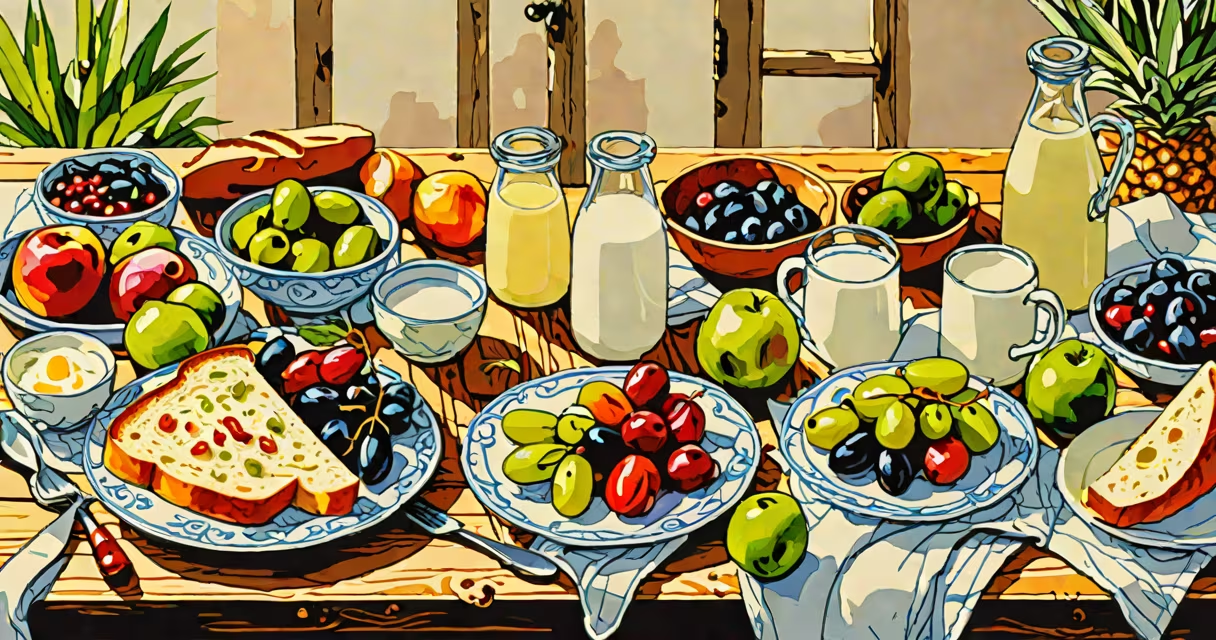
A Mediterranean breakfast is a daily meal rooted in the coastal regions of southern Europe, particularly Greece, Italy, Spain, and parts of North Africa. It emphasizes seasonal produce, whole grains, legumes, dairy, and olive oil-foods linked to lower rates of heart disease and improved longevity.
This eating pattern isn't a single recipe. It's a way of combining foods that align with decades of nutritional research. The World Health Organization notes that diets rich in plant-based foods, healthy fats, and moderate protein reduce chronic disease risk. The Mediterranean diet, including its breakfast traditions, is cited as one of the most effective dietary patterns for long-term health.
Unlike Western-style breakfasts dominated by processed cereals, sugary pastries, and packaged meats, a Mediterranean breakfast focuses on freshness, simplicity, and balance. It typically includes at least three food groups: fruit, whole grains, and dairy or plant-based protein. Meals are eaten slowly, often with family or friends, reinforcing social well-being alongside physical health.
The foundation of a Mediterranean breakfast lies in seasonal, locally sourced ingredients. Fresh figs, oranges, grapes, and berries appear in abundance during spring and summer. In autumn, apples, pears, and quince take center stage. These fruits provide fiber, vitamin C, and antioxidants without added sugars.
Whole grains form another pillar. Instead of refined toast or instant oatmeal, people eat whole-grain breads like pita, sourdough, or flatbreads. These are topped with olive oil, tomatoes, cucumbers, and feta-a combination known as *moussaka* in Greek households. In southern Italy, *pane e marmellata* (bread with jam) is common, but the jam is usually homemade with seasonal fruit and minimal sugar.
Dairy plays a key role. Greek yogurt, often thick and unflavored, is served with honey, walnuts, and fresh mint. In Spain, *yogur natural* with sliced banana and a sprinkle of cinnamon is typical. These choices avoid artificial sweeteners and prioritize texture and flavor over calorie counting.
Here are the essential elements of a traditional Mediterranean breakfast:
| Ingredient | Common Forms | Health Benefit |
|---|---|---|
| Fresh fruit | Oranges, figs, grapes, melon | High in vitamin C and soluble fiber; supports gut health |
| Extra virgin olive oil | Drizzled on bread or mixed into yogurt | Rich in monounsaturated fats; reduces inflammation |
| Whole grain bread | Pita, sourdough, ciabatta | Slow-digesting carbohydrates; improves satiety |
| Greek yogurt | Plain, high-protein, low-sugar | Contains probiotics and calcium; aids digestion |
| Nuts and seeds | Walnuts, almonds, chia seeds | Provide omega-3s and healthy fats; reduce LDL cholesterol |
These components work together to stabilize blood sugar, promote gut microbiome diversity, and reduce oxidative stress. A 2020 study published in BMJ Nutrition, Prevention & Health found that individuals following a Mediterranean-style diet-including breakfast-had a 25% lower risk of developing type 2 diabetes over ten years compared to those on standard Western diets.
One non-obvious fact: the timing of meals matters. Mediterranean breakfasts are typically eaten between 7:00 and 9:00 AM, but they're not rushed. A 2018 survey by the European Journal of Clinical Nutrition showed that people who ate breakfast within 30 minutes of waking had better concentration and lower afternoon fatigue than those who skipped or delayed it.
While the core principles remain consistent, regional differences exist. In coastal Greece, breakfast may include *spanakopita* (spinach pie) with a side of fresh orange juice. In southern Italy, *cannoli* are sometimes served-but only on Sundays, and filled with ricotta and candied citrus peel, not chocolate or cream.
In Spain, especially in Andalusia, breakfast features *tostadas*-toasted bread topped with mashed avocado, cherry tomatoes, and a poached egg. This dish combines healthy fats, fiber, and protein in one bite. In Morocco, a traditional breakfast includes harira soup (lentil and tomato-based) with dates and mint tea-showing how the concept extends beyond the Mediterranean Sea.
Despite these variations, all versions share a focus on minimally processed foods. A 2021 analysis by the Harvard School of Public Health confirmed that Mediterranean-style breakfasts are associated with higher cognitive function in older adults. Participants who consumed at least four servings of fruits and vegetables daily-often at breakfast-scored 12% higher on memory tests than those who ate fewer than two servings.
Many assume a Mediterranean breakfast is low-calorie or restrictive. That's incorrect. It's not about calorie counting-it's about food quality. A Greek breakfast with feta, olives, and honey-drizzled yogurt can exceed 500 calories, but the energy comes from nutrient-dense sources, not empty carbs or trans fats.
Another misconception: it requires exotic ingredients. You don't need imported za'atar or wild herbs. A bowl of Greek yogurt with local strawberries, walnuts, and a drizzle of honey meets all criteria. The key is using whole foods prepared simply.
I once tried replicating a traditional Turkish breakfast in my kitchen. I bought fresh simit (sesame-covered bread rings), labneh (strained yogurt), and a mix of dried apricots and pistachios. The result was satisfying-not because it was fancy, but because each component tasted true to its origin. The bread was crisp, the labneh tangy, and the nuts added crunch. It wasn't perfect, but it captured the spirit: food that feels good to eat and good to know.
Some confuse this with "Mediterranean-inspired" breakfasts sold in supermarkets-packaged granola bars labeled "Greek-style," or flavored yogurts with added sugar. These are not authentic. True Mediterranean breakfasts avoid added sugars, artificial flavors, and hydrogenated oils. They rely on nature's flavor profile, not marketing.
A Mediterranean breakfast is not a trend. It's a centuries-old eating tradition grounded in geography, culture, and science. It's defined by fresh, seasonal ingredients, whole grains, healthy fats, and fermented dairy-foods proven to support metabolic and mental health.
When you choose this kind of breakfast, you're not just eating. You're participating in a lifestyle that values time, place, and nourishment. It's not about perfection. It's about consistency: choosing real food, shared with others, enjoyed slowly.