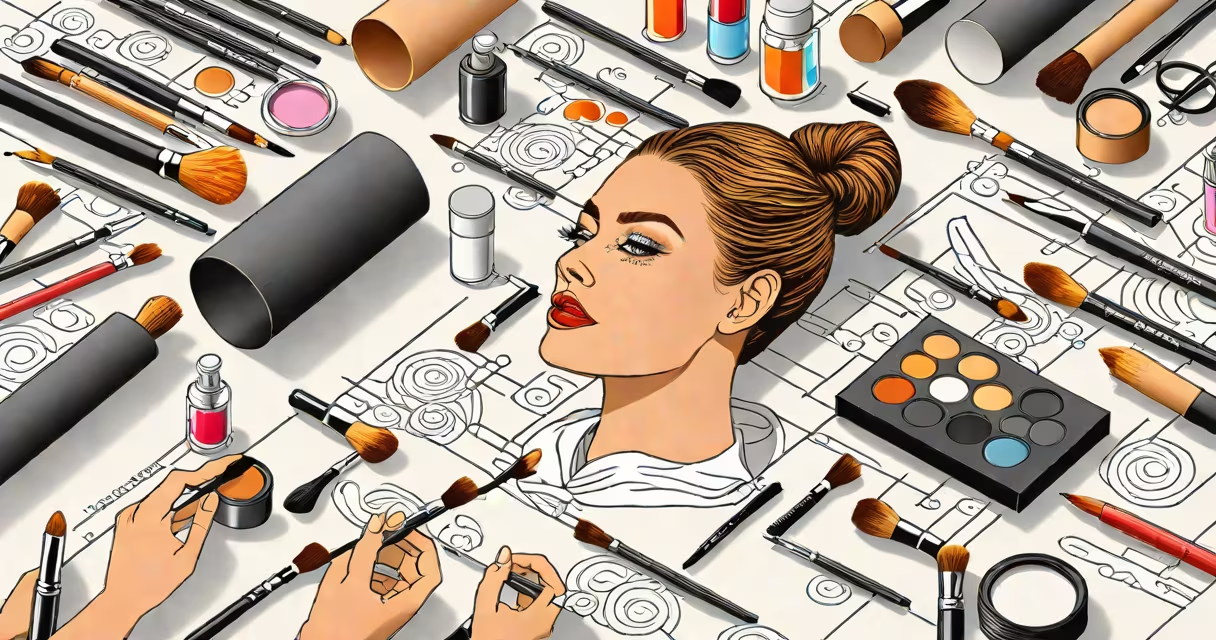
A cosmetology degree is a vocational credential earned after completing a state-approved program in skincare, hair styling, nail care, and makeup application. It is not an academic degree like a bachelor's or associate's degree but a career-focused certification required to work legally as a cosmetologist in most U.S. states.
Cosmetology programs typically last 9 to 18 months and combine classroom instruction with hands-on practice. Students learn anatomy of the skin and scalp, chemical treatments such as perms and relaxers, facial procedures, and client consultation techniques. Upon completion, they must pass a state licensing exam to become certified.
The term "degree" in this context refers to a formal credential, not a university award. Unlike a college degree, which often leads to broader career paths, a cosmetology credential focuses on practical skills needed in salons, spas, and freelance settings. The National Occupational Employment and Wage Estimates (BLS) reports that cosmetologists earn a median annual wage of $30,000, with higher earnings in metropolitan areas and specialized roles.
Students enroll in accredited beauty schools approved by their state's board of cosmetology. These institutions set curriculum standards and oversee training hours. Most states require a minimum of 1,000 hours of training, though requirements vary-California mandates 1,600 hours, while Florida requires 1,000.
Training includes both theory and practice. Theory covers topics like microbiology, sanitation protocols, and state laws governing beauty services. Practical sessions involve working on real clients under supervision. Schools often provide access to tools such as blow dryers, flat irons, and color mixing kits to simulate real-world conditions.
One common misconception is that cosmetology programs offer academic credit toward a college degree. They do not. Credits from a cosmetology program are not transferable to four-year universities. However, some schools partner with community colleges to allow students to pursue additional coursework in business management or marketing, which supports entrepreneurship.
While the term "cosmetology degree" is widely used, the actual credentials fall into distinct categories based on specialization:
| Program Type | Duration | Specialization | State Requirements |
|---|---|---|---|
| Cosmetology | 9-18 months | Hair, skin, nails, makeup | 1,000-1,600 hours |
| Nail Technology | 4-6 months | Nail art, extensions, pedicures | 300-600 hours |
| Esthetics | 6-12 months | Skin care, facials, waxing | 600-1,000 hours |
| Barbering | 9-12 months | Men's haircuts, shaving, grooming | 1,000-1,200 hours |
Each credential requires passing a separate state exam. For example, New York State administers a written test on safety and ethics, plus a practical demonstration using a live model. Failure rates average 20-30% on first attempts, according to the New York State Board of Regents.
Some professionals pursue advanced certifications after initial licensure. The National Coalition of Cosmetology Associations (NCCA) offers a Master Cosmetologist designation requiring five years of experience and additional training in advanced techniques like corrective coloring and medical-grade skincare.
Cosmetologists work in salons, spas, resorts, film and television production, and private studios. They serve clients seeking haircuts, color treatments, facials, and makeup for events or daily wear. The demand for licensed cosmetologists remains steady due to consistent consumer interest in personal appearance and grooming.
According to the U.S. Bureau of Labor Statistics (BLS), employment of cosmetologists is projected to grow 8% from 2022 to 2032-faster than average for all occupations. Growth is driven by rising disposable income, increased visibility of beauty influencers, and aging populations seeking anti-aging treatments.
One non-obvious distinction: cosmetologists cannot perform medical procedures. A licensed dermatologist or plastic surgeon performs laser resurfacing or injectables. However, estheticians-those trained in skincare-can offer non-invasive treatments like microdermabrasion and chemical peels under supervision, depending on state law.
Many people assume a cosmetology degree is equivalent to a college degree. It is not. A cosmetology credential is a vocational certification, not a formal academic degree. It does not qualify someone for jobs in science, education, or healthcare beyond beauty-specific roles.
Another frequent error is believing that online courses can replace in-person training. While some preparatory materials exist, federal and state regulations require hands-on practice with live models. The Federal Trade Commission (FTC) warns against schools claiming "online-only" cosmetology programs lead to licensure-they do not.
I once observed a student at a California beauty school attempt to skip the practical portion of her training. She completed all theory modules but failed the state exam because she couldn't demonstrate proper shampooing technique on a mannequin. Her instructor emphasized that real-world muscle memory cannot be taught through videos alone.
Some states allow cosmetologists to specialize in certain areas-such as wedding makeup or men's grooming-but these specializations don't grant new licenses. They require continuing education, not formal credentialing.
After passing the state exam, graduates can apply for a license and begin working. Many start by interning at salons to build portfolios and client networks. Some choose to open their own businesses, which requires additional steps: securing a business license, registering a tax ID, and obtaining liability insurance.
What degree is cosmetology? It is a vocational credential focused on practical beauty arts. It prepares individuals for immediate entry into the workforce, not academic study. Understanding this distinction prevents misaligned expectations and ensures realistic career planning.