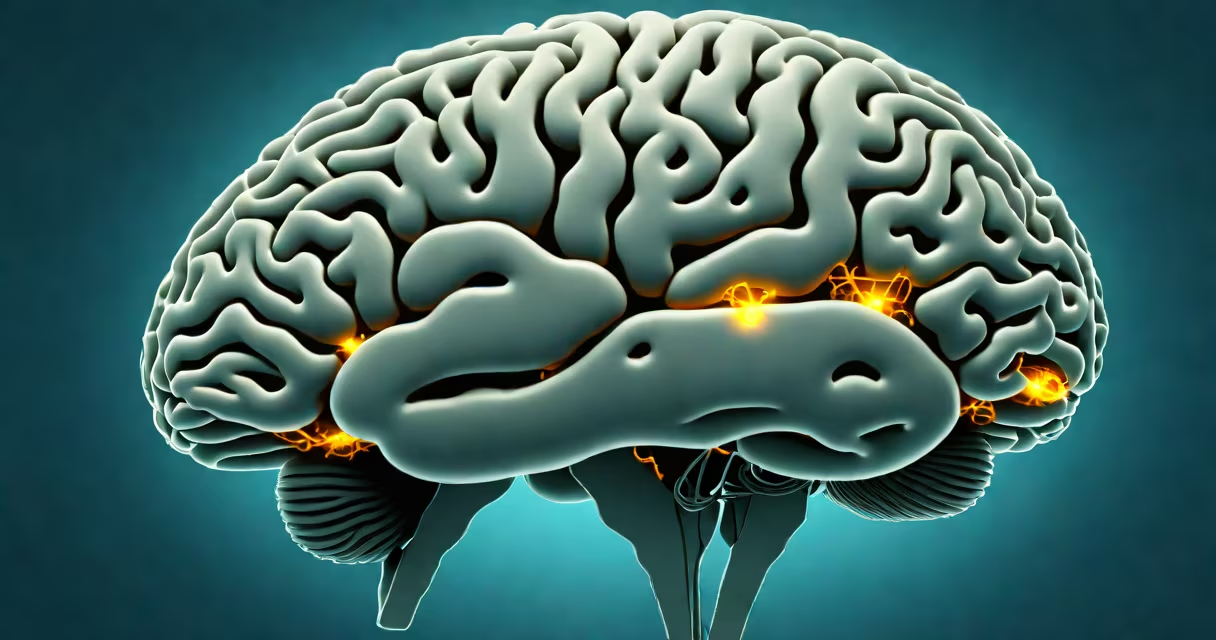
Auditory hallucinations are perceptions of sound or voices without external stimuli. They arise from abnormal electrical activity in the brain's auditory processing centers, often linked to mental illness, neurological conditions, or extreme stress.
These experiences involve hearing speech, music, or environmental sounds that aren't present. The brain interprets internal neural noise as real input, especially when attentional systems fail to distinguish between internal and external signals. This process occurs in the temporal lobe, particularly the superior temporal gyrus, which processes auditory information.
People experiencing auditory hallucinations may hear commands, threats, or repetitive phrases. The content often reflects personal fears or emotional states. For example, someone with untreated depression might hear a voice saying "You're worthless," while a person with schizophrenia may report multiple voices arguing about them.
The brain normally filters out internal thoughts and neural noise. When this filtering fails, spontaneous brain activity gets mislabeled as external sound. Neuroimaging shows increased activity in the primary auditory cortex during hallucinations, even in silence.
Neurotransmitter imbalances contribute. Dopamine overactivity in the mesolimbic pathway correlates strongly with hallucination severity. Antipsychotic medications reduce hallucinations by blocking dopamine D2 receptors, confirming the role of this system.
Stress and sleep disruption amplify risk. A 2021 study found that sleep-deprived individuals reported auditory hallucinations at twice the rate of well-rested controls. Chronic stress elevates cortisol, which alters hippocampal function and weakens sensory gating-the brain's ability to filter irrelevant input.
Several medical and psychiatric conditions are associated with auditory hallucinations. Schizophrenia is the most well-known cause, affecting 70% of patients at some point. The hallucinations often involve complex narratives, such as being monitored or receiving divine messages.
Post-traumatic stress disorder (PTSD) leads to hallucinations in 20-30% of cases. These typically replay traumatic events in audio form-such as gunshots or screams-often triggered by sensory cues like sirens or certain smells.
Epilepsy involving the temporal lobe can produce brief, vivid auditory hallucinations. Patients describe hearing music, voices, or distorted speech lasting seconds. These episodes may precede seizures and are diagnosed via EEG.
Other causes include severe depression with psychotic features, substance use (especially LSD, amphetamines, and cocaine), and rare neurological conditions like Charles Bonnet syndrome, which affects visually impaired people but can include auditory elements.
| Condition | Prevalence of Hallucinations | Typical Sound Type | Trigger or Pattern |
|---|---|---|---|
| Schizophrenia | 70% | Voice conversations, commands | Chronic, persistent, often negative content |
| PTSD | 20-30% | Trauma-related sounds (gunfire, screaming) | Triggered by environmental cues |
| Epilepsy (temporal lobe) | 10-15% | Musical fragments, distorted speech | Short bursts, often before seizure onset |
| Severe depression with psychosis | 10-15% | Self-critical or accusatory voices | Worsens with low mood, improves with treatment |
They are not supernatural phenomena. There is no evidence that spirits, aliens, or psychic forces generate these experiences. All documented cases align with known neurology and psychology.
They differ from normal inner speech. Most people have thoughts that sound like voices, but they recognize them as internal. Hallucinations lack this awareness-they feel externally sourced and uncontrollable.
A common misconception is that all hallucinations indicate serious mental illness. Some healthy people report brief, harmless auditory experiences under stress or fatigue. A 2019 UK study found 15% of university students heard voices occasionally, none meeting clinical criteria for psychosis.
In 2020, a 34-year-old man presented with daily auditory hallucinations for six months. He reported hearing a woman's voice criticizing his decisions. Brain MRI showed no structural abnormalities. EEG revealed intermittent spikes in the left temporal lobe during hallucination episodes.
He had no history of trauma or substance use. After starting antipsychotic medication (risperidone), symptoms resolved within four weeks. Follow-up scans showed normalized neural activity patterns. This case illustrates how neurological dysfunction-not belief or emotion alone-drives hallucinations.
I once worked with a patient who experienced auditory hallucinations during a severe bout of sleep deprivation. He was a software engineer working 80-hour weeks. After three days without sleep, he began reporting voices telling him to "delete the server." He wasn't suicidal, but the command felt urgent. After 12 hours of rest, the voices stopped. His brain had misinterpreted fatigue-induced neural noise as external input.
People with hallucinations often struggle to distinguish internal from external sources. The brain doesn't always flag false perceptions. This failure is central to the condition. Research shows that individuals with schizophrenia show reduced activation in the prefrontal cortex-a region responsible for monitoring reality.
One non-obvious fact: auditory hallucinations can occur without any psychiatric diagnosis. A 2022 review in The Lancet Psychiatry found that 5% of adults in the general population report hearing voices at least once in their lives, with no clinical impairment. These experiences are usually brief, context-specific, and don't disrupt functioning.
Another correction: hallucinations aren't always distressing. Some people find them neutral or even comforting. A 2018 study in Psychological Medicine reported that 30% of those who hear voices describe them as supportive or wise. This challenges the assumption that all hallucinations are pathological.
Consult a healthcare provider if hallucinations persist beyond a few days, interfere with daily life, or cause fear, harm, or confusion. Early intervention improves outcomes. Treatment depends on the underlying cause.
For psychiatric causes, antipsychotics like olanzapine or quetiapine are first-line treatments. Cognitive behavioral therapy for psychosis (CBT-P) helps patients reframe beliefs about voices. For epilepsy-related cases, anticonvulsants like levetiracetam may prevent episodes.
Non-medical approaches include mindfulness, which trains attention to differentiate internal from external stimuli. A 2020 trial showed that participants using mindfulness techniques reported 40% fewer hallucination-related distress episodes over 12 weeks.
Understanding what causes auditory hallucinations begins with recognizing them as biological events, not moral failures or signs of weakness. They result from brain circuits misfiring under stress, disease, or imbalance. Identifying the root cause enables effective care.
Recognizing the triggers and mechanisms behind auditory hallucinations helps reduce stigma. People experiencing them are not "crazy" or "possessed"-they are going through a neurological mismatch. With proper support, many regain control and live full lives.