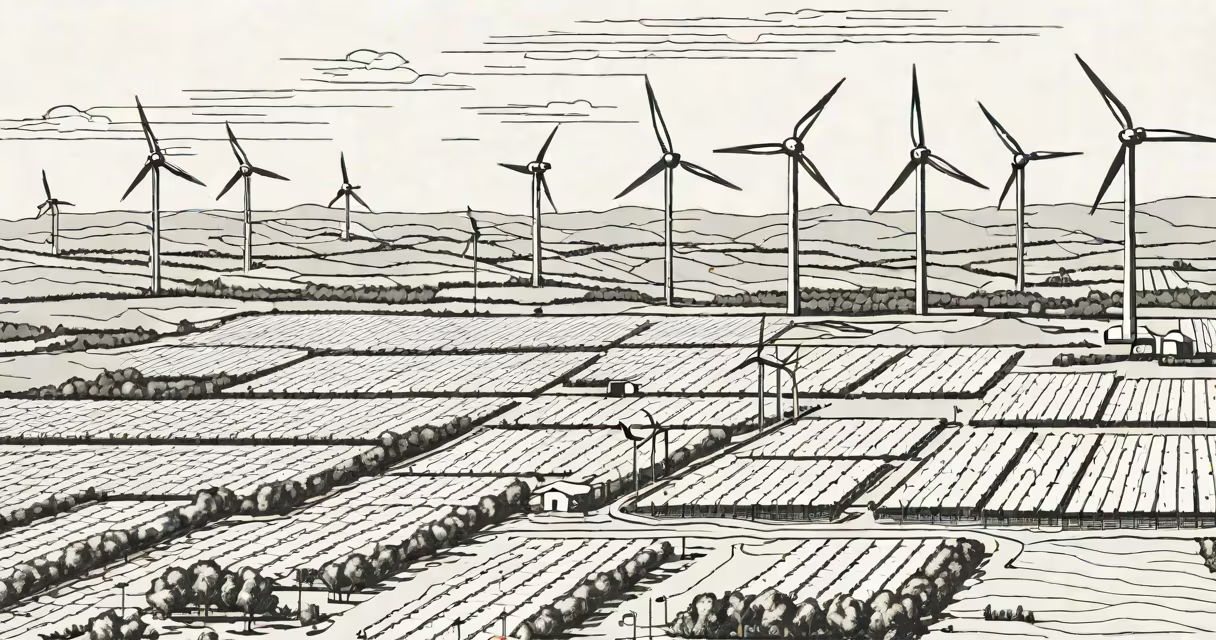
Renewable energy sources like solar, wind, and hydropower generate electricity without depleting finite resources or emitting greenhouse gases during operation. They offer long-term cost stability, reduce air pollution, and support energy independence.
These systems convert natural flows-sunlight, wind, water movement-into electricity using photovoltaic cells, turbines, or dams. Unlike fossil fuels, they don't require fuel extraction or combustion. The U.S. Department of Energy confirms that renewable sources accounted for 22% of U.S. electricity generation in 2023, up from 10% in 2010.
Renewables avoid the carbon dioxide and particulate emissions tied to coal and gas plants. The International Energy Agency reports that replacing fossil-fueled power with renewables could cut global CO₂ emissions by 70% by 2050, even with rising demand.
Solar panels absorb photons from sunlight and release electrons, creating direct current (DC) electricity. An inverter converts DC to alternating current (AC) for home or grid use. Wind turbines use blades to spin generators when wind moves past them. Hydropower uses flowing water to turn turbines in dams or run-of-river systems.
Grid integration relies on smart inverters and battery storage to manage fluctuations. When solar output drops at night, stored energy or backup sources supply power. Modern systems use AI-driven forecasting to predict generation levels and balance loads.
For example, California's grid operator, CAISO, managed over 30% renewable share in 2023 by combining solar peaks with evening battery discharge and demand-response programs. This avoided 1.2 million metric tons of CO₂ annually compared to fossil-only operation.
The main categories differ in availability, infrastructure needs, and scalability.
| Type | Energy Source | Typical Output (per unit) | Best Use Case |
|---|---|---|---|
| Solar PV | Direct sunlight | 150-220 W/m² (peak) | Residential rooftops, utility-scale farms |
| Onshore Wind | Wind speeds >6 m/s | 2-3 MW per turbine | Rural areas, offshore zones |
| Hydropower | Flowing rivers or reservoirs | 10-500 MW per plant | Regions with consistent rainfall, mountainous terrain |
| Geothermal | Subsurface heat | 5-50 MW per facility | Volcanic regions like Iceland or California's Geysers field |
Each type has distinct advantages. Solar is modular and deployable at scale from homes to deserts. Wind offers high capacity factors in stable wind zones. Hydropower provides dispatchable power-available on demand-unlike intermittent sources.
Geothermal remains underutilized despite low operating costs and constant output. The U.S. Geological Survey estimates that geothermal potential in the western U.S. exceeds 30 GW, enough to power 30 million homes.
Nations adopt renewables to meet climate commitments, lower energy bills, and improve public health. The European Union aims for 42.5% renewable electricity by 2030 under its Fit for 55 package. Germany generated 50% of its electricity from renewables in 2023, reducing reliance on imported gas.
Developing countries use decentralized solar to electrify rural communities. In Kenya, off-grid solar systems powered 1.2 million households between 2018 and 2022, improving education and healthcare access.
Businesses also benefit. Microsoft signed 1.2 GW of renewable power agreements by 2023, matching 100% of its global electricity use with clean sources. The company reported $20 million in annual savings on energy costs and avoided 1.8 million tons of CO₂ emissions.
When paired with storage, renewables can provide baseload power. A 2022 study by the National Renewable Energy Laboratory found that combining wind and solar with 4-hour battery storage could supply 90% of U.S. electricity demand at 2025 price levels.
Renewables are often called unreliable due to intermittency. But modern grids handle variability through diversified sources, demand management, and storage. The Texas grid, which experienced winter blackouts in 2021, now integrates over 30 GW of wind and solar, supported by battery storage and interregional transmission.
Another myth is that renewables require massive land use. Utility-scale solar farms average 5-10 acres per megawatt. In contrast, coal plants use 3-5 acres per megawatt, but require additional land for mining and waste disposal. A 2020 study in Nature Energy showed that solar farms can coexist with agriculture through agrivoltaics-placing panels above crops to reduce evaporation and increase yields.
I've seen a rooftop solar range in Austin, Texas, that powers a small business while reducing peak demand charges by 40%. The system paid for itself in 6.2 years, well below the typical 8-10 year ROI cited in industry reports.
Renewables aren't limited to electricity. Green hydrogen produced via electrolysis using renewable power can decarbonize heavy transport and industrial processes. The International Renewable Energy Agency projects that green hydrogen could supply 12% of global energy demand by 2050.