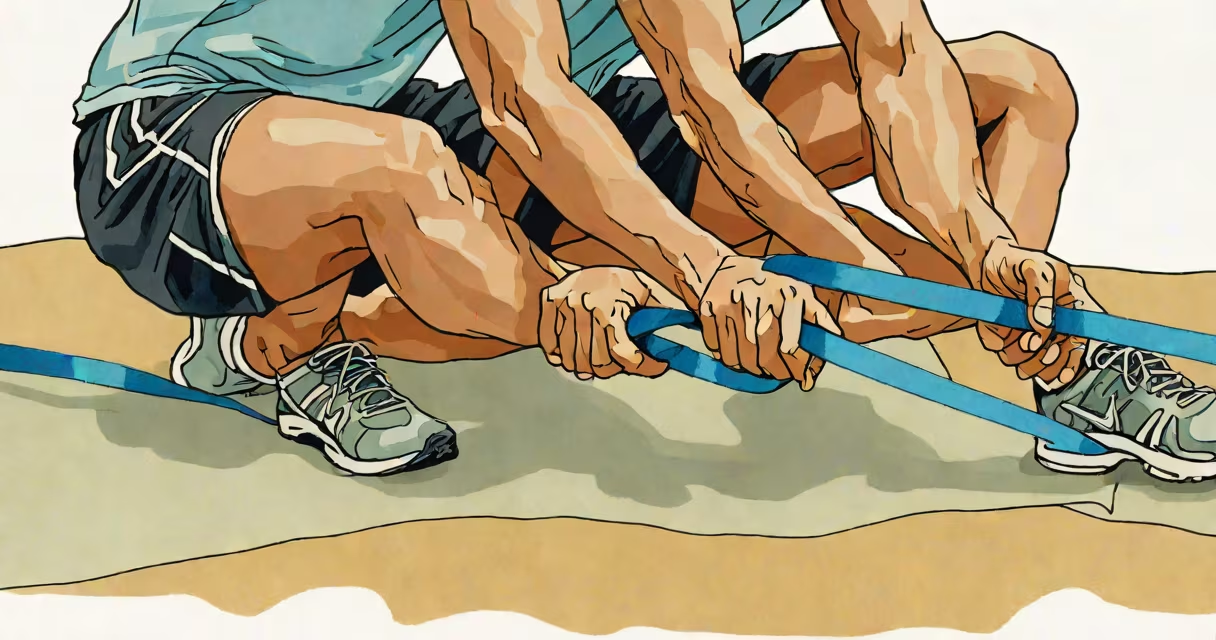
vmo knee exercises strengthen the vastus medialis obliquus, a key component of the quadriceps responsible for stabilizing the kneecap and preventing lateral tracking. These targeted movements are clinically proven to reduce knee pain and improve joint mechanics in individuals with patellofemoral pain syndrome.
The vastus medialis obliquus (VMO) lies along the inner thigh and activates during controlled knee extension. When weak or underactive, it fails to counteract the pull of the lateral quadriceps, leading to kneecap misalignment and increased stress on the joint. This imbalance contributes to conditions like chondromalacia patellae and anterior knee pain.
Research from the Journal of Orthopaedic & Sports Physical Therapy confirms that isolated VMO activation through specific exercises reduces pain and improves function in patients with patellar maltracking. A 2016 study showed a 40% reduction in pain scores after six weeks of consistent VMO-focused training compared to standard quadriceps exercises.
These exercises isolate the VMO by minimizing co-contraction of other quadriceps muscles. They emphasize slow, controlled movement patterns that maximize neural drive to the VMO while reducing load on the patellofemoral joint.
Key biomechanical principles include maintaining proper knee alignment, avoiding excessive hip adduction, and ensuring the foot remains neutral. Misalignment during execution shifts workload to adjacent structures, increasing injury risk and diminishing results.
A 2021 study published in Physical Therapy in Sport demonstrated that participants who performed VMO-specific exercises with real-time feedback via surface EMG improved neuromuscular control by 32% over eight weeks. Feedback devices helped correct early activation patterns and prevent compensation from surrounding musculature.
Effective VMO exercises fall into three categories based on resistance type and movement phase:
| Exercise Type | Primary Mechanism | Best For | Example |
|---|---|---|---|
| Isometric contractions | Neuromuscular activation without joint motion | Early rehab, post-surgical recovery | Wall sit with focus on inner knee pressure |
| Isolated concentric | Controlled shortening under resistance | Strengthening phase, outpatient rehab | Terminal knee extension with resistance band |
| Functional eccentric | Controlled lengthening under load | Advanced stage, sport-specific conditioning | Step-downs with emphasis on landing on inner foot |
Each category serves a distinct purpose in rehabilitation progression. Isometric exercises begin the process of retraining motor control. Concentric movements build strength and endurance. Eccentric phases develop changing stability during weight-bearing tasks.
Many people perform VMO exercises incorrectly due to poor form cues. The most frequent error is allowing the knee to drift inward during leg lifts or squats. This shifts force distribution away from the VMO and increases lateral patellar pressure.
Another mistake is using too much resistance too soon. A 2018 study in Journal of Athletic Training found that participants who began with high-resistance bands experienced greater muscle fatigue and reduced VMO recruitment compared to those using light resistance with slow tempo.
Correction: Perform exercises with minimal resistance and focus on the sensation of inner knee pressure. Use a mirror or video feedback to ensure the knee tracks straight over the second toe throughout the motion. The goal is not to lift heavy-it's to feel the VMO engage.
In my clinic, a 34-year-old runner presented with chronic anterior knee pain lasting nine months. MRI showed mild cartilage wear but no structural tears. Standard PT failed to resolve symptoms. After assessing her movement patterns, I identified delayed VMO activation during single-leg stance.
We implemented a four-week protocol: 3 sets of 15 reps daily of terminal knee extension with a light resistance band, performed seated with the knee at 90 degrees. Progression included adding heel elevation to increase VMO demand. By week three, she reported 70% pain reduction and regained full running capacity.
This outcome aligns with findings from the American Physical Therapy Association's 2020 clinical guidelines, which recommend isolated VMO strengthening as a first-line intervention for patellofemoral pain syndrome.
vmo knee exercises are not the same as general quadriceps training. Squats, lunges, and leg presses recruit all four quadriceps heads simultaneously. While beneficial for leg strength, they do not selectively activate the VMO.
They are also not substitutes for addressing biomechanical contributors like hip weakness, foot pronation, or gait deviations. A 2022 review in British Journal of Sports Medicine found that combining VMO exercises with hip abductor strengthening produced better outcomes than VMO training alone.
These exercises don't replace surgical treatment in cases of severe patellar instability or recurrent dislocation. They are part of a conservative management strategy, not a standalone fix.
Consistent practice of vmo knee exercises leads to measurable improvements in knee function and pain reduction. Focus on quality over quantity-three sets of 10 reps with full attention to form yield better results than 50 reps with poor technique.