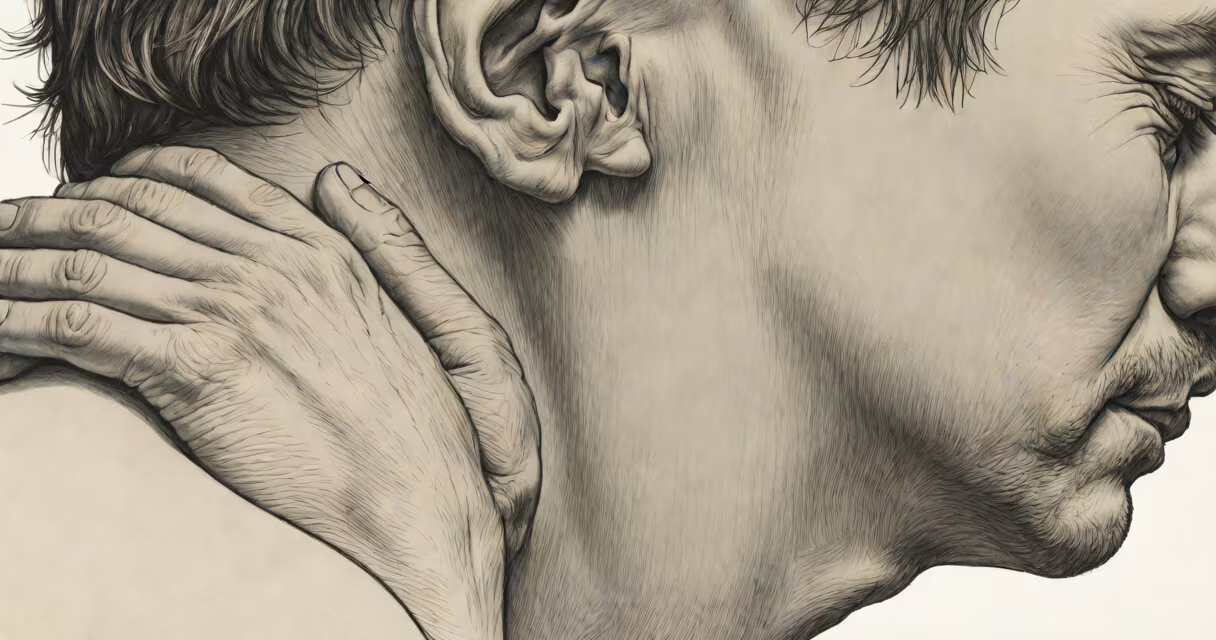
A trapped nerve in the neck, medically known as cervical radiculopathy, occurs when a spinal nerve root in the neck becomes compressed or irritated, leading to pain, tingling, numbness, or weakness that radiates into the shoulder, arm, or hand.
This condition arises when structures around the cervical spine-such as discs, bones, or ligaments-put pressure on a nerve exiting the spinal cord. The most common cause is a herniated disc, which can bulge and press against a nerve root. Other causes include bone spurs from degenerative changes, spinal stenosis, or trauma from whiplash.
The cervical spine consists of seven vertebrae (C1-C7), each with paired nerve roots. When a nerve root is affected, symptoms typically follow a specific dermatomal pattern-meaning they appear in predictable skin regions. For example, compression at C6 affects sensation in the thumb and index finger, while C7 affects the middle finger and triceps strength.
Nerve compression in the neck often results from gradual wear and tear. As people age, discs between vertebrae lose water content and become less effective as cushions. This leads to increased stress on adjacent joints and bone spurs forming on the vertebrae. These spurs can narrow the neural foramen-the opening through which nerves exit the spine-causing impingement.
Sudden injuries can also trigger a trapped nerve. A car accident involving rapid forward-backward motion (whiplash) may displace a disc or strain ligaments, compressing a nerve. Repetitive strain from poor posture during prolonged computer use or sleeping in awkward positions can contribute over time.
According to the American Academy of Orthopaedic Surgeons (AAOS), about 85% of cervical radiculopathy cases resolve within six months with conservative treatment. Only 10-15% require surgical intervention, usually when neurological deficits such as muscle weakness progress despite non-surgical care.
Trapped nerve symptoms vary based on which cervical nerve is involved. The most frequently affected levels are C5-C7, corresponding to the upper arm and hand. Below is a breakdown of common nerve root involvement:
| Nerve Level | Common Symptoms | Typical Pain Location |
|---|---|---|
| C5 | Weakness in deltoid muscle, limited shoulder abduction | Shoulder tip, outer arm |
| C6 | Weakness in biceps and wrist extensors, numbness in thumb and index finger | Thumb side of forearm and hand |
| C7 | Weakness in triceps, difficulty straightening elbow; numbness in middle finger | Back of upper arm, middle finger |
| C8 | Weakness in hand grip, numbness in ring and little fingers | Little finger side of hand |
Some patients report a burning or electric-like sensation shooting down the arm-a symptom called radicular pain. Others describe a constant ache in the neck that worsens with certain movements, such as turning the head or looking up.
Non-obvious fact: Not all neck pain stems from nerve compression. Many people mistake general neck stiffness or muscle tension for a trapped nerve. True radiculopathy involves neurological signs-like diminished reflexes or sensory loss-that can be confirmed via physical exam or imaging.
Diagnosis begins with a clinical evaluation. Doctors assess range of motion, muscle strength, reflexes, and sensory changes. They may perform the Spurling's test: extending the neck and laterally bending it toward the symptomatic side. A positive result reproduces arm pain, suggesting nerve root irritation.
If suspicion remains high after physical examination, imaging is used. MRI is the gold standard for visualizing soft tissue-discs, nerves, and spinal cord. CT scans with myelography are alternatives when MRI is contraindicated (e.g., due to pacemaker or claustrophobia).
For mild to moderate cases, initial treatment focuses on reducing inflammation and relieving pressure. Nonsteroidal anti-inflammatory drugs (NSAIDs), short-term muscle relaxants, and physical therapy are first-line approaches. A 2021 study published in Spine Journal found that supervised physical therapy improved outcomes in 70% of patients with cervical radiculopathy after eight weeks.
When conservative care fails after six weeks, corticosteroid injections into the epidural space may be offered. These reduce local inflammation around the nerve root. Epidural steroid injections provide pain relief in about 50% of patients, according to the North American Spine Society.
Only a small subset of patients require surgery. Anterior cervical discectomy and fusion (ACDF) is the most common procedure. It removes the damaged disc and fuses the adjacent vertebrae to stabilize the spine. Success rates exceed 90% for symptom resolution, per data from the Mayo Clinic.
Trapped nerve in the neck is often mistaken for other conditions. Tendonitis, rotator cuff injuries, or even heart-related pain can mimic arm radiation. A key differentiator is the presence of dermatomal sensory patterns-numbness following precise skin zones-not random aches.
Red flags requiring immediate medical attention include progressive weakness, loss of bowel or bladder control, or difficulty walking. These suggest spinal cord involvement, not just a nerve root issue. Such cases demand urgent imaging and neurosurgical consultation.
I once treated a patient who had assumed his left arm numbness was due to repetitive typing. After a week of worsening symptoms and dropping objects, he sought care. An MRI revealed a C6-C7 herniated disc compressing the nerve root. He responded well to physical therapy and avoided surgery.
Maintaining proper posture reduces mechanical stress on the cervical spine. Keep your monitor at eye level, avoid cradling phones between ear and shoulder, and take breaks every 30 minutes to stretch.
Strengthening the deep neck flexors and scapular stabilizers improves stability. Exercises like chin tucks and scapular retractions are effective. A 2020 randomized trial showed that patients doing daily neck stabilization exercises had 40% fewer recurrences over one year compared to controls.
For those with recurring episodes, early intervention prevents chronic pain. Delaying care increases the risk of permanent nerve damage. Early diagnosis and consistent management lead to better outcomes.
Understanding the difference between a trapped nerve in the neck and general neck strain helps guide appropriate action. If symptoms persist beyond a few days or involve weakness, seek evaluation. Treatment is effective when started early.