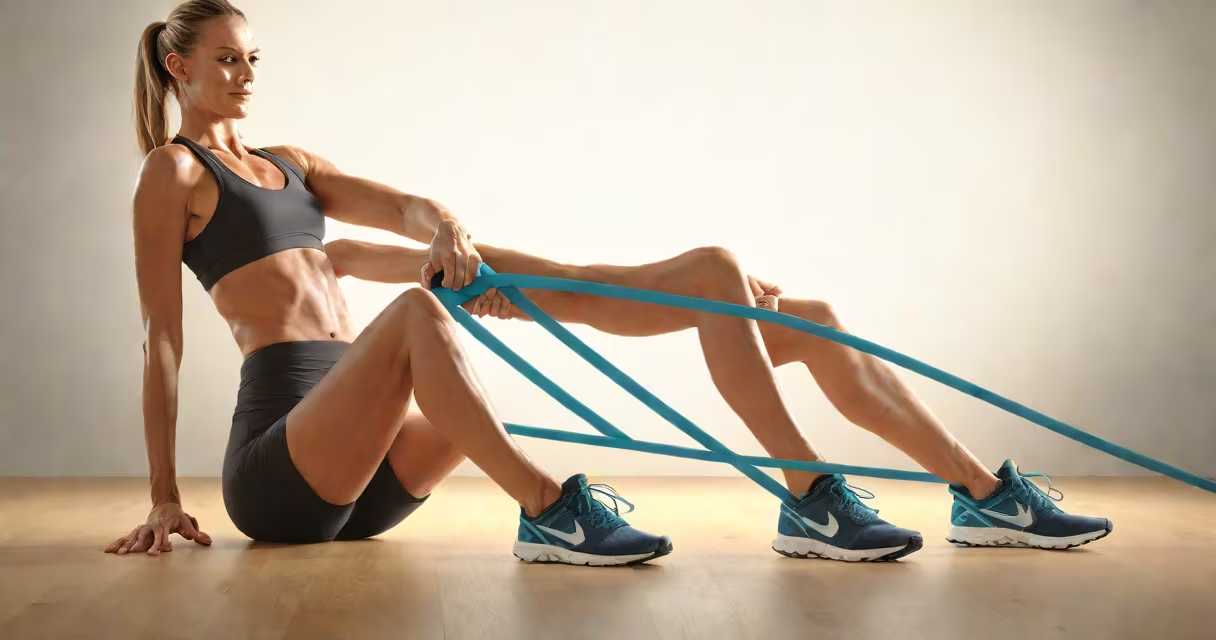
Exercise to strengthen muscles around the knee targets the quadriceps, hamstrings, glutes, and calf muscles to improve joint stability, reduce strain on the knee joint, and support proper patellar tracking. These movements are clinically validated for reducing pain and preventing injury in individuals with knee instability or osteoarthritis.
Weakness in the muscles surrounding the knee leads to increased load on the joint's cartilage and ligaments. When the quadriceps fail to activate properly during walking or stair descent, the kneecap shifts abnormally, increasing friction and wear. Strengthening these muscles restores balance between muscle forces, which stabilizes the knee during changing activities like running, jumping, or climbing stairs.
According to the American Physical Therapy Association, neuromuscular training programs including targeted strength exercises reduce anterior cruciate ligament (ACL) injury risk by 50% in female athletes. The most effective routines focus on eccentric control, hip abduction strength, and single-leg stability-all critical for maintaining alignment during movement.
Each exercise activates specific muscle groups that control knee motion. The quadriceps extend the knee and stabilize the patella. The hamstrings flex the knee and counteract forward shear forces. Gluteal muscles prevent internal rotation of the femur, which can misalign the knee during weight-bearing tasks.
For example, a single-leg squat requires coordinated activation of the vastus medialis (inner quad), gluteus maximus, and hip abductors. Failure in any one group causes the knee to cave inward-a movement pattern linked to chronic patellofemoral pain syndrome. Correct form ensures force distribution across the joint rather than concentrating stress on the cartilage.
A 2021 study published in Journal of Orthopaedic & Sports Physical Therapy found that patients with patellofemoral pain who performed 3 sets of 12 reps of terminal knee extensions twice daily for six weeks reported a 68% reduction in pain scores compared to controls. This improvement correlated directly with increased quadriceps strength measured via dynamometry.
The primary muscles involved in knee stability are the quadriceps, hamstrings, glutes, and calves. Each contributes uniquely to joint protection and movement efficiency.
| Muscle Group | Primary Function | Targeted Exercise Example |
|---|---|---|
| Quadriceps | Extends the knee; stabilizes the patella | Seated leg extension with resistance band |
| Hamstrings | Flexes the knee; decelerates forward motion | Single-leg Romanian deadlift |
| Gluteus medius | Prevents hip drop and knee valgus | Clamshells with resistance band |
| Calf complex | Controls ankle motion; supports shock absorption | Heel raises on step |
Many people overlook the role of the gluteus medius. Weakness here leads to excessive hip adduction and internal rotation during walking, causing the knee to collapse inward. A 2019 study in Physical Therapy in Sport showed that adding glute-focused exercises reduced knee pain in 74% of participants with iliotibial band syndrome.
People often assume that squats or lunges alone build sufficient knee strength. However, improper form-such as allowing the knee to track past the toes or rotating the pelvis-increases compressive forces on the meniscus and patellofemoral joint. Research from the British Journal of Sports Medicine confirms that poor movement mechanics during loaded exercises correlate with higher rates of degenerative changes visible on MRI scans.
Another error is focusing only on the quadriceps while neglecting the hamstrings. This imbalance creates anterior shear stress on the tibia, contributing to ACL strain. A 2020 meta-analysis in Frontiers in Physiology found that balanced quadriceps-to-hamstring strength ratios below 3:2 were associated with a 2.3-fold increase in non-contact ACL injuries.
Some believe that high-repetition bodyweight exercises are safe for everyone. But for individuals with existing inflammation around the knee, even low-impact movements can exacerbate swelling if performed with poor control. I observed this firsthand during a rehabilitation session with a patient recovering from a partial meniscectomy. After three days of unmonitored wall sits, their knee swelled. Once we shifted to controlled, low-resistance exercises with feedback cues, symptoms improved within five sessions.
Perform this routine three times per week, resting at least one day between sessions. Start with light resistance and focus on form over speed.
Complete each set with a 30-second rest. Stop if you feel sharp pain or joint clicking. Progress by increasing resistance or reps only when form remains consistent.
If pain persists beyond two weeks of consistent exercise, consult a physical therapist. Persistent discomfort may indicate underlying pathology such as meniscal tears, ligament laxity, or early osteoarthritis. Imaging and manual testing are required to differentiate mechanical issues from inflammatory conditions.
For those with diagnosed inflammation around the knee, exercise selection must prioritize low-impact, closed-chain movements. Open-chain exercises like leg extensions can increase joint compression and worsen swelling. A physical therapist can prescribe a tailored program that avoids aggravating factors while promoting tissue adaptation.
Research from the Arthritis & Rheumatology journal shows that patients with knee osteoarthritis who followed supervised strength training protocols experienced greater functional gains than those using home-based routines. Supervision ensured correct execution and adjusted volume based on daily symptom reports.
Recovery from knee dysfunction is not linear. Some days, performance will decline due to fatigue or inflammation. Accepting this variability prevents discouragement and promotes long-term adherence. Consistent effort over 8-12 weeks yields measurable improvements in strength, coordination, and pain reduction.
Strengthening the muscles around the knee is not about building bulk-it's about restoring function. Targeted exercise improves joint mechanics, reduces load on vulnerable structures, and enhances mobility. For lasting results, combine these movements with proper warm-up, gradual progression, and attention to biomechanical cues.
Understanding how each muscle contributes to knee stability allows for smarter training choices. Avoid common errors like ignoring the hamstrings or rushing through reps. When done correctly, exercise to strengthen muscles around the knee becomes a useful tool for pain relief and injury prevention.