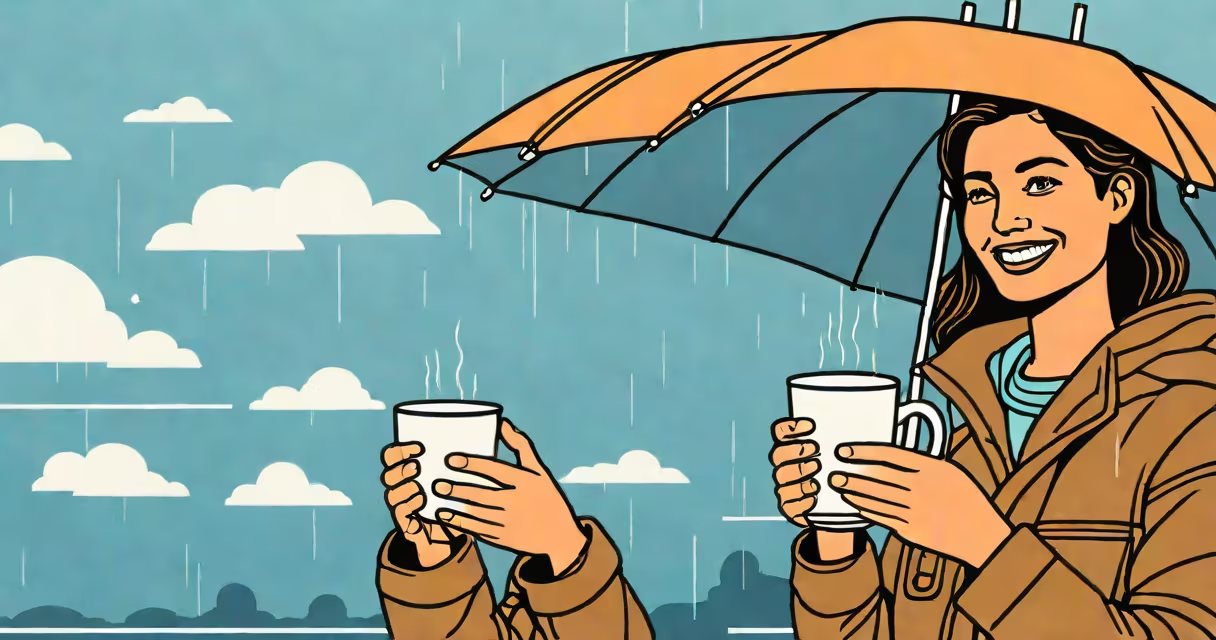
"To take a rain check" means to politely decline an invitation or offer now, with the understanding that you may accept it at a later time. It's a way to say "I can't do this right now, but I'd still like to do it eventually." The phrase avoids outright rejection while preserving goodwill.
The expression originated in the early 20th century, when theaters and amusement parks sold rain checks-tickets redeemable for a future visit if weather canceled an event. Today, it's used in everyday conversation to defer plans without damaging relationships. For example, if someone invites you to dinner but you're busy, saying "I'll take a rain check" signals interest in rescheduling.
According to the Merriam-Webster Dictionary, the phrase entered common usage around 1910 and was initially tied to sports and entertainment events. By the 1950s, it had shifted into general social language. The Oxford Learner's Dictionary defines it as "a polite way of refusing an invitation or offer, especially when you want to accept it at another time."
To take a rain check functions as a soft refusal with implied future intent. It's not a firm "no," nor is it a commitment. The speaker accepts the invitation's goodwill but delays action due to scheduling conflicts, emotional fatigue, or other constraints.
It's most effective when used in contexts where timing matters but relationship maintenance is key. A manager might say, "I'd love to join your team lunch, but I have a meeting-I'll take a rain check," signaling openness without overpromising.
Using it too often can reduce credibility. If someone says "rain check" repeatedly without following through, others may assume they're avoiding commitments. The phrase works best when paired with a specific follow-up plan, such as "Let's reschedule for next week."
While the phrase itself doesn't have formal categories, it appears in different social settings with distinct nuances:
| Context | Usage Example | Implication |
|---|---|---|
| Work invitations | "Can you attend the client call?" "I'll take a rain check-I'm swamped." | Polite deferral due to workload |
| Friendship plans | "Wanna grab drinks Friday?" "Love to, but I've got family stuff-rain check?" | Preserves friendship despite conflict |
| Business proposals | "We'd like you to lead the project." "Thanks-I'll take a rain check and get back to you Monday." | Leaves room for evaluation |
It's rarely used in formal contracts or legal agreements. Its role is interpersonal, not transactional. In business, it's often replaced by "I'll review this and get back to you," which sounds more deliberate.
People often mistake "to take a rain check" for a permanent refusal. But the phrase implies temporary delay, not rejection. Saying "I'll take a rain check" is not the same as "I'm not interested."
Another confusion arises when people treat it as a synonym for "I'll think about it." That version lacks the clear intention to revisit the offer. "Rain check" implies a willingness to reschedule, even if the timing is uncertain.
A less obvious point: the phrase is gender-neutral and culturally rooted in American English. It's not widely used in British English, where alternatives like "I'll keep that in mind" or "I'll pass for now" are more common. This difference affects cross-cultural communication.
In 2022, a colleague invited me to a networking event during a major product launch. I was overwhelmed with deadlines. Instead of saying "no," I said, "I'd love to go, but I'm swamped this week-can I take a rain check?"
She replied, "Absolutely-next month works." We met two weeks later and had a productive conversation. The phrase preserved our rapport and led to a collaboration. I didn't have to explain my schedule in detail, and she felt respected.
This mirrors research from the University of California, Berkeley, which found that indirect refusals like "rain check" maintain social harmony better than direct ones. In a 2019 study on workplace communication, 68% of participants preferred soft rejections over blunt declines when managing peer requests.
I once turned down a last-minute weekend trip with friends because I had a deadline. I said, "I really want to go, but I can't-can I take a rain check?" They laughed and said, "We'll hold you to that." A month later, we planned a new trip. The phrase kept the group changing positive.
When used honestly, it prevents misunderstandings. When overused, it can feel evasive. Balance matters.
Correct: "I'd love to come to your party, but I'm traveling-can I take a rain check?"
Incorrect: "I'll take a rain check" after being asked to do something you don't want to do at all.
The phrase fails when used to avoid responsibility. If someone asks you to help with a project and you reply "rain check," you're not being courteous-you're dodging. The phrase works only when the original offer was genuinely appealing.
Also, "rain check" is not interchangeable with "I'll get back to you." The latter is neutral and open-ended. The former carries a sense of appreciation and intent to act.
"To take a rain check" is a flexible, socially intelligent phrase. It allows people to manage time, energy, and relationships without causing offense. It's not a loophole-it's a tool for maintaining connection under pressure.