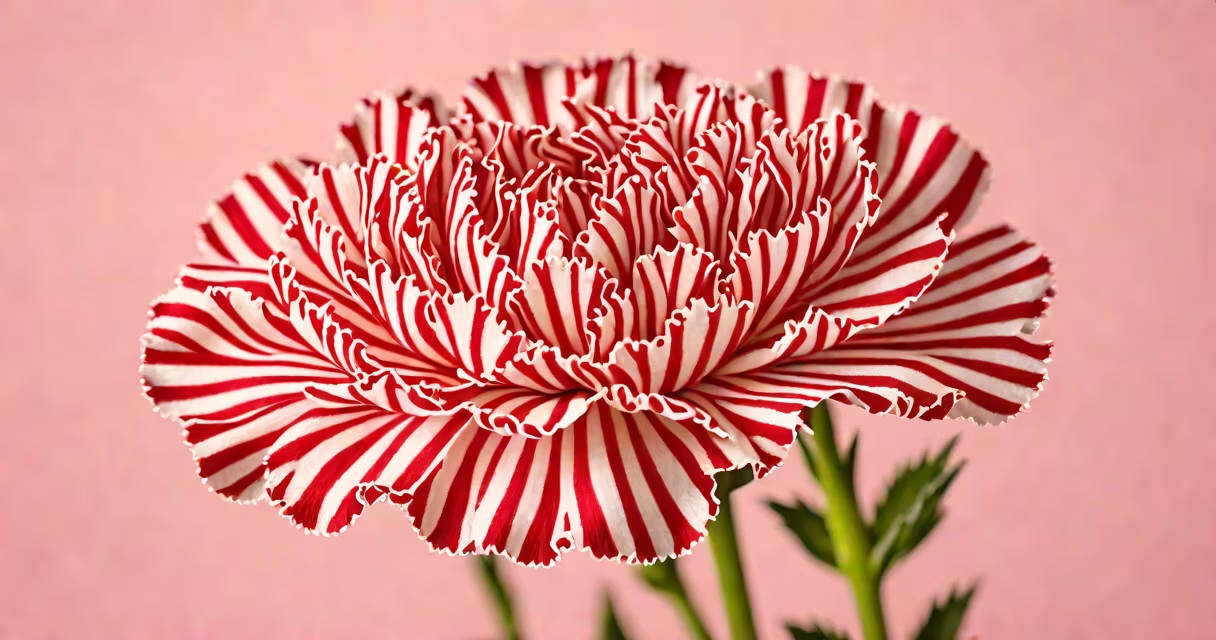
A striped carnation is a flowering plant with petals displaying alternating bands of color, most commonly red and white or pink and white. These patterns carry layered symbolic meanings tied to emotion, celebration, and cultural tradition.
Striped carnations derive their visual identity from genetic variation in pigment distribution during petal development. The contrast between colors results from localized expression of anthocyanin pigments, which produce red or purple hues. When these pigments appear in distinct bands rather than uniformly, the effect is a striped appearance. This trait is stable in cultivated varieties and often selected for ornamental appeal.
The most common striped carnation features red and white bands. Red symbolizes love and admiration, white represents purity and innocence. Together, they convey a message of respectful affection-ideal for expressing admiration without romantic intent. Pink-and-white striped variants emphasize gratitude and gentle appreciation, often given to teachers, mentors, or friends during recognition events.
Flower symbolism in Western traditions traces back to Victorian-era botany and the language of flowers. During the 1800s, people assigned specific emotions to blooms based on color, form, and scent. Carnations were associated with enduring love, resilience, and familial bonds. Striped varieties emerged later as horticultural hybrids, but their symbolic weight was quickly adopted.
In Japan, carnations are linked to longevity and good fortune. Striped versions, particularly those with red and white, are used in Shinto ceremonies and wedding decorations. The red band represents vitality, the white symbolizes spiritual clarity. This pairing reflects balance-life and peace coexisting.
Modern usage continues this legacy. A bouquet of red-and-white striped carnations presented at a graduation ceremony communicates pride in achievement and respect for effort. Similarly, sending pink-and-white striped carnations to a colleague after a successful project signals appreciation without overstepping professional boundaries.
Not all striped carnations carry the same meaning. Color combinations determine emotional nuance:
| Color Combination | Primary Symbolism | Common Use Cases |
|---|---|---|
| Red and white | Admiration, purity, respect | Graduations, teacher appreciation, memorial tributes |
| Pink and white | Gratitude, tenderness, friendship | Birthday gifts, thank-you notes, friendship gestures |
| White and green | Peace, renewal, harmony | Funerals, housewarming gifts, meditation spaces |
Red-and-white striped carnations are among the most widely recognized. According to the National Association of Funeral Directors, they are frequently chosen for memorial arrangements due to their balanced symbolism-acknowledging loss while honoring lasting respect.
Green-striped variants are rarer and typically result from variegated leaf patterns extending into petals. These are less common in commercial floristry but appear in garden displays. Their meaning centers on growth and environmental harmony, often used in eco-conscious events.
Many assume striped carnations are purely decorative or that their meaning is identical to solid-colored ones. This is incorrect. The pattern itself alters interpretation. A solid red carnation signifies passionate love. A red-and-white striped version expresses admiration with restraint-love tempered by respect.
Another misconception is that all striped flowers have similar meanings. This is false. While striped carnations draw from established floral lexicon, other striped species-like striped tulips or zinnias-carry different associations. Tulips with black and yellow stripes may symbolize secrecy or hidden strength, depending on context.
A key distinction lies in regional variation. In parts of Eastern Europe, red-and-white striped carnations are used in folk weddings to represent unity between families. In contrast, in North America, they're more likely to appear at civic events or military memorials. Meaning is shaped by local customs, not universal rules.
In 2022, a high school in Portland, Oregon, held a senior awards ceremony. Teachers submitted nominations for students who demonstrated leadership, kindness, and academic perseverance. One recipient, Maya Chen, was honored with a corsage featuring a single red-and-white striped carnation.
The principal explained the choice: "Maya led her peer group through a community clean-up initiative. She didn't seek attention, but her actions spoke. The striped carnation represented both her quiet dedication and the respect we hold for her."
This gesture aligned with documented practices. The American Society of Florists notes that striped carnations are increasingly used in formal presentations where emotional subtlety matters-especially in educational and corporate settings.
Striped carnation meaning does not equate to romance. Despite red being a traditional love color, the addition of white neutralizes romantic intent. Sending a striped carnation to a partner in a relationship may be misinterpreted as cold or distant unless context clarifies intent.
It also does not imply mourning. While red-and-white combinations appear in funerals, the presence of stripes alone doesn't denote death. A bouquet of pink-and-white striped carnations at a baby shower is entirely appropriate and expected.
Finally, striped carnations are not inherently rare. While some varieties are specialty cultivars, many striped forms are commercially available year-round. They are not limited to seasonal events or exclusive markets.
Understanding striped carnation meaning requires attention to detail. The pattern isn't decorative fluff-it's part of the message. Choosing the right hue combination ensures your gesture lands with precision.