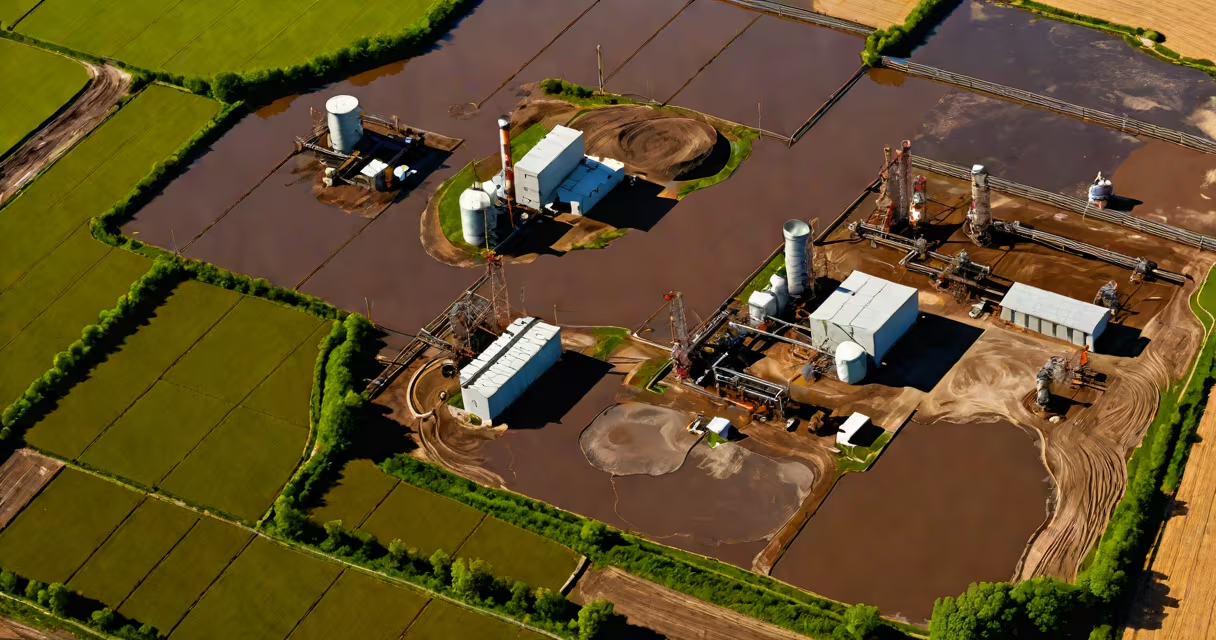
Land pollution arises from human activities that introduce harmful substances into soil, degrading its quality and threatening ecosystems. These pollutants originate from industrial operations, agriculture, urban development, and improper waste disposal. The primary sources include chemical runoff, solid waste dumping, and toxic byproducts released during manufacturing.
Land pollution occurs when contaminants enter the ground and persist in soil, groundwater, or surface water. Unlike air or water pollution, which disperse quickly, land pollutants often remain in place for decades. This persistence leads to long-term ecological damage and risks to human health through contaminated food and water supplies.
According to the U.S. Environmental Protection Agency (EPA), over 1.6 million tons of hazardous waste are generated annually in the United States alone, much of it disposed of in landfills or illegally dumped. The EPA identifies industrial discharge, pesticide use, and unregulated waste sites as leading contributors to soil degradation. The World Health Organization (WHO) notes that contaminated soils contribute to 10% of global disease burden linked to environmental exposure.
When pollutants enter the soil, they move through layers via infiltration and leaching. Water percolates through the ground, carrying dissolved chemicals downward. Heavy metals like lead and cadmium accumulate in topsoil and can be absorbed by plants. Once taken up by crops, these toxins enter the food chain.
For example, a factory releasing untreated wastewater containing chromium compounds into a nearby field can cause chromium levels in soil to exceed safe thresholds. The EPA sets a maximum contaminant level of 0.1 mg/L for hexavalent chromium in drinking water. When soil concentrations reach 10 mg/kg, plant uptake becomes significant, and edible crops may contain unsafe levels.
Microbial breakdown slows in compacted or chemically altered soils. This reduces natural detoxification processes. As a result, pollutants like polycyclic aromatic hydrocarbons (PAHs) from old fuel spills can persist for over 50 years in undisturbed soil.
Land pollution sources fall into four broad categories: industrial, agricultural, municipal, and accidental. Each contributes distinct contaminants and requires different mitigation strategies.
| Type | Common Pollutants | Typical Locations | Health & Environmental Risk |
|---|---|---|---|
| Industrial | Heavy metals, solvents, PCBs | Factories, refineries, mining zones | Neurotoxicity, cancer risk, groundwater contamination |
| Agricultural | Pesticides, fertilizers, animal waste | Farm fields, feedlots | Nitrates in drinking water, algal blooms in rivers |
| Municipal | Plastics, batteries, electronics, household chemicals | Landfills, dumpsites, urban streets | Leachate seepage, microplastic accumulation |
| Accidental | Oil spills, chemical leaks, fire debris | Transport corridors, storage facilities | Acute toxicity, habitat destruction |
Industrial sources dominate in high-density manufacturing regions. In the U.S., the EPA's Superfund program tracks over 1,300 active sites contaminated by industrial waste. The largest site, the Love Canal in New York, was abandoned in 1953 after being used as a chemical dump. By 1978, residents reported birth defects and respiratory issues linked to dioxin and furan exposure.
Agricultural runoff accounts for nearly 70% of nitrogen and phosphorus entering U.S. waterways, according to the National Oceanic and Atmospheric Administration (NOAA). Excess nitrogen from fertilizer application leads to eutrophication in downstream lakes and estuaries. In the Gulf of Mexico, this process creates a dead zone exceeding 6,000 square miles annually.
Urban centers generate concentrated waste streams due to high population density. A single city like Los Angeles produces about 15,000 tons of solid waste daily. Much of this ends up in landfills such as the Puente Hills facility, which operated from 1996 to 2013 and received over 150 million tons of waste. Leachate from such sites contains benzene, toluene, and formaldehyde-known carcinogens.
Rural areas face different challenges. In California's Central Valley, intensive farming uses over 2 billion pounds of pesticides annually. Drought conditions increase reliance on irrigation, which spreads contaminants deeper into aquifers. The state's Department of Public Health reports elevated levels of atrazine in groundwater samples from 12 counties.
One underreported issue is the migration of pollutants across borders. In 2019, the Basel Convention documented 11,000 incidents of illegal export of hazardous waste from OECD countries to Southeast Asia. Indonesia and the Philippines reported receiving shipments labeled as "recyclable" but containing lead-acid batteries and electronic waste.
Many assume land pollution only affects visible trash or foul-smelling dumps. In reality, invisible chemical contamination poses greater long-term threats. For example, lead in soil from old paint or gasoline additives can remain bioavailable for centuries. The CDC confirms that children living near former gas stations have blood lead levels up to 30% higher than average.
Another misconception is that landfills are safe containment systems. Modern landfills use liners and leachate collection systems, but failures occur. A 2021 study in Environmental Science & Technology found that 18% of U.S. landfills exceeded regulatory limits for methane emissions and leachate leakage within five years of closure.
Some confuse land pollution with erosion or desertification. While both degrade land, erosion involves physical removal of soil, whereas pollution introduces foreign substances. A field stripped of topsoil by wind is eroding. A field saturated with arsenic from a former mine is polluted.
Tar Creek, located in northeastern Oklahoma, illustrates how multiple sources of land pollution interact. The site was heavily mined for lead and zinc between 1919 and 1972. After mining ended, waste rock piles were left exposed. Rainwater washed over these piles, dissolving heavy metals and creating acidic runoff.
By 1983, the EPA identified Tar Creek as one of the most contaminated areas in the nation. Soil lead levels reached 10,000 mg/kg-over 100 times the EPA's action level of 400 mg/kg. Local residents, including many Native American families, suffered from developmental delays and chronic illness. The site remains under remediation, with ongoing efforts to cap waste piles and treat contaminated groundwater.
This case shows that sources of land pollution are not isolated events. They compound over time, especially when legacy contamination combines with current practices. Addressing them requires coordinated monitoring, regulation, and community involvement.
Understanding sources of land pollution helps identify risks early and prevent irreversible damage. Industrial emissions, agricultural chemicals, and poor waste management are the dominant contributors. Each source demands targeted solutions based on location, pollutant type, and exposure pathways. Recognizing these factors is essential for protecting soil health and public safety.