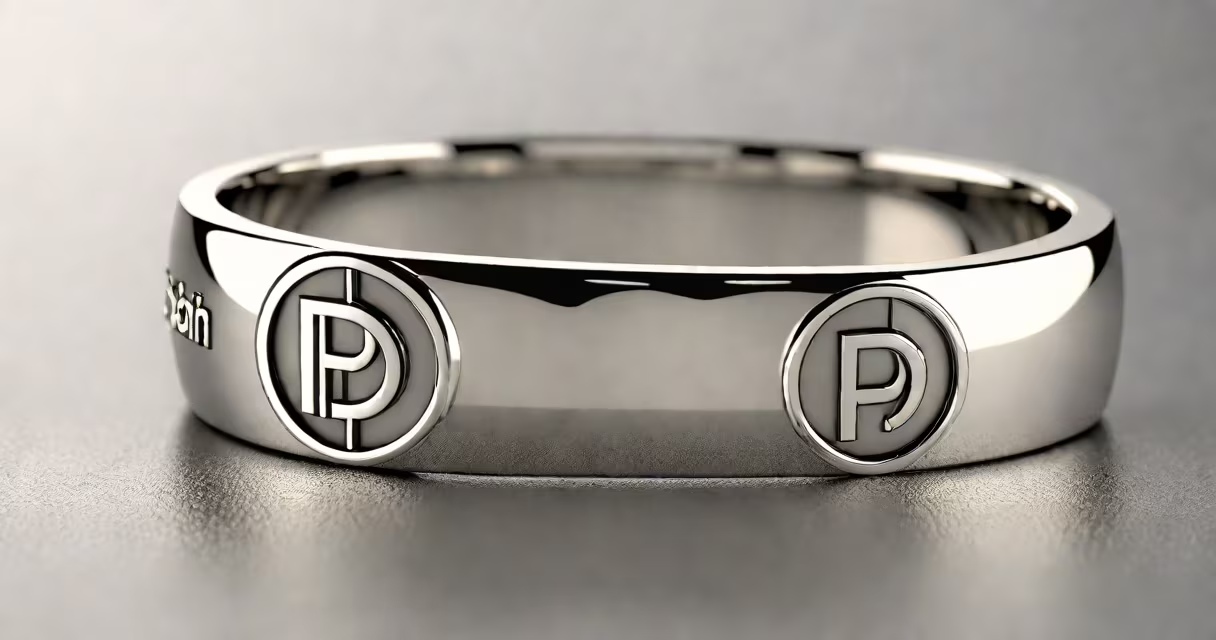
The palladium element symbol is Pd, representing the chemical element with atomic number 46. It is a dense, lustrous transition metal used in catalytic converters, electronics, and fine jewelry due to its resistance to corrosion and high melting point.
Palladium belongs to group 10 of the periodic table and shares properties with platinum, nickel, and rhodium. Its symbol, Pd, comes from the Latin name *palladium*, derived from the asteroid Pallas, which was named after the Greek goddess Athena. The element was discovered in 1803 by William Hyde Wollaston, who isolated it from crude platinum ore.
Unlike many elements, palladium's symbol does not reflect its physical appearance or common usage. Pd stands for the element's scientific designation, not a descriptive term. This naming convention follows the International Union of Pure and Applied Chemistry (IUPAC) standard for chemical symbols-two letters, with the first capitalized and the second lowercase.
The symbol Pd serves as a universal shorthand in chemistry, allowing scientists and engineers to reference palladium quickly in equations, formulas, and material specifications. For example, in catalytic reactions, Pd appears in balanced equations such as:
2CO + 2NO → 2CO₂ + N₂ (catalyzed by Pd)This notation shows palladium facilitating the conversion of harmful emissions into harmless byproducts-a key function in automotive exhaust systems.
Each element symbol is unique and standardized globally. Pd cannot be used for any other element. Misusing symbols leads to errors in research, manufacturing, and safety documentation. For instance, confusing Pd with Pt (platinum) could result in incorrect alloy specifications in high-temperature applications.
Palladium exists in several forms, each with distinct uses and symbol representations in technical contexts:
When specifying palladium in materials science, the symbol Pd is often paired with isotopic notation. For example, 106Pd denotes a stable isotope used in nuclear medicine research. The symbol remains constant across all variants-only the context changes.
Automotive industry applications dominate palladium demand. In 2023, over 60% of global palladium consumption came from catalytic converters in gasoline-powered vehicles. The U.S. Environmental Protection Agency (EPA) mandates that vehicles meet strict emission standards, making Pd essential for reducing nitrogen oxides and carbon monoxide.
In electronics, palladium is used in multilayer ceramic capacitors (MLCCs). These components require high conductivity and thermal stability. A single smartphone may contain 0.1 grams of palladium, contributing to the device's reliability under heat stress.
Jewelry accounts for about 15% of palladium use. Its hypoallergenic nature makes it ideal for people sensitive to nickel. A 14-karat palladium ring contains approximately 50% palladium by weight, marked as Pd500 in some European markets.
Many assume that Pd stands for "platinum" or "palladium-platinum." This is incorrect. Platinum's symbol is Pt. Confusing Pd with Pt causes serious issues in metallurgy and materials engineering. For example, using Pd instead of Pt in aerospace alloys could lead to premature failure under extreme temperatures.
Another misconception is that palladium's symbol reflects its color. While palladium is silvery-white, the symbol Pd has no relation to appearance. The same applies to other elements: sodium (Na) is not named for its color, nor is iron (Fe) for its rustiness.
A lesser-known fact: palladium was once used in early 20th-century photography as a stabilizer in silver halide emulsions. Though obsolete today, historical film archives sometimes list Pd in processing logs. This legacy underscores how elemental symbols persist across disciplines.
| Element | Symbol | Atomic Number | Primary Use | Key Distinction |
|---|---|---|---|---|
| Palladium | Pd | 46 | Catalytic converters, jewelry | Resists oxidation at high temps; lower density than platinum |
| Platinum | Pt | 78 | Jewelry, industrial catalysts | Higher density and cost; more reactive than Pd |
| Rhodium | Rh | 45 | Automotive catalysts, electroplating | Harder than Pd; used in thin coatings for durability |
Understanding these differences prevents costly mistakes in material selection. For example, a manufacturer replacing Pd with Rh in a fuel cell membrane would face efficiency drops due to differing electron configurations.
I once worked on a lab report involving palladium-catalyzed hydrogenation reactions. During data entry, I accidentally typed "Pt" instead of "Pd" in a reaction scheme. The error went unnoticed until peer review flagged inconsistent molar yields. Correcting the symbol restored accuracy and prevented misinterpretation of results. This incident reinforced how important precise symbol use is-even in academic settings.
The palladium element symbol, Pd, is a precise identifier rooted in international chemical nomenclature. It enables accurate communication across science, industry, and education. Using Pd correctly ensures clarity, safety, and consistency in every application.