Optimal foraging theory is a model in evolutionary ecology that predicts how animals make feeding choices to maximize net energy intake per unit time. It treats foraging as a decision-making process shaped by natural selection, where survival depends on efficiently acquiring resources.
The theory assumes animals face trade-offs between the energy gained from food and the time and effort spent finding and processing it. Natural selection favors individuals who consistently choose options that yield the highest return on investment-measured in calories per minute spent. This structure applies across species, from insects to primates, and underpins much of modern behavioral ecology.
Foraging decisions are not random. A squirrel selecting nuts based on size, ease of cracking, and location follows principles predicted by optimal foraging theory. So do wolves choosing which prey to pursue during a hunt. The model doesn't assume perfect knowledge-it accounts for uncertainty, risk, and environmental variation.
At its core, optimal foraging theory uses cost-benefit analysis to predict animal behavior. It calculates the ratio of energy gained to time spent foraging. When this ratio peaks, the animal achieves optimal efficiency. The model adjusts predictions based on available food density, handling time (how long it takes to eat or process food), and travel time between patches.
For example, a bird feeding in a patch of berries will stay longer when berries are scarce. But if berries are abundant, it will leave quickly-even if some remain-because the marginal gain drops below the cost of staying. This pattern, known as the marginal value theorem, was formalized by Eric Charnov in 1976 and remains central to the theory.
Mathematical models in optimal foraging theory often use equations like: Net energy gain per hour = (Energy from food − Handling time) / Total time per foraging cycle. These equations allow researchers to test predictions against observed behavior in the wild.
Several variants of optimal foraging theory exist, each addressing different ecological contexts:
| Type | Description | Example |
|---|---|---|
| Prey Choice Model | Predicts which prey items an animal should target based on profitability (energy/handling time). | A blue jay prefers large, high-calorie beetles over small ones, even if smaller ones are easier to catch. |
| Marginal Value Theorem | Models how long an animal should stay in a food patch before moving to another. | Bees leave a flower patch when the rate of nectar collection drops below the average for the environment. |
| Optimal Diet Model | Explains why predators may ignore low-value prey when higher-value options are available. | Lions avoid hunting small antelope when larger prey like wildebeest are nearby. |
These models have been validated through field observations. For instance, research on great tits (*Parus major*) showed they selectively feed on larger caterpillars when both large and small ones are present-exactly as predicted by the prey choice model.
Ecologists use optimal foraging theory to understand population dynamics, habitat use, and conservation priorities. It helps explain why certain species disappear from areas with abundant food-because the cost of accessing it outweighs the benefit.
Many assume optimal foraging theory implies animals are "rational" or "intelligent." That's incorrect. The model describes outcomes shaped by evolution-not conscious calculation. An animal doesn't solve equations. Instead, genes that promote efficient foraging strategies spread over generations.
Another error is thinking the theory assumes perfect information. In reality, it accounts for uncertainty. Animals operate under incomplete knowledge. A forager might leave a patch early due to risk of predation, even if food remains-this is still optimal under the model's assumptions.
A lesser-known but critical point: optimal foraging theory doesn't always predict the most energy-efficient choice. Sometimes, animals prioritize safety or social status over maximum caloric gain. This leads to suboptimal behavior-but only when other pressures override fitness goals. The model adapts to include such trade-offs.
In 1980, ecologist Robert MacArthur studied warblers in New England forests. He observed that five species coexisted in the same trees, each occupying slightly different niches. Using optimal foraging theory, he predicted that each bird would forage at a height and on specific insect types that maximized their energy return.
Field data confirmed this. The black-throated green warbler focused on insects in the upper canopy, while the yellow-rumped warbler preferred lower branches. Their feeding heights matched the predicted optimal foraging zones based on insect abundance and handling difficulty.
This study demonstrated that natural selection shapes foraging patterns to reduce competition-and that these patterns align precisely with theoretical predictions. It's one of the clearest empirical validations of the theory.
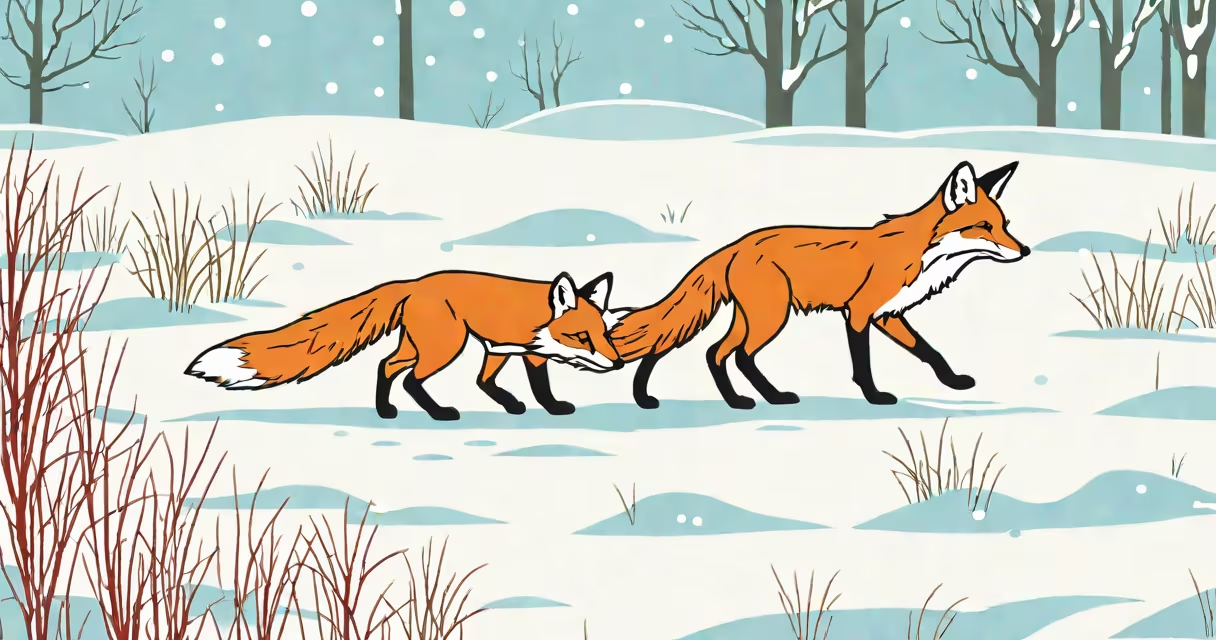
I once watched a red fox in a meadow near my home. It paused at the edge of a field, scanned left and right, then darted into tall grass. After 45 seconds, it emerged with a vole in its mouth. It didn't eat it immediately. Instead, it carried it to a nearby ditch, buried it, and returned to the field.
Later, I saw it dig up the vole and consume it. The delay wasn't random. The fox had likely assessed the risk of being seen by a hawk. By burying the prey, it reduced the chance of theft and avoided attracting attention during consumption. This behavior fits optimal foraging theory: the cost of eating in the open (predation risk) exceeded the benefit of immediate consumption. Delaying the meal improved long-term survival odds.
Optimal foraging theory isn't just about animals. It informs human decision-making in fields like economics, urban planning, and public health. The concept of maximizing utility per unit of effort appears in models of consumer behavior and transportation routing.
For example, grocery shoppers often choose stores based on travel time, product availability, and price-just like an animal balancing travel and handling costs. Behavioral economists refer to this as "bounded rationality," a concept rooted in the same principles.
Understanding optimal foraging theory also clarifies how ecosystems function. When a predator shifts its diet due to changing prey availability, it affects entire food webs. Predicting these shifts helps conservationists manage habitats effectively.
While the theory doesn't account for emotions or culture, it provides a useful baseline for analyzing behavior across species. Its predictive power has stood up to decades of testing, making it one of the most successful frameworks in evolutionary biology.