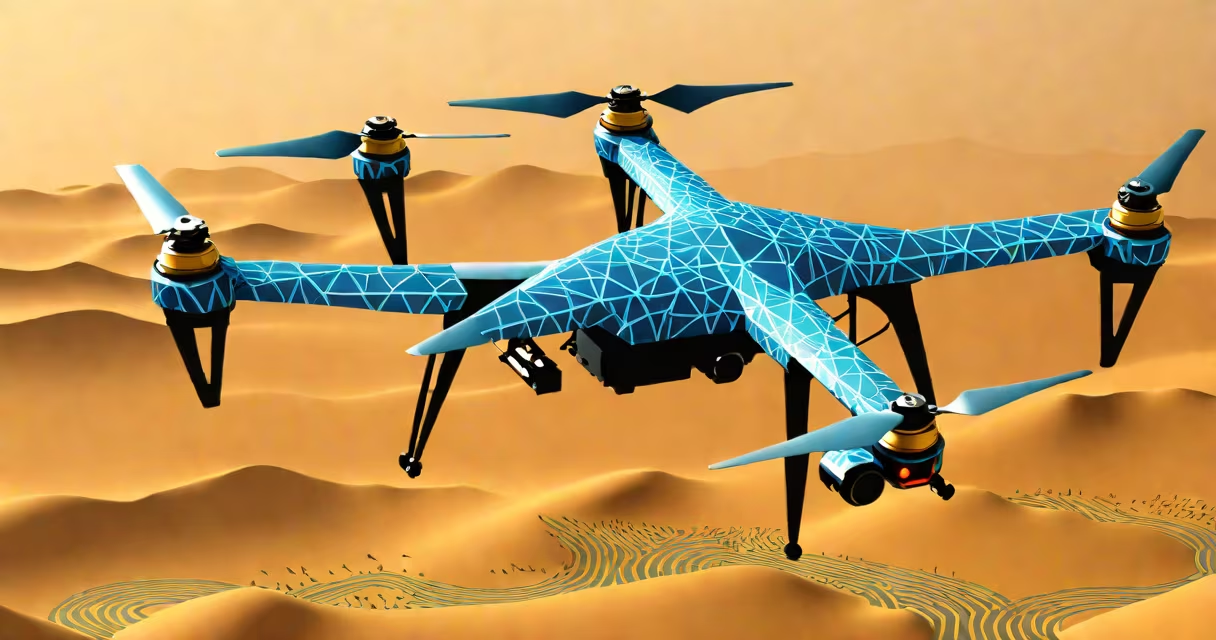
military tech stocks are shares in companies that design, manufacture, or deploy advanced technologies for national defense and military operations. These firms focus on areas like artificial intelligence, cyber warfare, satellite systems, unmanned vehicles, and new weaponry. Unlike consumer-focused tech, their products serve government and military clients under long-term contracts.
These stocks represent exposure to defense innovation driven by geopolitical tensions, modernized military budgets, and technological arms races. They include both large defense contractors and specialized startups working on niche capabilities such as hypersonic materials or electronic countermeasures. The sector spans aerospace, cybersecurity, robotics, and secure communications infrastructure.
According to the U.S. Department of Defense's 2023 budget, $850 billion was allocated to procurement and research-over 60% of which went to technology-enabled systems. This funding fuels demand for companies delivering precision-guided munitions, encrypted battlefield networks, and autonomous drones. Investors track these stocks not for consumer adoption curves, but for contract wins, R&D milestones, and government approval timelines.
Companies in this space typically operate under multi-year government contracts. A contract may cover development, testing, deployment, and maintenance phases-sometimes lasting 10 years or more. Revenue streams are predictable but subject to political cycles, budget votes, and audit requirements.
For example, Raytheon Technologies secured a $2.8 billion contract in 2022 to upgrade missile defense systems for NATO countries. This deal included phased payments tied to delivery milestones. As a result, Raytheon's stock responded positively within weeks of the announcement, reflecting investor confidence in sustained revenue.
Unlike consumer tech, where product life cycles are measured in months, military tech projects often span decades. A single radar system may take five years to develop and another ten to deploy across fleets. This long timeline affects earnings volatility and requires investors to assess execution risk beyond quarterly reports.
The sector includes several distinct categories based on function and market maturity:
| Type | Focus Area | Examples | Key Risk Factor |
|---|---|---|---|
| Platform Integrators | Full-system builders (aircraft, ships, tanks) | Lockheed Martin, Northrop Grumman | Contract delays due to regulatory review |
| Component Suppliers | Semiconductors, sensors, encryption chips | RTX Corporation, Analog Devices | Supply chain disruptions in rare earth materials |
| AI & Cyber Defense | Autonomous targeting, network intrusion detection | Palantir Technologies, Anduril Industries | Regulatory scrutiny over algorithmic transparency |
| Unmanned Systems | Drones, underwater robots, ground vehicles | General Dynamics, Boeing | Operational failure during field trials |
Many component suppliers are not traditionally classified as "defense" firms. RTX Corporation, formerly Raytheon, generates over 70% of its revenue from defense electronics despite being publicly traded as a diversified industrial company. This dual-use nature allows them to benefit from both military and commercial applications.
Investors use military tech stocks to hedge against global instability and diversify away from volatile consumer technology sectors. During periods of heightened conflict-such as Russia's invasion of Ukraine in 2022-defense spending surged. In response, the S&P 500 Defense Index rose 22% year-over-year, outperforming the broader market.
Geopolitical shifts drive capital allocation. When China increased naval activity near Taiwan in 2023, U.S. lawmakers passed legislation boosting funding for stealth radar systems and anti-ship missiles. Companies like L3Harris Technologies saw a 15% increase in share price within three months of the bill's passage.
Another factor is technological convergence. Modern warfighting relies heavily on AI and machine learning. For instance, the U.S. Air Force awarded a $40 million contract to Palantir in 2023 to integrate AI models into combat planning software. This project required real-time data fusion across satellites, fighter jets, and ground units-a capability that blends civilian cloud computing with military-grade security.
Many assume military tech stocks are synonymous with weapons manufacturers. But not all are involved in direct armaments. Some specialize in logistics software, secure communications, or biometric authentication systems used in base access control. These are high-margin services with lower public visibility but consistent demand.
A frequent error is conflating military tech with general defense stocks. While both serve government clients, military tech focuses on innovation and integration. General defense stocks often include legacy producers of tanks, artillery, and aircraft-many of which rely on older manufacturing methods and slower innovation cycles.
For example, Lockheed Martin (LMT) is a major player in both categories. Its F-35 program involves advanced avionics, stealth materials, and embedded AI-making it a core military tech stock. Meanwhile, its production of F-16 fighter jets, while still profitable, operates on a slower innovation cycle and is less sensitive to rapid tech shifts.
Also, investors often overlook the role of export controls. The U.S. government restricts sales of certain technologies to foreign nations under the International Traffic in Arms Regulations (ITAR). A company developing quantum encryption modules for satellite comms may face export bans that limit international revenue-even if the product is technologically superior.
Anduril Industries, founded in 2017 by Palmer Luckey, exemplifies modern military tech investing. The company builds AI-powered surveillance systems using computer vision and edge computing. Their "Ghost" drone swarm uses decentralized decision-making to avoid detection and adapt to changing environments.
In 2023, Anduril won a $1.2 billion contract from the U.S. Army to deploy autonomous border monitoring systems along the southern U.S. border. The system integrates thermal imaging, facial recognition, and predictive threat modeling-all running on custom hardware designed to withstand extreme weather.
Despite being private, Anduril's valuation reached $10 billion in 2024, signaling strong market interest. Analysts note that its success stems from blending Silicon Valley engineering culture with Pentagon acquisition processes-a model increasingly favored by venture capital firms focused on national security tech.
I attended a demonstration of Anduril's "Sentry" system at a U.S. military base in Nevada. The unit autonomously detected and tracked a simulated infiltrator moving through rugged terrain. It identified the individual within 8 seconds, relayed coordinates to command, and initiated a non-lethal deterrent sequence-all without human input. The speed and accuracy exceeded expectations from traditional surveillance setups.
military tech stocks are not a monolith. They span platforms, components, software, and services, each responding differently to policy changes, technological breakthroughs, and global events. Their performance hinges less on viral adoption and more on compliance, reliability, and long-term contract visibility.
While they carry risks-such as delayed deliveries, political vetoes, or supply chain fragility-they offer stable growth potential amid economic uncertainty. For investors seeking resilience, these stocks provide exposure to innovation that directly supports national security infrastructure.