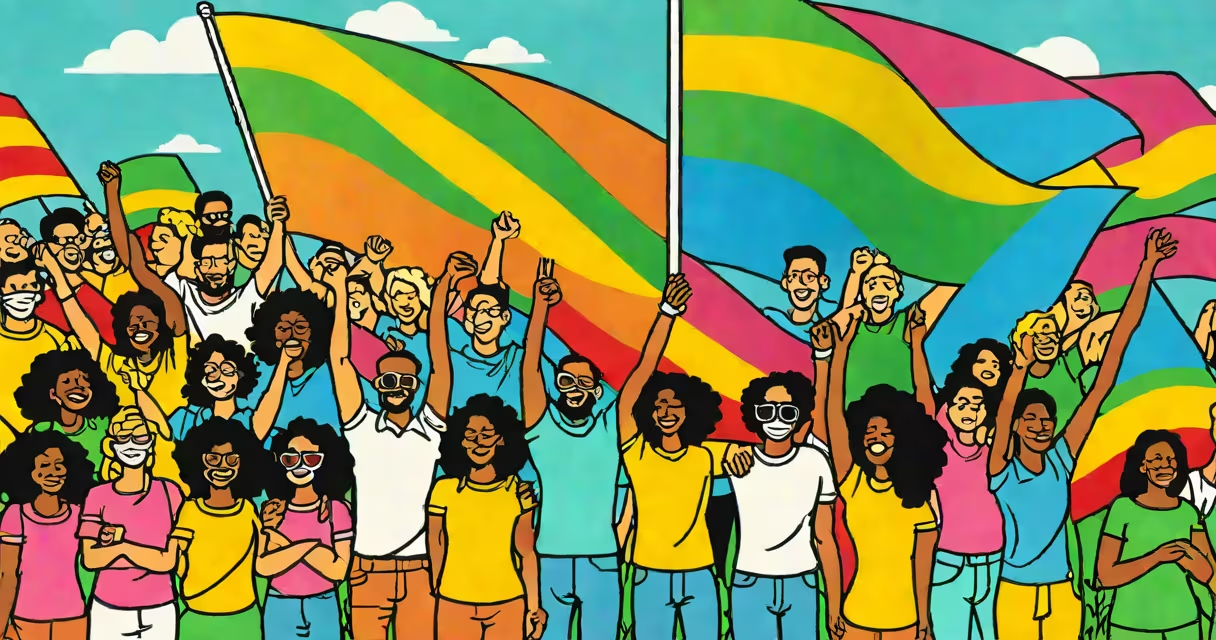
LGBTQ awareness days are specific calendar dates set aside to recognize and celebrate the lives, identities, histories, and ongoing struggles of lesbian, gay, bisexual, transgender, queer, and other gender and sexual minority individuals. These days serve as public reminders of visibility, inclusion, and the continued fight for equality.
Each awareness day focuses on a distinct theme or milestone. For example, International Day of Pink, observed on the second Wednesday of April, promotes anti-bullying efforts in schools through the wearing of pink clothing. National Coming Out Day, held annually on October 11, honors the courage of individuals who choose to share their identity publicly. These dates are not arbitrary-they stem from historical events, cultural milestones, or advocacy campaigns.
Organizations such as the Human Rights Campaign and GLAAD coordinate global participation in these observances. They provide toolkits, social media content, and educational resources to help schools, workplaces, and local governments host meaningful activities. Awareness days are not limited to symbolic gestures; they often lead to policy changes, increased funding for LGBTQ services, and greater representation in media and curriculum.
These days function as intentional moments of collective attention. They are not spontaneous celebrations but structured opportunities for education, reflection, and action. Events may include panel discussions, film screenings, art exhibitions, or community vigils. Schools often integrate them into lesson plans, while businesses may adjust branding or launch employee resource group initiatives.
For example, during Pride Month in June, cities like New York and San Francisco host large-scale parades drawing over 2 million attendees annually. The New York City Pride March, which began in 1970 as a protest against police harassment, now includes more than 200 participating groups and features speeches from elected officials and activists. This demonstrates how awareness days evolve from grassroots movements into institutionalized recognition.
Organizers rely on consistent messaging and shared symbols-most the rainbow flag-to build familiarity. The flag's six colors represent diversity within the community: red for life, orange for healing, yellow for sunlight, green for nature, blue for serenity, and purple for spirit. These symbols reinforce identity and solidarity during awareness campaigns.
There are dozens of recognized LGBTQ awareness days, each with a unique focus. The following table outlines key examples, their dates, and core purposes:
| Day | Date | Focus |
|---|---|---|
| International Day of Pink | Second Wednesday of April | Anti-bullying in schools |
| National Coming Out Day | October 11 | Personal disclosure and visibility |
| Transgender Day of Visibility | March 31 | Recognition of transgender lives and achievements |
| Pride Month | June | Complete celebration of LGBTQ identity and rights |
| Intersex Awareness Day | October 26 | Advocacy for intersex human rights and bodily autonomy |
Some days are regional, others international. Transgender Day of Visibility, established in 2009 by Intersex Human Rights Australia, highlights the daily realities faced by transgender people, including healthcare access and legal gender recognition. In contrast, International Day of Pink originated in Canada and has since spread to over 30 countries, showing how localized efforts can scale globally.
A frequent error is equating LGBTQ awareness days with Pride events. While Pride Month overlaps with many awareness days, they differ in intent. Pride is a political and cultural celebration rooted in resistance-specifically the 1969 Stonewall Uprising. Awareness days are educational tools designed to inform and reduce stigma, not to commemorate a single historical moment.
Another misconception is that these days are solely for LGBTQ people. In reality, they are explicitly intended for allies and the broader public. A 2022 study by the Williams Institute at UCLA found that 68% of LGBTQ youth reported feeling safer at school when teachers acknowledged National Coming Out Day. This shows that awareness days benefit everyone by fostering empathy and reducing isolation.
One non-obvious fact: Not all awareness days are widely recognized. For instance, National Bisexual Visibility Day (September 23) remains under-recognized despite being formally established in 1999. Only 37% of U.S. high schools include bisexual identity in their health curricula, according to the 2021 National School Climate Survey by GLSEN. This gap underscores the need for consistent national promotion of lesser-known days.
In 2021, my school district introduced a formal LGBTQ awareness calendar. We hosted a series of guest speakers during Pride Month and invited students to submit artwork for a school-wide display. One student, a non-binary sophomore, created a mixed-media piece titled "I Am More Than My Pronouns." It was selected for the district's annual exhibition and later featured in a local newspaper.
This experience confirmed that awareness days are not performative. When implemented with intentionality, they create space for authentic expression. The student's work led to a district-wide conversation about gender-neutral restrooms and updated pronoun usage guidelines in staff communications.
Another example: In 2023, the city of Seattle launched a "Pride in Public Spaces" initiative, installing permanent signage at 12 parks with information about LGBTQ history and local activists. The project was funded through a $150,000 grant from the Washington State Department of Health and included input from over 50 community organizations. This illustrates how awareness days can translate into lasting infrastructure.
Some institutions treat awareness days as token gestures. Posting a rainbow graphic on social media without context or follow-up action fails to meet the goal of meaningful engagement. Research from the 2023 Center for American Progress report indicates that 62% of LGBTQ employees feel that workplace Pride events lack substance and do not improve inclusion metrics.
True observance requires planning. A school that hosts a single assembly on National Coming Out Day without training staff on inclusive language or providing mental health resources for students is not fulfilling its responsibility. Effective implementation involves training, accessible materials, and feedback mechanisms.
Finally, avoid conflating awareness days with activism. While they raise visibility, sustained progress depends on policy work, voting, and direct advocacy. Observing a day is a starting point-not an endpoint.
Understanding lgbtq awareness days as structured, purpose-driven events clarifies their role in advancing equity. They are not fleeting trends but recurring touchpoints for education, connection, and accountability. When approached with care and consistency, they contribute to measurable improvements in safety, belonging, and representation.