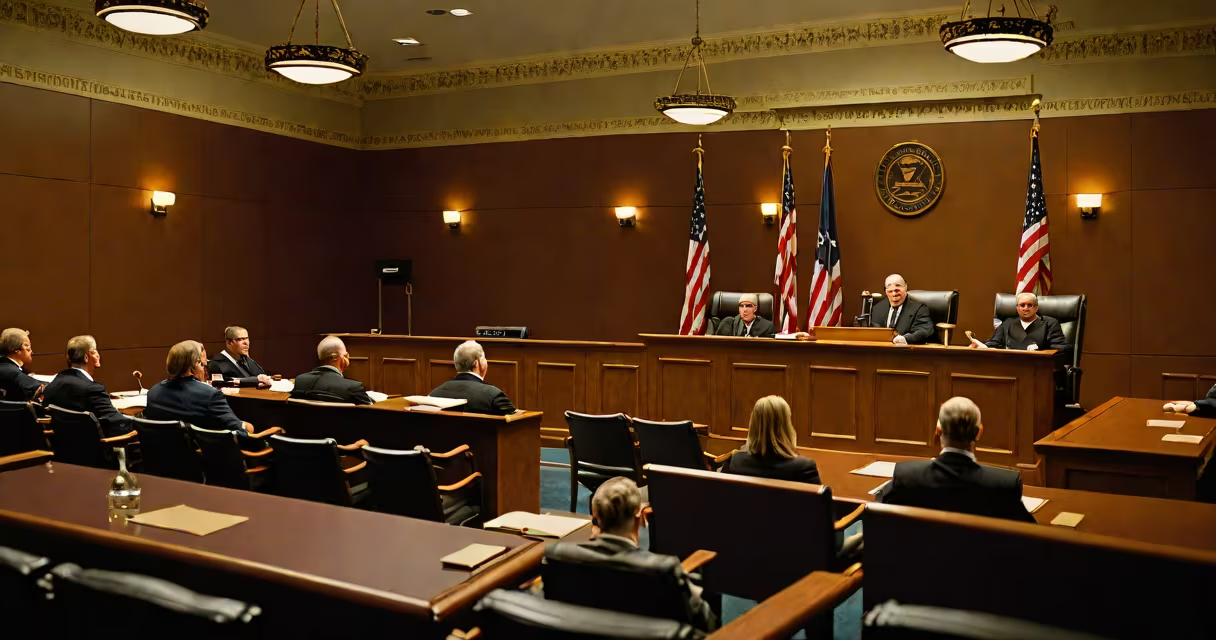
An introduction to criminal justice provides a foundational understanding of how societies enforce laws, manage offenders, and protect communities through structured institutions including law enforcement, courts, and corrections. This structure ensures accountability, deters crime, and supports fair treatment under the law.
The criminal justice system operates in three primary phases: law enforcement, adjudication, and corrections. Law enforcement agencies such as local police departments investigate crimes and apprehend suspects. Courts determine guilt or innocence through trials and hearings, applying statutes and constitutional protections. Corrections handle sentencing, supervision, and rehabilitation of individuals convicted of offenses.
Each phase relies on trained professionals and standardized procedures. For example, a traffic stop begins with a police officer citing a violation. The case proceeds to court, where a prosecutor presents evidence. If convicted, the individual enters the corrections system-possibly serving time in prison, being placed on probation, or completing community service.
Criminal justice functions through a chain of responsibilities. When a crime occurs, officers respond, collect evidence, and file reports. Prosecutors review cases and decide whether to bring charges. Judges oversee court proceedings, interpret laws, and impose sentences. Correctional staff manage facilities and supervise released individuals.
Every stage includes checks and balances. The U.S. Constitution guarantees due process, meaning suspects have rights like legal representation and a fair trial. The Supreme Court has ruled in cases like Miranda v. Arizona (1966) that suspects must be informed of their rights upon arrest. These rulings ensure systemic fairness and prevent abuse of power.
For example, in 2021, the Bureau of Justice Statistics reported that 60% of state prisoners had prior arrests. This highlights how the system tracks recidivism and informs policy decisions around rehabilitation programs. Without consistent data collection, reform efforts would lack direction.
The criminal justice system consists of three interconnected parts:
| Component | Primary Function | Examples of Professionals |
|---|---|---|
| Law Enforcement | Prevent and investigate crime | Police officers, detectives, federal agents |
| Adjudication | Determine guilt and assign punishment | Judges, prosecutors, defense attorneys |
| Corrections | Supervise sentenced individuals | Prison wardens, parole officers, probation officers |
These roles require specific training. Police officers complete academy programs lasting 6-12 months. Prosecutors typically hold law degrees and pass bar exams. Parole officers often have bachelor's degrees in criminal justice or social work.
A common misconception is that criminal justice ends with incarceration. In reality, reentry services help formerly incarcerated people reintegrate into society. Research from the National Institute of Justice shows that individuals who participate in educational programs while incarcerated are 28% less likely to return to prison within three years.
People often confuse criminal justice with law enforcement alone. But criminal justice encompasses far more than policing. It includes judicial processes, legal representation, and post-sentence support. A single arrest may involve dozens of actors across multiple agencies.
Another misunderstanding is that all criminal justice workers wear uniforms or carry guns. While police officers do, many others in the field-such as forensic analysts, court clerks, or victim advocates-work behind the scenes. A forensic technician analyzing DNA evidence in a lab plays a critical role in solving crimes without ever confronting a suspect.
There's also confusion between criminal justice and criminology. Criminology studies the causes of crime and patterns of behavior. Criminal justice focuses on the response-how systems react to crime and administer justice. One examines why crime happens; the other manages how society responds.
Understanding criminal justice opens doors to diverse careers. Graduates enter fields ranging from federal law enforcement to nonprofit advocacy. The U.S. Bureau of Labor Statistics projects a 5% growth in jobs related to criminal justice between 2022 and 2032-faster than average for all occupations.
For example, a person with a degree in criminal justice might start as a juvenile probation officer. They assess risk levels, create supervision plans, and connect youth with counseling or job training. After five years, they could advance to a supervisory role overseeing a team of officers.
I once observed a community court in Oakland where judges, social workers, and housing coordinators collaborated to address low-level offenses among homeless populations. Instead of jail time, participants received services like mental health care and shelter placement. The program reduced repeat offenses by 40% over two years-an outcome rooted in systemic design, not just individual effort.
Education is key. Courses in criminal justice cover topics like constitutional law, ethics, and research methods. Students learn to analyze data, interpret case law, and understand institutional bias. A course on restorative justice, for instance, teaches alternatives to incarceration by emphasizing dialogue between victims and offenders.
Entry-level positions often require a bachelor's degree. Some roles, like federal agent or attorney, demand advanced credentials. But even entry-level jobs-such as court security officer or records clerk-offer pathways into the field.
An introduction to criminal justice is not just about rules and punishments. It's about understanding how systems affect lives, how fairness is measured, and how reform can reduce harm. Knowledge of this system empowers citizens, guides professionals, and strengthens public trust.