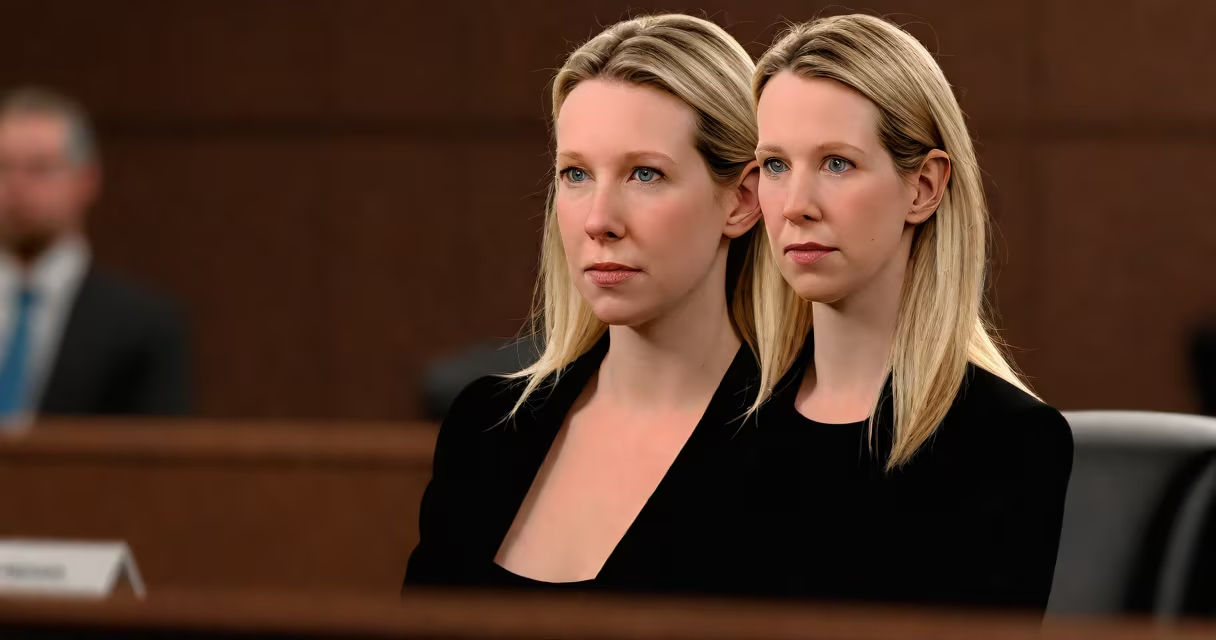
Elizabeth Holmes you can see everything refers to the HBO documentary series that chronicles the rise and collapse of Theranos, the blood-testing startup founded by Holmes, revealing how she misled investors, patients, and regulators through false claims about revolutionary technology.
The series, released in 2023, uses archival footage, interviews, and court transcripts to reconstruct the events leading to Holmes's conviction on four counts of fraud. It presents a detailed account of how a Stanford dropout with a vision of changing healthcare became one of the most notorious figures in Silicon Valley history. The title reflects both the transparency demanded by the legal process and the public's demand for accountability.
Theranos promised to change medicine with a device that could run hundreds of tests from a single drop of blood. In reality, the technology never worked as advertised. By 2015, federal investigators had uncovered widespread deception. Holmes was later sentenced to 11 years and 3 months in prison, making her one of the few tech founders to face jail time for fraud.
The HBO series was produced by the team behind "The Social Dilemma" and "The Inventor," blending investigative journalism with narrative storytelling. It relies heavily on unedited court recordings, internal emails, and testimony from former employees and whistleblowers.
One key scene shows Holmes testifying in court, claiming she believed in the technology despite evidence showing she knew it was flawed. Her demeanor-calm, composed, often smiling-contrasts sharply with the damning evidence against her. This dissonance is central to the series' emotional impact.
Unlike dramatized portrayals, "Elizabeth Holmes You Can See Everything" avoids reenactments. Instead, it uses still images, audio clips, and side-by-side comparisons of press coverage from 2014 to 2018. This approach forces viewers to confront the gap between public perception and documented facts.
The documentary draws from multiple categories of evidence to build its case:
| Evidence Type | Source | Example |
|---|---|---|
| Court transcripts | Federal trial records | Holmes admitting she knew the device failed in 2013 |
| Internal communications | Emails and Slack messages | Employee warning: "We're faking results" |
| Expert testimony | Medical and engineering experts | "The device couldn't measure glucose reliably" |
| Press coverage | Time, Forbes, Wall Street Journal | 2014 cover: "The Next Steve Jobs?" |
These materials were cross-referenced with timelines from the U.S. Department of Justice and the Securities and Exchange Commission (SEC). The SEC filed a civil complaint in 2015 accusing Holmes of defrauding investors out of $700 million.
A lesser-known fact: Holmes reportedly told a group of investors in 2014 that Theranos had "validated" its technology using FDA-approved methods. But internal documents show the company had not submitted any device for FDA review. The claim was false.
Elizabeth Holmes you can see everything resonates because it exposes systemic failures in venture capital, media scrutiny, and regulatory oversight. Investors poured money into Theranos based on promises, not proof. Media outlets praised Holmes as a visionary. Regulators delayed action until patients were harmed.
One patient, Erika Cheung, testified that Theranos results led to a misdiagnosis of lupus. She underwent unnecessary treatment and lost her job. Her story appears in the series and underscores the human cost of technological overreach.
When I watched the episode covering the 2016 Wall Street Journal investigation, I realized how easily credibility can be weaponized. Holmes appeared on stage at a conference wearing a black turtleneck-her signature look-and declared, "We're going to change healthcare." The audience clapped. No one asked for data. That moment, captured in slow motion, remains haunting.
Many assume the series is a dramatization. It is not. It is a compilation of verified materials. Some viewers think Holmes was a victim of a media circus. The evidence shows otherwise: she actively suppressed dissent, fired critics, and altered reports to hide failures.
Another myth is that Theranos failed due to technical limitations. The core issue wasn't engineering-it was ethics. The company's culture encouraged secrecy. Employees who raised concerns were silenced. One former lab technician said he was told to "just do what you're told" when questioned about test accuracy.
Even the name "Theranos" was misleading. It combined "therapeutic" and "biosis," suggesting healing through biology. But the company never developed a therapeutic product. Its sole focus was diagnostic testing-using unproven devices.
The full series is available on HBO Max. Episodes are approximately 45 minutes long and structured around key phases: early promise, investor pressure, regulatory scrutiny, and trial. A companion podcast, "The Theranos Files," offers deeper dives into individual episodes.
Elizabeth Holmes you can see everything is not just a story about fraud. It's a lesson in how ambition, unchecked by verification, can corrupt innovation. The series doesn't offer redemption. It demands accountability.