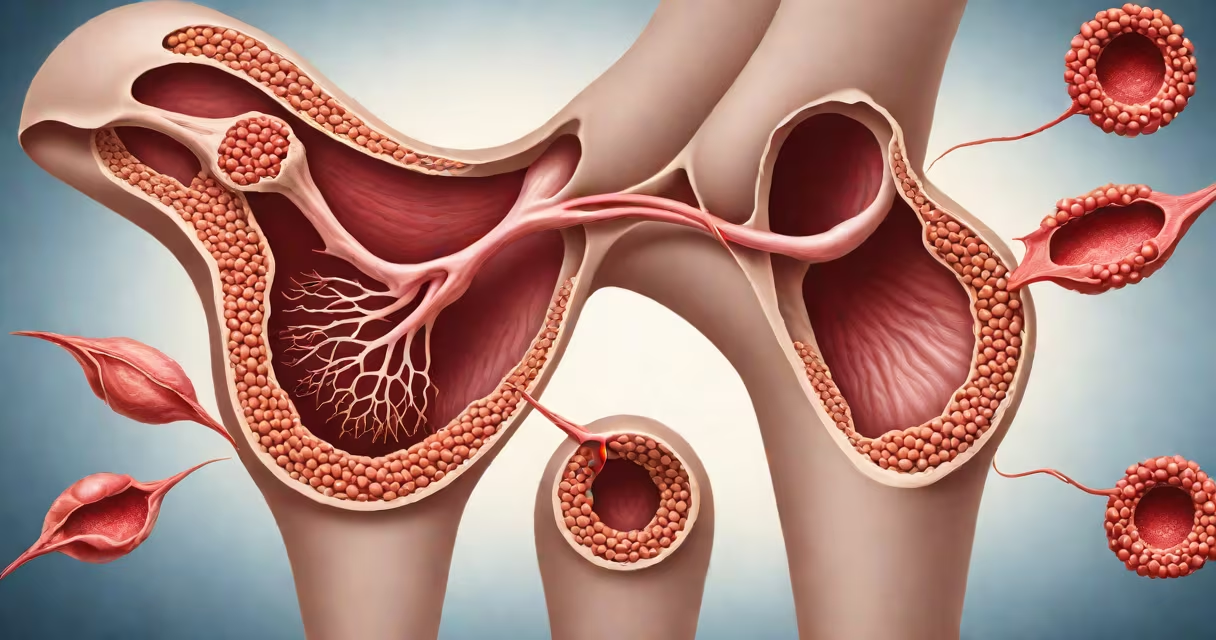
dysmenorrhoea and menorrhagia are two distinct but frequently co-occurring gynecological conditions affecting menstruation. Dysmenorrhoea refers to painful menstrual cramps, often caused by excessive prostaglandin release. Menorrhagia describes abnormally heavy or prolonged menstrual bleeding, typically exceeding 80 mL per cycle or lasting more than seven days. Together, they affect up to 30% of menstruating individuals globally, impacting daily function and mental health.
Dysmenorrhoea arises from uterine contractions triggered by high levels of prostaglandins-hormone-like substances that cause the uterus to contract during menstruation. These contractions reduce blood flow to the uterine lining, leading to ischemia and pain. Primary dysmenorrhoea occurs without underlying pelvic pathology and usually begins within six months to a year after menarche. Secondary dysmenorrhoea develops later in life and is linked to conditions such as endometriosis, adenomyosis, or fibroids. The pain typically starts just before or at the onset of menses and lasts 12-72 hours.
Menorrhagia involves menstrual blood loss exceeding 80 mL per cycle-equivalent to about 16 soaked regular-sized sanitary pads per period. Clinical signs include needing to change pads or tampons hourly, passing clots larger than a quarter, or experiencing fatigue due to iron deficiency anemia. Causes range from hormonal imbalances (especially in adolescents and perimenopausal women) to structural issues like polyps, fibroids, or adenomyosis. The World Health Organization reports that menorrhagia affects approximately 1 in 10 women of reproductive age, with significant underdiagnosis due to normalization of heavy bleeding.
While dysmenorrhoea focuses on pain and menorrhagia on volume, both can stem from the same pathologies. Endometriosis, for example, commonly presents with severe dysmenorrhoea and heavy bleeding. A 2021 study in The Lancet found that 68% of women diagnosed with endometriosis reported both symptoms. However, primary dysmenorrhoea may occur in the absence of menorrhagia, particularly in younger individuals with normal pelvic anatomy.
Diagnostic distinction relies on history, physical exam, and imaging. Transvaginal ultrasound detects fibroids, polyps, and adenomyosis. MRI is used when endometriosis is suspected. Blood tests assess thyroid function, coagulation disorders, and iron stores. The American College of Obstetricians and Gynecologists (ACOG) recommends evaluating any menstrual pattern that disrupts daily activities, especially if bleeding exceeds 10 days or requires double protection.
| Type | Onset | Common Causes | Typical Age Group |
|---|---|---|---|
| Primary dysmenorrhoea | Within 1-2 years of menarche | Prostaglandin excess, no pelvic disease | Teens to early 20s |
| Secondary dysmenorrhoea | After age 25, often progressive | Endometriosis, fibroids, adenomyosis | 25-45 |
| Menorrhagia (non-structural) | Variable | Hormonal imbalance, thyroid dysfunction | Adolescents, perimenopause |
| Menorrhagia (structural) | Progressive | Fibroids, polyps, adenomyosis | 30-50 |
Many individuals assume that heavy bleeding or cramping is "normal" and delay seeking care. This normalization leads to delayed diagnosis of serious conditions. A 2022 survey by the National Women's Health Network found that 63% of women with menorrhagia had waited over a year to consult a provider, often due to stigma or lack of awareness.
Another misconception is equating dysmenorrhoea with ovulation pain. Ovulation typically causes brief, unilateral lower abdominal pain lasting minutes to hours, not the persistent, cramp-like pain of dysmenorrhoea., some confuse menorrhagia with menometrorrhagia (irregular bleeding with heavy flow), which requires different diagnostic pathways.
A key distinction missed by many providers is that primary dysmenorrhoea rarely worsens over time. If pain increases with each cycle, secondary etiology must be ruled out. Conversely, menorrhagia that begins abruptly in a previously regular cycle demands investigation-especially if accompanied by fatigue or dizziness.
Consider a 29-year-old woman presenting with worsening menstrual pain and soaking through two pads per hour for five days. She reports no prior history of severe cramps. Physical exam reveals a slightly enlarged uterus. Transvaginal ultrasound shows a 4 cm submucosal fibroid and thickened endometrium. Her hemoglobin is 10.2 g/dL (low-normal), and ferritin is 12 ng/mL (indicating depleted iron stores).
Diagnosis: secondary dysmenorrhoea and menorrhagia due to fibroid. Treatment includes tranexamic acid (to reduce blood loss), combined oral contraceptive pills (to regulate cycles and reduce prostaglandin production), and referral for hysteroscopic myomectomy. After surgery, her bleeding normalized, and pain resolved within three months.
During a clinic visit, I observed a patient who had dismissed her heavy bleeding as "just her cycle." She reported missing work for four days monthly and using six pads per day. After testing revealed iron deficiency anemia and a 3 cm endometrial polyp, she underwent outpatient polypectomy. Within two cycles, her bleeding decreased by 75%, and her energy levels improved.
Consult a healthcare provider if menstrual pain interferes with school, work, or social activities. Seek immediate evaluation for sudden changes in flow, passage of large clots (>2.5 cm), or symptoms of anemia such as fatigue, shortness of breath, or dizziness. Persistent heavy bleeding despite over-the-counter pain relief warrants further investigation.
Understanding dysmenorrhoea and menorrhagia is essential for timely diagnosis and effective management. Recognizing abnormal patterns enables early treatment, improves quality of life, and prevents long-term health consequences. Both conditions are treatable, but require accurate assessment to determine the root cause.