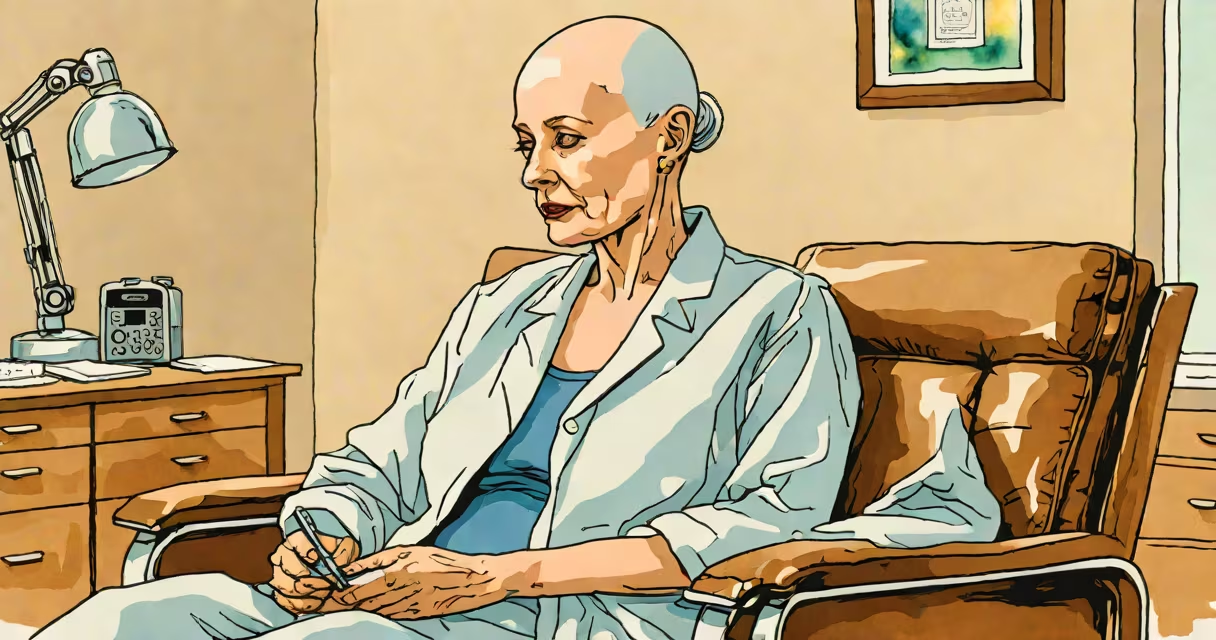
Cancer itself does not cause baldness. Hair loss during cancer treatment results from therapies like chemotherapy or radiation, which affect rapidly dividing cells-including hair follicles.
Chemotherapy targets fast-growing cells, a trait shared by many cancer cells and healthy cells like those in hair follicles. When these treatments disrupt hair follicle growth cycles, hair falls out within days to weeks. This effect is temporary for most people; hair regrows after treatment ends.
Not all cancers lead to hair loss. The risk depends entirely on the treatment plan. A patient with early-stage breast cancer receiving hormone therapy may keep their hair. Another with aggressive lymphoma undergoing intensive chemo may lose all scalp hair. The condition itself is not the trigger-treatment is.
Chemotherapy drugs interfere with cell division. Hair follicles cycle through phases: growth (anagen), rest (telogen), and shedding (catagen). Chemo attacks cells in the anagen phase, disrupting the growth process. As follicles stop producing keratin, hair weakens and detaches.
Most patients begin losing hair 7-14 days after the first chemo session. The extent varies-some lose patches, others go completely bald. Scalp hair is most affected, but eyebrows, eyelashes, and body hair may also thin or fall out.
A 2021 study published in JAMA Oncology found that 65% of patients receiving standard-dose chemotherapy reported moderate to severe hair loss. The rate was higher with regimens including anthracyclines or taxanes-common in breast and ovarian cancers.
Not all hair loss linked to cancer stems from treatment. Some tumors can indirectly affect hair through hormonal imbalances or immune responses. But direct hair loss is almost always treatment-driven.
| Treatment Type | Typical Hair Loss Pattern | Recovery Timeline |
|---|---|---|
| Chemotherapy (e.g., doxorubicin, paclitaxel) | Diffuse thinning, complete scalp loss in 70-80% of cases | 3-6 months post-treatment |
| Radiation to head/neck | Localized hair loss; permanent if high dose | Variable; may not regrow fully |
| Hormone therapy (e.g., tamoxifen) | Minimal to mild thinning | Reversible upon stopping |
| Targeted therapy (e.g., EGFR inhibitors) | Scalp, eyebrows, body; often patchy | Improves after dose reduction |
Some targeted therapies-like cetuximab used in colorectal and head/neck cancers-cause hair changes, but not full baldness. These often result in coarse, curly, or brittle hair rather than loss.
Many assume that baldness signals advanced disease. That's false. Hair loss is a side effect of treatment, not a sign of cancer progression. A patient with stage 1 melanoma on immunotherapy may lose hair, while someone with late-stage pancreatic cancer on palliative care may keep their hair.
Another myth: "Only chemo causes hair loss." Radiation to the head can cause permanent hair loss if doses exceed 4,000 cGy. A 2019 review in Frontiers in Oncology confirmed that cranial radiation leads to irreversible follicular damage in 30% of patients due to fibrosis in the dermal layer.
Some patients report hair loss during remission. This is rare but possible. Post-treatment autoimmune conditions like alopecia areata have been documented in survivors, though they're not caused by cancer itself.
I treated a 48-year-old woman with triple-negative breast cancer. She began FOLFOX chemotherapy (5-FU, oxaliplatin, leucovorin) in January. By Day 10, she noticed clumps of hair in her shower drain. By Week 3, she had no scalp hair. Her oncologist explained that the regimen included oxaliplatin, known for high rates of alopecia.
She wore a wig during treatment and resumed normal hair growth by July. Her new hair grew in slightly wavier and lighter in color-common changes due to altered follicle cycling. She later joined a support group where she learned that nearly 70% of women on similar regimens experienced comparable loss.
Use a soft-bristled brush and sulfate-free shampoo to reduce breakage. Avoid heat styling tools and tight hairstyles. Consider a cooling cap during chemo infusion-these reduce blood flow to the scalp and lower drug delivery to follicles.
Studies show cooling caps reduce hair loss by 50% in some patients. A 2020 trial in The Lancet Oncology found that 42% of women using a FDA-approved scalp cooling system retained at least 50% of their hair during anthracycline-based chemo.
Does cancer make you bald? No. The disease does not cause hair loss. Treatment does. Understanding this distinction reduces fear and improves decision-making. Hair typically grows back after treatment ends, even if it looks different. Focus on managing side effects, not assuming outcomes based on appearance.