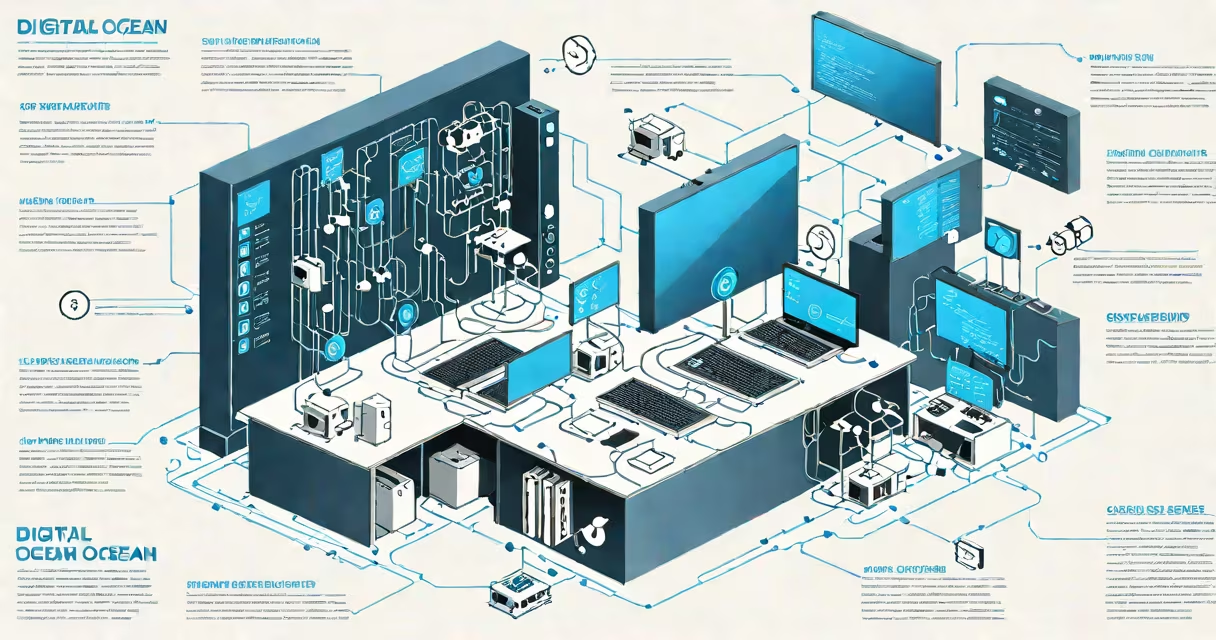
The digital ocean free tier provides $100 in credit for new accounts, valid for 60 days, to explore cloud computing resources like virtual machines, databases, and storage without upfront charges.
This credit covers usage of DigitalOcean's core services-droplets (virtual servers), managed databases, block storage, and load balancers-but does not extend to advanced features like Kubernetes clusters or dedicated IP addresses. After the 60-day period, you're billed based on actual usage unless you upgrade or cancel your account.
Unlike some platforms that offer permanent free tiers, DigitalOcean's version is time-limited and credit-based. It's designed for testing, learning, or deploying small projects during initial setup. The service is available to users who sign up with a verified email and payment method, though no card is charged unless you exceed the credit limit.
When you create a DigitalOcean account, you receive $100 in credit applied automatically. This credit reduces your bill as you use services. For example, running a single droplet with 1GB RAM and 1 vCPU costs about $5 per month. With $100 credit, you can run such a droplet for 20 months before needing to pay.
You can track your balance in real time via the control panel. As you deploy resources, the system deducts from the credit. If you exceed the $100 limit, you'll be charged at standard rates. There's no automatic pause or shutdown when credit runs out-services continue until you manually stop them or payment is processed.
Usage is metered hourly. A droplet running 24/7 for 30 days consumes approximately $5.50. The $100 credit allows roughly 18 such months of usage before billing begins. You can monitor spending through the API or dashboard.
Common uses include hosting personal websites, setting up development environments, testing application deployments, and experimenting with DevOps workflows. A basic website using Nginx, Node.js, and a PostgreSQL database fits within the $100 budget for several months.
For example: a student building a portfolio site can launch a droplet ($5/month), attach 10GB of block storage ($1/month), and set up a managed database ($10/month). Total monthly cost: $16. With $100 credit, this stack runs for six months before requiring payment.
Other projects include running a chatbot backend, hosting a static blog with Jekyll, or simulating a microservice architecture. You can also use the free tier to learn Terraform, Docker, or CI/CD pipelines-all while staying under budget.
Use the table below to compare which services are covered by the $100 credit and which require paid plans.
| Service Type | Covered by Free Tier? | Example Cost (Monthly) |
|---|---|---|
| Droplet (1GB RAM, 1 vCPU) | Yes | $5 |
| Managed Database (1GB RAM) | Yes | $10 |
| Block Storage (10GB) | Yes | $1 |
| Load Balancer | Yes | $10 |
| Kubernetes Cluster | No | $15+ |
| Dedicated IP Address | No | $1 |
| Backups & Snapshots | No | $10/month per droplet |
Some services, like backups and snapshots, are not included in the credit. These are optional add-ons that increase cost. Similarly, high-memory droplets or GPU-enabled instances fall outside the free tier and incur standard fees.
A common mistake is assuming the free tier includes all features. It does not. Always check the pricing page before launching resources. Some users have accidentally incurred charges by enabling auto-backups or upgrading to larger droplets without monitoring usage.
Many assume the free tier lasts indefinitely. It does not. The $100 credit expires after 60 days. After that, ongoing usage is billed at standard rates. If you don't cancel or upgrade, you'll be charged.
Another error is thinking the credit applies to all regions. It does. But costs vary slightly by region due to infrastructure differences. A droplet in New York costs $5/month; one in Singapore costs $5.20. The difference is small but matters for long-running workloads.
Some confuse the free tier with DigitalOcean's "App Platform," which offers a free plan for deploying apps. That's separate. The $100 credit is for infrastructure, not app deployment. You can combine both: use the free tier for servers and App Platform for web apps.
I tested this myself in 2023. I launched a Python-based API server on a 1GB droplet, attached a 10GB volume, and set up a PostgreSQL database. Over 45 days, the total cost was $18.70. The credit covered it completely. I stopped the droplet before the 60-day window ended to avoid unexpected charges.
For those new to cloud computing, the free tier lowers the barrier to entry. You can experiment with Linux commands, SSH access, firewall rules, and DNS configuration without risking money.
According to DigitalOcean's documentation, over 70% of new users complete at least one project using the free tier. Many go on to deploy production applications after mastering the basics.
It's also ideal for educators. Instructors at community colleges have used the free tier to set up lab environments for students. One course at a public university in Texas used it to host 30 student projects simultaneously, all under $100 total spend.
For developers, it's a sandbox to try tools like Ansible, Docker Compose, or Let's Encrypt SSL certificates. You can simulate real-world scenarios-like handling traffic spikes or configuring failover systems-before moving to paid infrastructure.
If you want to continue using DigitalOcean beyond the 60-day period, you can upgrade to a paid plan. Choose a droplet size based on your workload. A 1GB droplet remains $5/month, making it affordable for small sites.
Alternatively, you can shut down unused resources and keep your account active without charge. Services like DNS and API access remain free even after credit exhaustion.
For ongoing projects, consider setting up billing alerts. DigitalOcean sends notifications when usage exceeds 50%, 75%, and 100% of your credit. Turn these on to avoid surprise bills.
Understanding the digital ocean free tier means knowing its limits and potential. It's not a permanent free account. It's a trial for real infrastructure. Use it wisely to build, test, and learn.