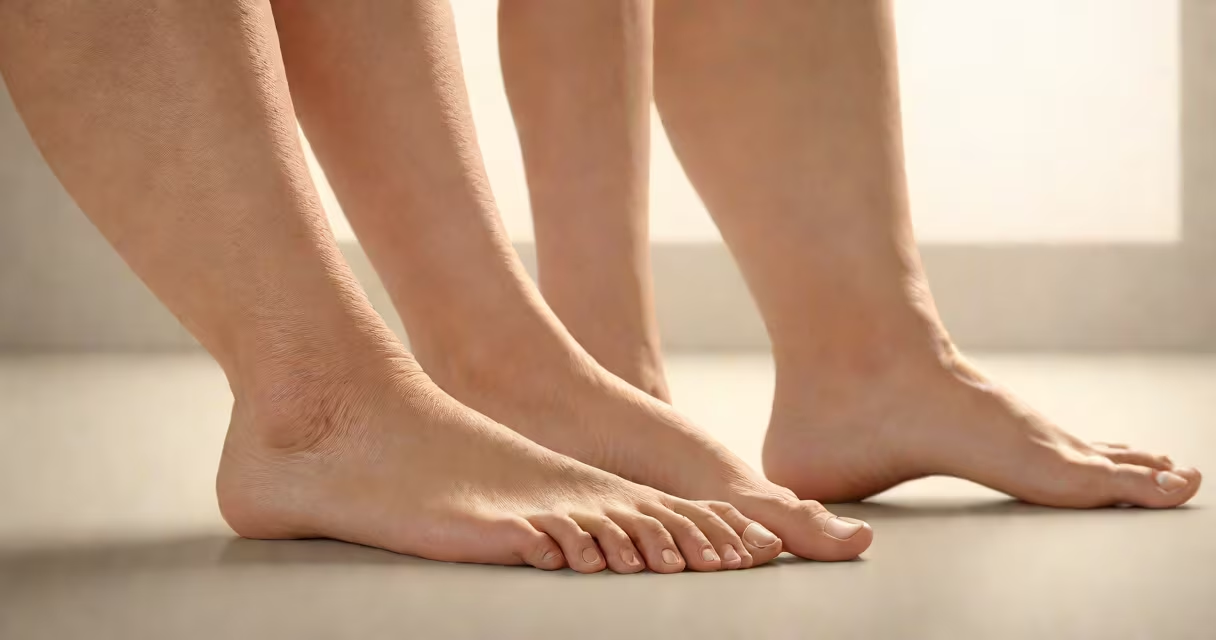
Swelling in the calves and feet-also called peripheral edema-is the accumulation of excess fluid in tissues below the knees. It appears as puffiness, tightness in shoes, or indentations that remain after pressing the skin. This condition often results from gravity, prolonged standing, or underlying medical conditions.
Fluid normally circulates through blood vessels and moves into tissues as needed. When this balance fails, fluid leaks out and builds up. The lower limbs are most affected because they're farthest from the heart and must overcome gravity to return blood and fluid. Swelling typically begins in the feet and ankles, then spreads upward into the calves.
Common triggers include sitting or standing for long periods, pregnancy, high salt intake, or wearing tight footwear. However, persistent or sudden swelling may indicate serious issues such as heart failure, kidney disease, liver cirrhosis, or deep vein thrombosis (DVT).
Edema forms when capillary pressure exceeds the forces pulling fluid back into blood vessels. Normally, hydrostatic pressure pushes fluid out of capillaries, while oncotic pressure (from proteins like albumin) pulls it back in. When this equilibrium shifts-due to low protein levels, increased capillary pressure, or damaged vessel walls-fluid accumulates in surrounding tissues.
The lymphatic system usually clears excess fluid. But if lymph nodes are blocked or damaged, fluid builds up. This is known as lymphedema, which can follow surgery, radiation, or infection. Unlike typical edema, lymphedema often feels firm and doesn't leave an indentation when pressed.
A 2021 study in Journal of Clinical Medicine found that 68% of patients with unexplained leg swelling had an underlying systemic condition, including heart, kidney, or liver dysfunction. Only 12% were due to benign causes like prolonged standing.
Swelling can be categorized by cause. The most frequent types include:
| Type | Primary Cause | Typical Features | When to Seek Care |
|---|---|---|---|
| Peripheral edema | Heart failure, kidney disease, medications | Bilateral, pitting, worsens with standing | Progressive swelling, shortness of breath, weight gain |
| Pregnancy-related | Hormonal changes, increased blood volume | Mild, symmetric, resolves postpartum | Swelling in one leg, pain, redness-possible DVT |
| Lymphedema | Lymph node removal, infection, trauma | Non-pitting, thickened skin, asymmetrical | Chronic, progressive, affects one limb |
| Medication-induced | Calcium channel blockers, NSAIDs, steroids | Develops weeks after starting drug | Improves after stopping medication |
For example, a 58-year-old man taking amlodipine for hypertension developed bilateral ankle swelling within four weeks. His doctor confirmed the link after reviewing his medication history. Stopping the drug led to resolution in seven days.
One overlooked cause is venous insufficiency. Damaged valves in leg veins allow blood to pool, increasing pressure and forcing fluid into tissues. Symptoms include heavy legs, varicose veins, and worsening swelling after standing. A 2020 review in Phlebology reported that 40% of patients with chronic leg swelling had undiagnosed venous insufficiency.
Many assume calf and foot swelling is simply "water retention" from salty food or heat. While diet and temperature affect fluid balance, persistent swelling requires evaluation. A single episode after a long flight or holiday meal is usually harmless. But recurring or asymmetric swelling demands attention.
Some confuse edema with cellulitis-a bacterial skin infection causing redness, warmth, and pain. Cellulitis can mimic swelling but includes fever and tenderness. Misdiagnosis risks delaying antibiotics. The American Academy of Dermatology notes that misidentifying cellulitis as edema leads to delayed treatment in 23% of cases.
Another confusion is linking swelling to arthritis. Joint pain and stiffness may accompany swelling, but true joint swelling involves visible enlargement and reduced mobility. Swelling confined to soft tissue around the ankle-without joint involvement-is more likely vascular or lymphatic in origin.
Seek medical evaluation if swelling is sudden, asymmetric, painful, or accompanied by other symptoms. Red flags include:
I once saw a patient whose left foot swelled rapidly over 48 hours. He denied trauma but had a recent long-haul flight. A Doppler ultrasound revealed a deep vein thrombosis. Without imaging, this could have been missed. Early detection prevents pulmonary embolism.
For mild, intermittent swelling, lifestyle adjustments help. Improve legs above heart level for 30 minutes twice daily. Reduce salt intake to under 2,300 mg per day. Wear compression stockings during travel or prolonged standing. Avoid tight clothing that restricts circulation.
If swelling persists beyond a week despite these steps, consult a healthcare provider. Diagnostic tests may include blood work (to check kidney and liver function), urine analysis (for protein loss), echocardiogram (for heart strain), or imaging like ultrasound to rule out DVT.
Calves and feet swelling is not always a minor issue. It can reflect systemic imbalance. Recognizing warning signs early improves outcomes. When in doubt, don't wait-get evaluated.