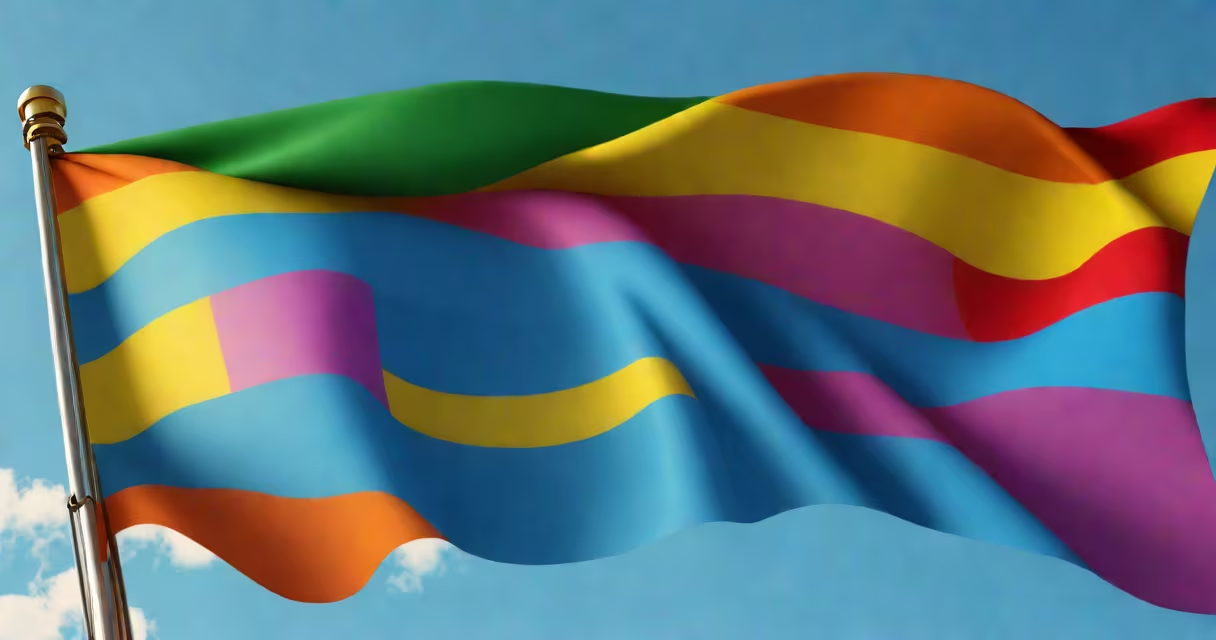
The best pride flag is the rainbow flag, designed in 1978 by Gilbert Baker, which remains the most widely recognized symbol of LGBTQ+ identity and unity. Its six colors-red, orange, yellow, green, blue, and violet-represent life, healing, sunlight, nature, harmony, and spirit, respectively. The flag's enduring presence in protests, parades, and public spaces marks it as both a cultural icon and a political statement.
Baker created the original version with eight colors, including pink for sex and turquoise for art. He removed pink and turquoise due to production limitations and cost, leaving the six-color version still in use today. The flag's design was rooted in activism, not aesthetics-Baker intended it to be accessible and wearable by all, especially during the height of the gay rights movement in San Francisco.
While the rainbow flag is the most iconic, other flags have emerged to represent specific identities within the LGBTQ+ spectrum. These include the transgender flag, bisexual flag, pansexual flag, and non-binary flag. Each uses distinct colors and patterns to reflect unique experiences and identities. The best pride flag for a given context depends on who is being represented and what message is being conveyed.
Pride flags function as visual identifiers for communities. Each color and symbol carries meaning derived from cultural, historical, or personal significance. The rainbow flag's six colors were chosen not randomly but to reflect diversity and wholeness. Red stands for life, orange for healing, yellow for sunlight, green for nature, blue for harmony, and violet for spirit.
Flags serve multiple roles: they signal belonging, assert visibility, and educate. A person displaying a pride flag at home or in public communicates solidarity. In educational settings, schools use them to promote inclusivity. During events like Pride marches, flags create a shared visual language that unites people across regions and generations.
When displayed correctly, pride flags follow standard guidelines. They should be hung vertically or horizontally, never upside down unless signaling distress. The rainbow flag is often paired with others in a "flag wall" at events, showing intersectionality. For example, a display may feature the rainbow flag alongside the transgender flag (blue, pink, white) and the non-binary flag (yellow, white, purple, black).
There is no single "best" pride flag-it depends on context. Below are key flags and their origins:
| Flag | Colors | Meaning | Origin Year |
|---|---|---|---|
| Rainbow (LGBTQ+) | Red, Orange, Yellow, Green, Blue, Violet | Unity, diversity, joy | 1978 |
| Transgender | Light Blue, Pink, White | Gender identity, transition | 1999 |
| Bisexual | Pink, Purple, Blue | Attraction to two or more genders | 1998 |
| Pansexual | Red, Yellow, Blue | Attraction regardless of gender | 2010s |
| Non-Binary | Yellow, White, Purple, Black | Identity beyond male/female | 2010 |
Each flag evolved from grassroots efforts. The bisexual flag, for example, was designed by Michael Page in 1998 to counter invisibility. The pansexual flag gained traction online, particularly on Tumblr, before spreading to mainstream events. The non-binary flag, created by Kye Rowan in 2010, includes black and white to represent those who are agender or have no gender.
A common misconception is that all pride flags are interchangeable. They are not. Using the wrong flag can misrepresent someone's identity. For example, the transgender flag is sometimes mistaken for the intersex flag (which features a purple circle on a white field). Confusing them erases the distinct experiences of trans and intersex people.
Pride flags appear in homes, workplaces, schools, and public spaces. They're flown during Pride Month (June), at rallies, and in memorials. In 2023, New York City installed over 1,000 pride flags along Fifth Avenue as part of its annual celebration.
Organizations use flags to signal policy alignment. The Human Rights Campaign reports that 76% of Fortune 500 companies display pride flags during June. This visibility correlates with higher employee retention among LGBTQ+ staff. A 2022 study by the Williams Institute found that employees in visibly inclusive workplaces reported 30% greater job satisfaction.
On social media, pride flags are used in profile pictures, stories, and posts. During the 2021 U.S. Supreme Court decision on LGBTQ+ employment rights, the rainbow flag trended globally. Over 1.2 million tweets included the flag emoji or image that week.
One notable example: in 2022, the city of Portland, Oregon, adopted a new municipal flag that incorporated the rainbow colors and a stylized "P" for Portland. The design was debated for months, with critics arguing it diluted the flag's activist roots. Supporters saw it as a step toward institutional recognition.
Many assume the rainbow flag is a universal symbol for all LGBTQ+ people. While it's the most visible, it doesn't represent everyone equally. Some communities feel excluded by its focus on gay men and lesbians. Trans people, for example, often prefer the transgender flag because it reflects their lived experience more accurately.
Another myth is that pride flags are solely decorative. They are not. The rainbow flag was born from protest. In 1978, Baker hand-stitched the first version using fabric from a local store. It was carried at the San Francisco Gay Freedom Day Parade. That act wasn't fashion-it was resistance.
A lesser-known fact: the original rainbow flag had eight colors. The pink stripe stood for sex, and turquoise for art. When Baker redesigned it for mass production, he removed pink and turquoise due to fabric availability. Today, many people don't know this history. But the original design is preserved in museums like the GLBT Historical Society in San Francisco.
I once attended a pride event in Minneapolis where a vendor sold rainbow flag pins with the colors reversed-violet at the top, red at the bottom. I asked the artist about it. She said she did it to challenge the idea that the flag must be displayed in a certain way. Her version sparked conversation about ownership and interpretation. That moment reminded me that pride flags aren't static-they evolve with the people who carry them.
When selecting a pride flag, consider the audience and intent. For a school assembly, the rainbow flag may be appropriate. For a transgender support group meeting, the transgender flag is more accurate. Mixing flags in a display shows respect for intersectionality.
Some people use the term "best pride flag" to mean the most inclusive. In that sense, the rainbow flag wins-not because it's perfect, but because it's adaptable. It has inspired dozens of derivative designs, from the bi-pan flag (a blend of bisexual and pansexual) to the polyamorous flag (black, gray, white, purple).
The best pride flag is not a single design-it's a living system of symbols. It changes with time, culture, and community need. What matters most is not the flag itself, but who it represents and how it's used.